
Quick Answer
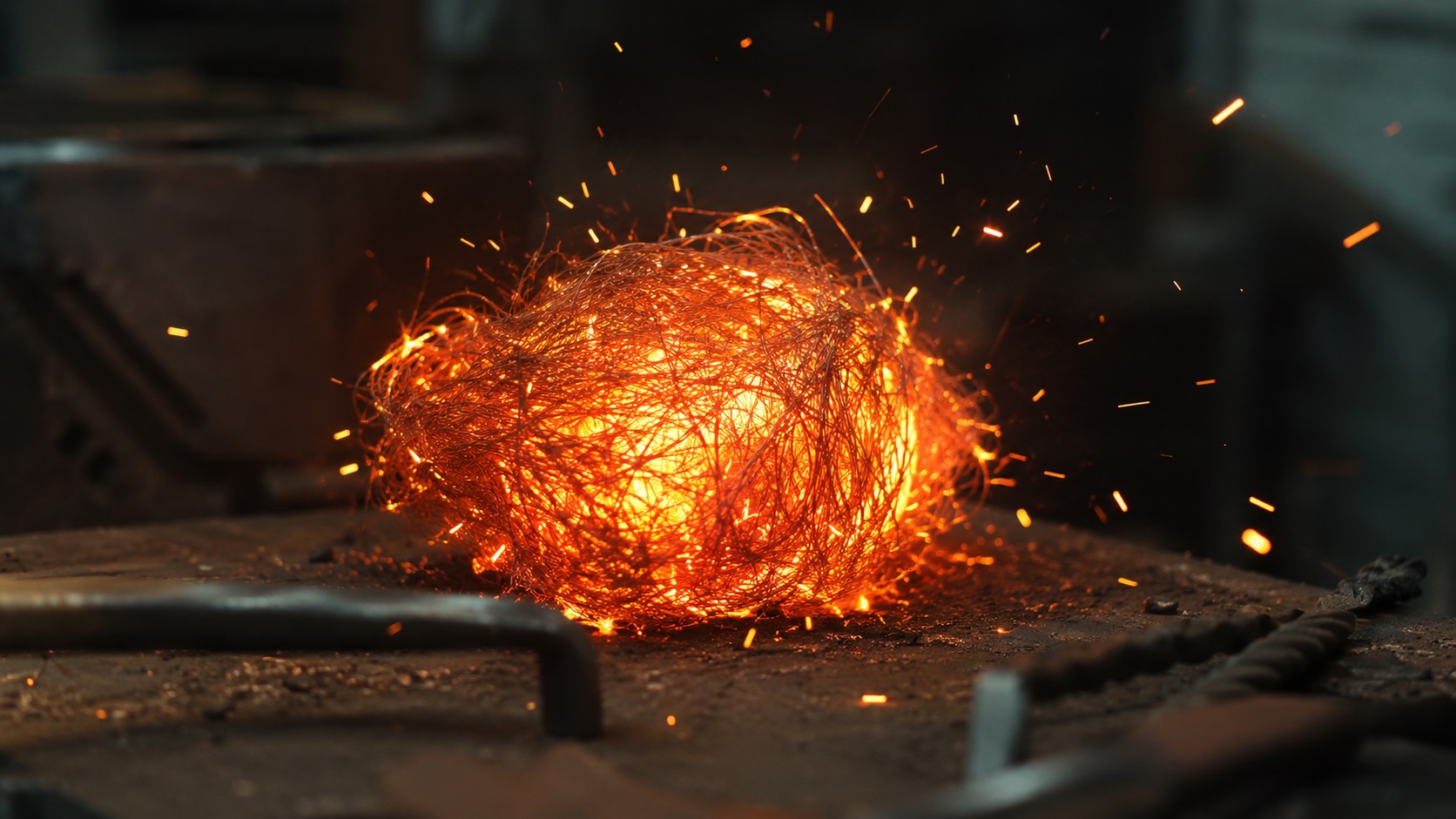
Steel wool burns because its extremely thin iron fibers have a massive surface area exposed to oxygen. Once ignited, the fine strands heat up almost instantly and oxidize rapidly, creating a self-sustaining combustion reaction. Solid steel usually does not burn easily because it has far less exposed surface area and absorbs heat too slowly.
When most people think about metal, they picture something impossible to burn. In real fabrication shops, steel is associated with heat resistance, grinding sparks, and structural strength — not flames.
That’s why burning steel wool feels strange the first time you see it.
But from a material science perspective, it actually makes perfect sense.
The same iron that feels nearly impossible to ignite in a steel bar becomes surprisingly flammable when stretched into thousands of microscopic strands. One common mistake DIY users make is assuming steel wool behaves like solid steel. In reality, the material geometry changes everything.
Why Solid Steel Usually Does Not Burn
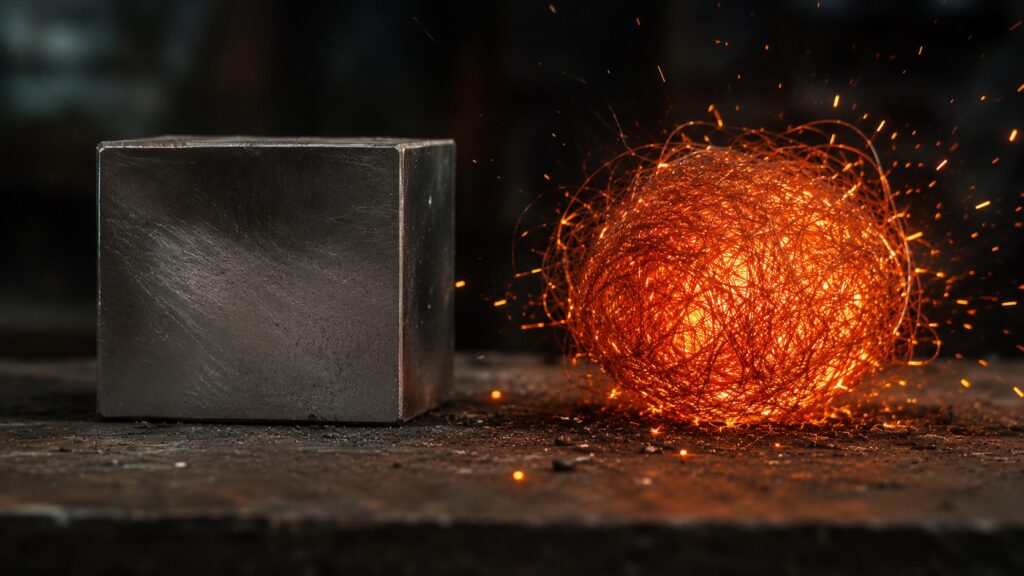
A solid block of steel has relatively little surface area exposed to oxygen compared to its total mass.
This is also why steel often discolors before it ever burns; if you want to understand that heat reaction better, see this guide on why steel changes color when heated.
That matters because combustion is fundamentally a chemical reaction between oxygen and the material being oxidized.
Steel can technically burn, but large solid pieces dissipate heat too efficiently to sustain ignition under normal conditions. The heat spreads through the entire piece faster than the surface can maintain combustion temperature.
You can think of it like trying to light a railroad track with a lighter. The steel absorbs and distributes the heat too quickly.
In real industrial environments, thick steel components usually only reach combustion temperatures during:
- oxy-fuel cutting
- severe grinding sparks
- foundry operations
- furnace failures
- oxygen-rich environments
Even then, ignition is uncommon without concentrated heat and oxygen.
What Makes Steel Wool So Flammable?
Surface Area Changes Everything
Steel wool is made from extremely fine strands of low-carbon steel or iron.
Those tiny fibers massively increase the amount of exposed metal touching oxygen in the air.
A single pad of steel wool contains thousands of thin filaments, which creates dramatically more reactive surface area than a solid steel object of the same weight.
That increased exposure allows oxidation to happen rapidly across many points at once.
The same oxidation principle also explains why different metals corrode differently, especially when comparing iron-based steel with how nonferrous metals rust.
In practical workshop terms, this is similar to why metal grinding dust can become dangerous. The finer the particles become, the easier rapid oxidation occurs.
Thin Fibers Heat Up Extremely Fast
Another major factor is thermal mass.
Each strand of steel wool is so thin that it takes very little energy to raise its temperature to ignition levels.
Once one section starts glowing, heat transfers quickly through neighboring strands. That creates a chain reaction where oxidation spreads throughout the wool.
From real workshop experience, this is similar to how tiny grinding sparks behave. A large steel plate will not ignite from grinding heat, but microscopic hot particles absolutely can.
Oxidation Creates a Self-Sustaining Reaction
Burning steel wool is essentially rapid oxidation.
The reaction combines iron with oxygen to form iron oxide.
4Fe+3O2→2Fe2O3
This oxidation process releases heat, which keeps neighboring strands hot enough to continue reacting.
That is why steel wool glows and spreads combustion even after the initial ignition source is removed.
What Actually Happens When Steel Wool Burns?

When steel wool burns, several things happen almost simultaneously:
- The iron fibers heat rapidly.
- Oxygen molecules bond with exposed iron atoms.
- Oxidation releases additional heat.
- Adjacent strands reach ignition temperature.
- The glowing combustion spreads through the material.
One interesting detail many people do not realize is that burned steel wool can actually become heavier.
That sounds impossible at first, but oxygen atoms are physically added to the iron during oxidation. The resulting iron oxide contains both iron and oxygen mass combined.
In other words, the material is not simply disappearing. It is chemically transforming.
This kind of material change is different from hardness, but in shop work both oxidation and checking metal hardness help you understand how steel behaves under heat and use.
Why Steel Wool Burns Better With Airflow
If you have ever tried burning steel wool, you probably noticed it glows brighter when you blow on it.
That happens because airflow increases oxygen availability.
More oxygen allows oxidation to accelerate faster, which increases heat generation.
In fabrication environments, airflow can dramatically affect combustion behavior around:
- grinding sparks
- fine aluminum dust
- titanium chips
- oily rags
- welding debris
You will usually notice steel wool burns slowly in still air but becomes dramatically more active when exposed to wind or forced airflow.
How to Ignite Steel Wool Safely
Using a Lighter
The simplest method is using a standard lighter.
Fine-grade steel wool usually catches quickly once a small section begins glowing.
For best results:
- pull the wool apart slightly
- avoid compressing it tightly
- expose more fibers to oxygen
- use dry, oil-free wool
Many DIY users accidentally smother the reaction by compacting the steel wool too densely.
Using a 9-Volt Battery
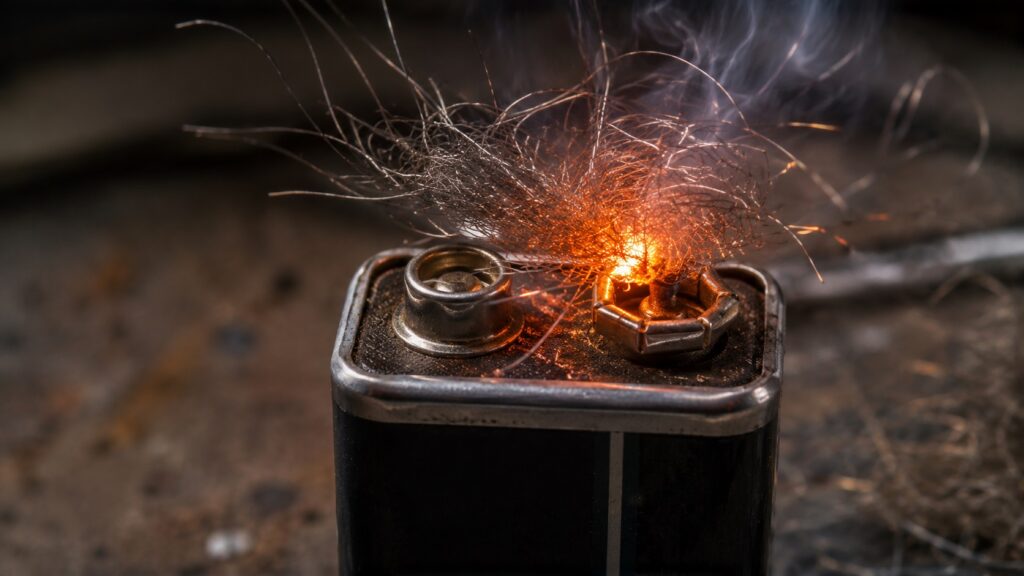
A 9-volt battery works exceptionally well because the terminals sit close together.
When both terminals contact the steel fibers:
- electrical resistance generates heat
- the fibers rapidly glow
- oxidation begins almost instantly
This is a common emergency fire-starting method in survival situations.
One common mistake machinists and DIY users make is using contaminated steel wool. Oily residue, corrosion inhibitors, or moisture can make ignition inconsistent.
Why Some Steel Wool Refuses to Ignite
If steel wool will not burn properly, the problem is usually one of these:
| Problem | Why It Happens | Solution |
|---|---|---|
| Wool too coarse | Thick strands resist heating | Use fine-grade wool |
| Moisture contamination | Water absorbs heat | Dry thoroughly |
| Oily coating | Blocks oxidation | Use clean steel wool |
| Packed too tightly | Reduced airflow | Loosen fibers |
| Stainless wool | Chromium reduces oxidation | Use standard carbon steel wool |
Does Steel Wool Get Lighter or Heavier After Burning?
Counterintuitively, burned steel wool often gains weight.
That is because oxygen atoms become chemically bonded to the iron during combustion.
The resulting iron oxide contains:
- original iron mass
- added oxygen mass
This is a great real-world example of oxidation chemistry in action.
In industrial settings, similar oxidation behavior appears during:
- heavy scaling
- forge overheating
- heat treatment failures
- severe rust formation
Why Fine Steel Wool Burns Better Than Coarse Grades
Fine steel wool burns dramatically easier because the strands are thinner.
Thinner fibers:
- heat faster
- expose more oxygen-reactive area
- sustain oxidation more efficiently
- require less ignition energy
Coarse steel wool has greater thermal mass, so it absorbs and dissipates heat more effectively before combustion can spread.
This same principle appears throughout machining and fabrication.
For example:
- fine titanium chips ignite easier than large chunks
- aluminum dust is more dangerous than solid aluminum
- thin grinding sparks cool differently than thick hot slag
Particle size changes combustion behavior significantly.
Steel composition also matters in real shop work, especially with high-carbon steel tools that react differently to heat, oxidation, and grinding.
Real Workshop Fire Hazards Related to Steel Wool
Oily Steel Wool Can Self-Ignite
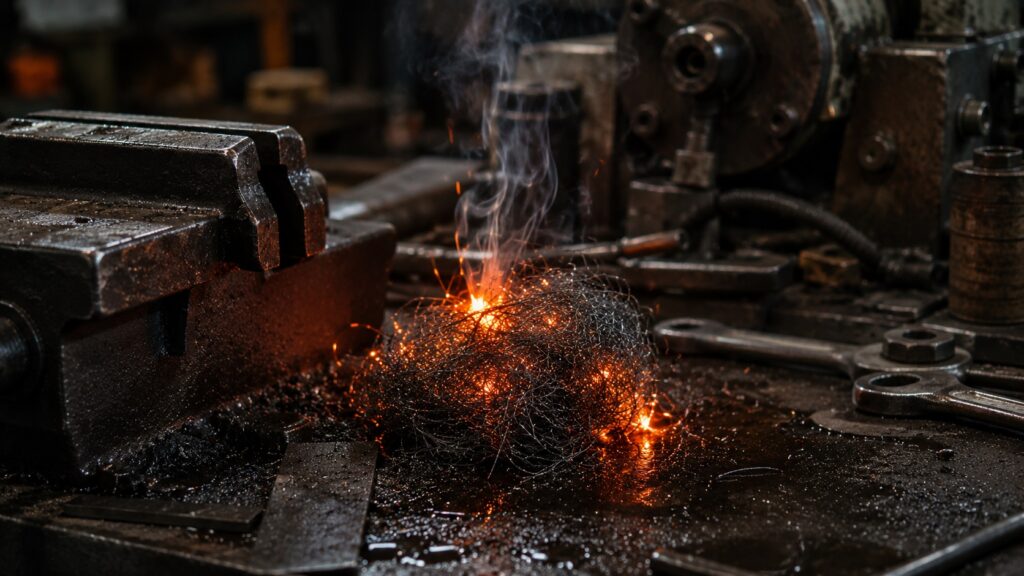
One serious safety issue is oily steel wool.
Steel wool soaked with finishing oils or linseed oil can self-heat through oxidation.
Under the right conditions:
- heat builds internally
- airflow becomes restricted
- temperature rises gradually
- spontaneous ignition becomes possible
In real fabrication shops, oily rags and contaminated steel wool are treated as legitimate fire hazards for this reason.
Similar spark-control habits are used around welding areas, where learning how to reduce welding spatter can also lower cleanup problems and fire risk.
Always store used steel wool in:
- sealed metal containers
- non-combustible areas
- dry conditions away from sparks
Fine Metal Dust Can Become Explosive
Steel wool itself is relatively controlled compared to industrial metal dust.
However, the combustion principle is very similar.
Fine metal particles from:
- aluminum grinding
- titanium machining
- magnesium sanding
- polishing operations
can become explosive when suspended in air.
Many DIY users underestimate how dangerous fine metal particles can become inside enclosed workshops with poor dust extraction.
Heat, oxygen, and metal removal behave differently across processes too, which is why understanding flame cutting vs plasma cutting helps explain how metal reacts under intense heat.
Can Stainless Steel Wool Burn Too?
Yes, but it is usually harder to ignite.
Stainless steel contains chromium, which forms a protective chromium oxide layer.
That chromium content is also why different types of stainless steel behave differently around heat, corrosion, and oxidation.
That oxide layer slows oxidation dramatically compared to regular carbon steel wool.
You will usually notice:
- weaker combustion
- slower glowing
- less spark activity
- harder ignition
This is one reason stainless steel has much better corrosion resistance in general fabrication environments.
Common Mistakes People Make With Burning Steel Wool
| Mistake | Result |
|---|---|
| Using coarse wool | Difficult ignition |
| Burning indoors | Fire hazard |
| Ignoring wind direction | Flying sparks |
| Using oily wool | Unpredictable flames |
| Spinning near dry grass | Wildfire risk |
| Holding wool directly | Burn injuries |
| Using near solvents | Flash fire danger |
One common mistake DIY users make is treating burning steel wool like harmless sparks. In reality, those glowing particles can stay hot long enough to ignite dry materials surprisingly far away.
Professional Tips for Using Steel Wool Safely
From real workshop experience:
- Always keep a fire extinguisher nearby.
- Avoid burning steel wool near grinding dust.
- Never use it around flammable vapors.
- Fine-grade wool works best for demonstrations.
- Perform outdoor experiments on non-combustible surfaces.
- Wet down nearby dry grass before photography projects.
- Inspect the area afterward for smoldering particles.
In fabrication environments, operators become extremely cautious around fine combustible particles because ignition can happen faster than most people expect.
Common Questions About Burning Steel Wool
Why does steel wool burn but solid steel does not?
Steel wool has vastly greater surface area and far lower thermal mass. That allows it to heat rapidly and oxidize fast enough to sustain combustion.
Can steel wool start a real fire?
Yes. Burning steel wool easily ignites:
paper
dry grass
cardboard
sawdust
tinder materials
That is why it is commonly used for emergency fire starting.
Is burning steel wool dangerous indoors?
It can be. Burning particles can travel farther than expected and ignite nearby combustible materials.
Why does steel wool glow instead of producing large flames?
The reaction is primarily surface oxidation occurring directly on the iron fibers. It produces intense heat and glowing embers more than traditional gas-fed flames.
Does all steel wool burn the same way?
No. Fine carbon steel wool burns much easier than coarse or stainless steel wool.
Why does a battery ignite steel wool?
Electrical resistance in the tiny steel strands generates intense localized heat, quickly raising the fibers to ignition temperature.
Final Thoughts
Steel wool burns because its microscopic iron strands completely change how the metal reacts with oxygen.
Instead of behaving like a solid steel bar, the fine fibers heat almost instantly, oxidize rapidly, and sustain combustion through continuous heat generation.
From a workshop perspective, it is also a useful reminder that material size and shape dramatically affect fire behavior. The same metal that feels nearly impossible to ignite in bulk form can become highly combustible once reduced into fine strands, chips, or dust.
That principle shows up constantly in real fabrication environments — especially around grinding operations, polishing dust, and fine machining debris.