
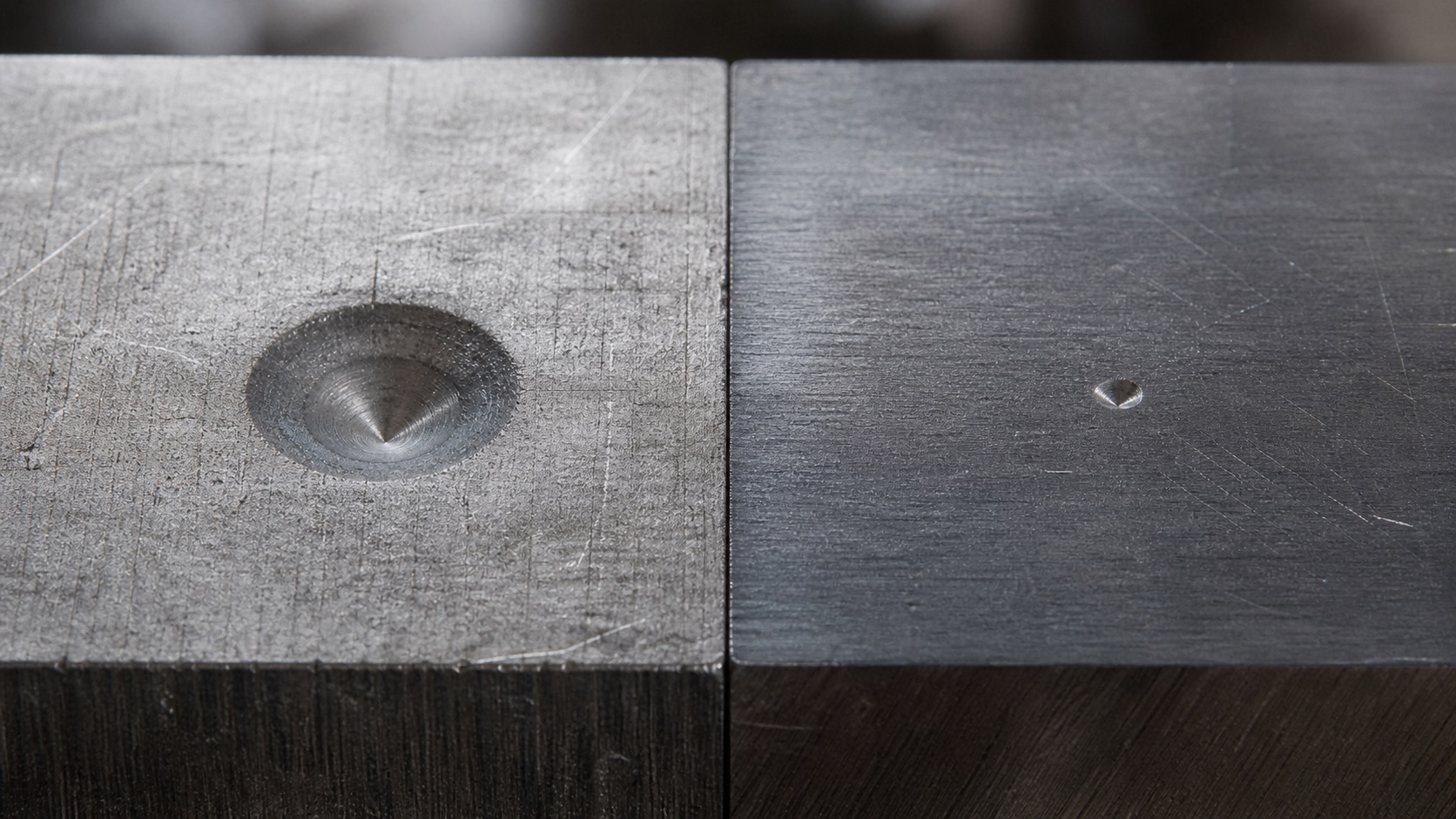
How to check the hardness of metal is something many people get wrong.
Most people try to guess metal hardness—and get it completely wrong.
They scratch it, hit it with a file, or judge it by color. The problem is simple:
if you use the wrong method, you get the wrong result.
If you actually want a reliable answer, you need to use the right hardness testing method for the situation.
For example, heat treatment processes like annealing can significantly affect metal hardness.
You can check the hardness of metal using a Rockwell hardness test, Brinell hardness test, Vickers hardness test, Knoop microhardness test, a portable hardness tester (Leeb), or simple shop methods like hardness files and scratch testing. For accurate industrial measurements, Rockwell is the most common. For fast workshop decisions, file tests and portable testers are often more practical.
Checking Hardness Without a Machine
In real machine shops, hardness is often checked before any lab test is used.
You can estimate hardness using:
- Hardness files with known HRC values
- File “bite vs skate” method
- Scratch comparison
These methods are not as accurate as a Rockwell hardness test, but they are fast, inexpensive, and widely used to verify heat treatment or compare materials.
Why Hardness Tests Fail
Many incorrect readings come from basic mistakes:
- Using the wrong hardness testing method
- Testing dirty, coated, or oxidized surfaces
- Measuring material that is too thin
- Choosing the wrong Rockwell scale
- Poor support under the part
- Using a portable hardness tester on small parts
- Relying on scratch testing for precision
Choosing the Right Hardness Test for the Material
| Material Type | Recommended Test |
|---|---|
| Thin sheet metal | Vickers or Knoop |
| Thick hardened steel | Rockwell (HRC) |
| Castings and rough materials | Brinell |
| Large installed parts | Portable hardness tester (Leeb) |
| Tools and blades | Hardness file test |
What Metal Hardness Means in Practice
Metal hardness is the resistance to:
- Indentation
- Scratching
- Plastic deformation
In real applications:
- Harder metals resist wear better
- Softer metals absorb impact better
Hardness is strongly affected by heat treatment processes such as annealing and hardening, which can significantly change the structure and performance of steel.
How to Check the Hardness of Metal (Step-by-Step Guide)
- Identify the material type
- Check thickness and surface condition
- Choose the correct hardness testing method
- Prepare the surface (clean, flat, smooth)
- Perform the test properly
- Interpret the result based on the correct scale
This process is what separates reliable measurements from guesswork.
Rockwell Hardness Test
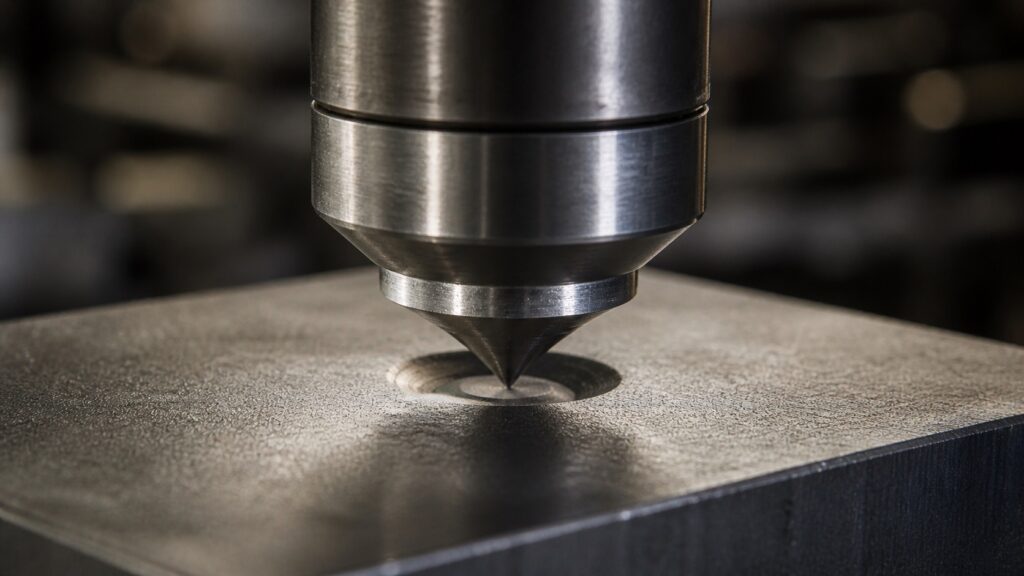
In production environments, the Rockwell hardness test is the most widely used method.
It measures the depth of indentation under a minor and major load using a diamond or ball indenter.
- HRC scale → hardened steel
- HRB scale → softer metals
Best used for:
- Heat-treated parts
- Tool steel
- Machined components
This is especially important when working with heat-treated steel in machining applications.
Limitation:
- Requires sufficient thickness
- Sensitive to support and setup
In real machine shops, improper support causes more inaccurate readings than machine errors.
Brinell Hardness Test
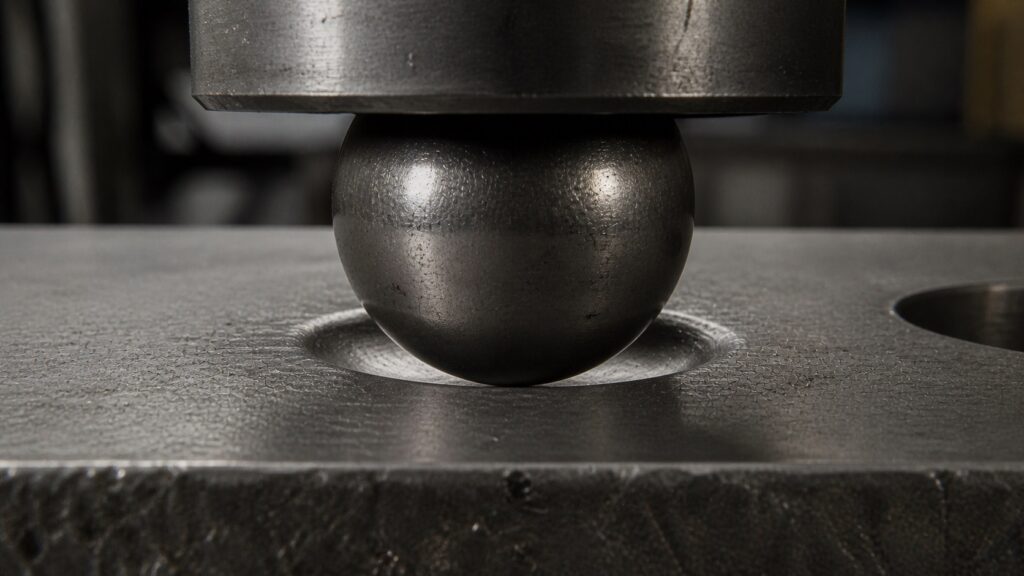
The Brinell hardness test uses a hardened ball and measures indentation diameter.
It is commonly used in:
- Foundries
- Heavy steel fabrication
- Cast iron components
This is similar to how different metal types behave under load and stress.
Why it works well:
- Averages hardness over a larger surface area
- Handles non-uniform materials better
Limitation:
- Leaves a visible indentation
- Not suitable for hardened steel
Vickers Hardness Test
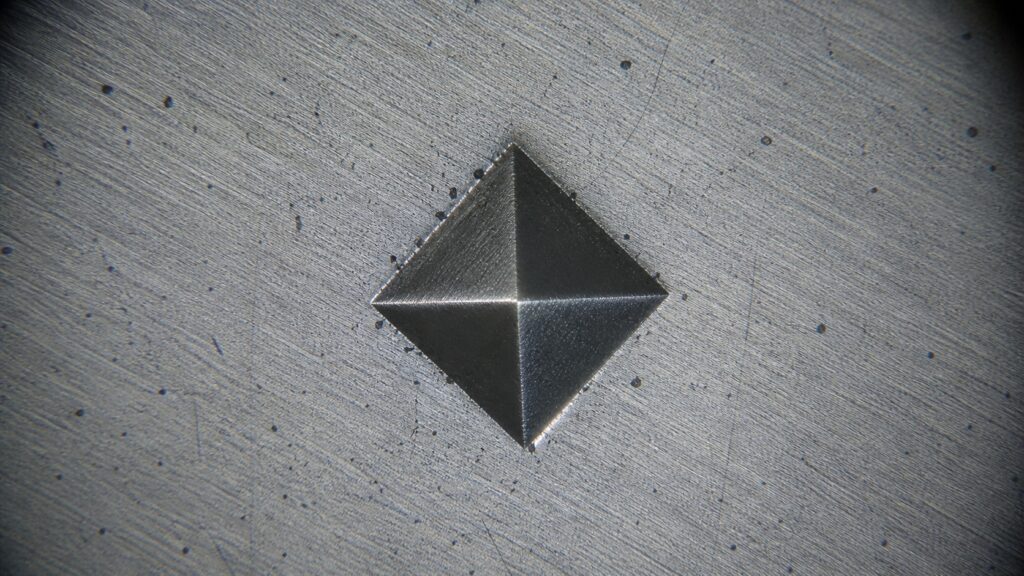
The Vickers hardness test uses a diamond pyramid indenter and measures indentation diagonals.
In welding inspection, this method is commonly used to analyze:
- Weld metal
- Heat-affected zones (HAZ)
This is critical when evaluating welding quality and structural integrity.
Advantages:
- Very high precision
- Works on thin materials and small areas
Limitation:
- Slower than Rockwell
- Requires optical measurement
Knoop Hardness Test
The Knoop hardness test is similar to Vickers but produces a shallower indentation.
It is mainly used for:
- Thin coatings
- Brittle materials
- Microhardness analysis
Less common in general workshop use.
Portable Hardness Tester (Leeb)
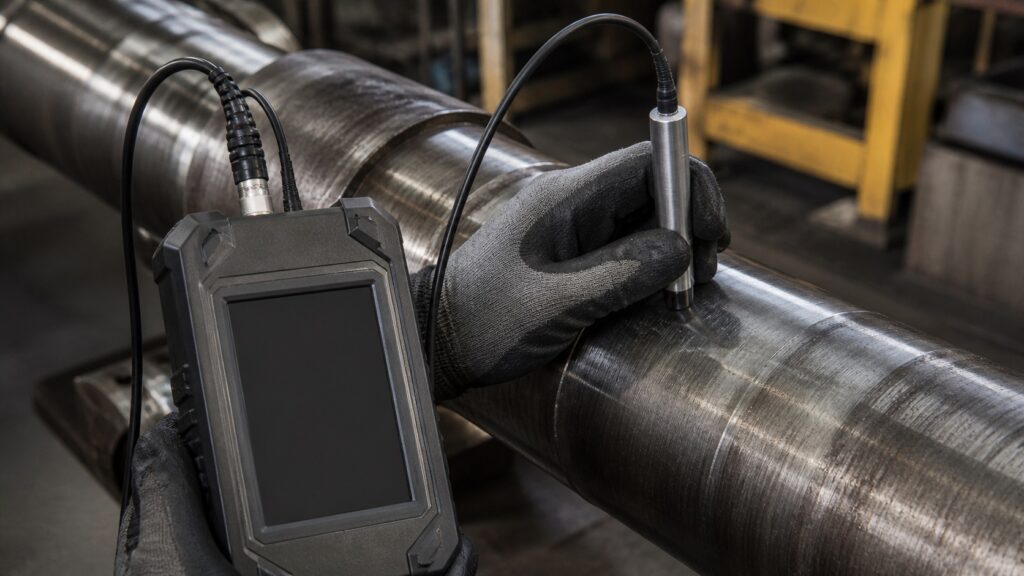
Portable hardness testers measure rebound velocity.
In field inspection, they are used for:
- Large shafts
- Installed machinery
- Heavy equipment
Advantages:
- Portable
- Fast
Limitations:
- Requires sufficient mass
- Sensitive to surface condition
Hardness File Test
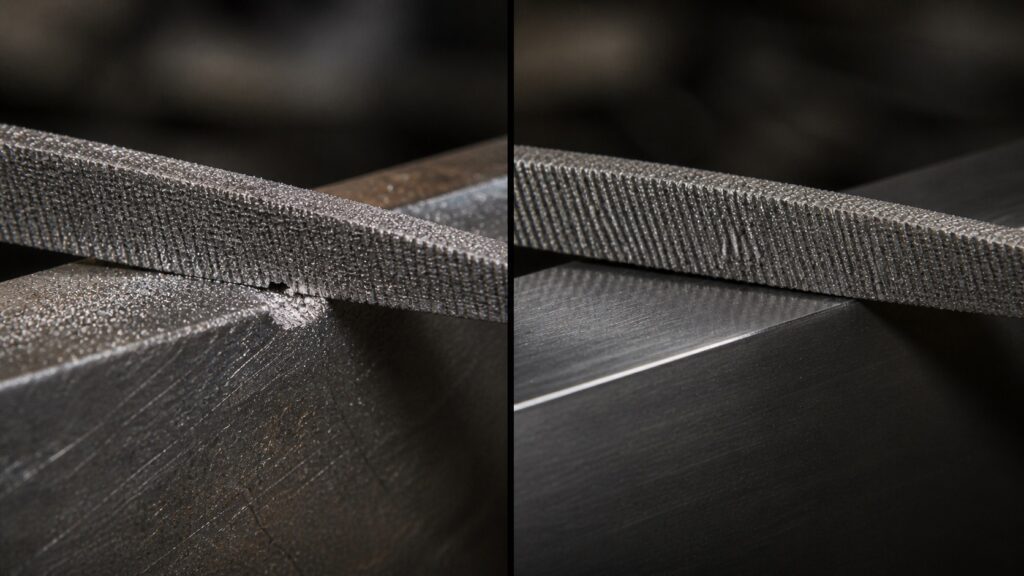
In real machine shops, hardness files are often used before confirming results with a Rockwell hardness test.
Each file corresponds to a known hardness level.
- File bites → material is softer
- File skates → material is harder
Best used for:
- Blades
- Tools
- Heat-treated steel
This method is not laboratory-accurate but extremely practical.
Scratch Testing
Scratch testing compares relative hardness by observing which material scratches another.
Useful for:
- Quick comparisons
This method is sometimes used when trying to identify unknown metal types.
Limitations:
- Not precise
- Not suitable for engineering decisions
Checking if Steel Is Hardened
Without a machine, you can use:
- File test
- Hardness file set
- Comparison with known materials
Spark testing can provide supporting information, but it does not directly measure hardness.
Appearance alone is not reliable.
Common Mistakes in Hardness Testing
- Testing too close to edges
- Ignoring surface preparation
- Measuring case hardness instead of core hardness
- Assuming one test represents the entire part
- Using the wrong scale or method
These issues are common even in experienced shops.
Which Hardness Test Is Most Accurate
Accuracy depends on the application:
- Vickers and Knoop → highest precision for small areas
- Rockwell → best for fast industrial testing
- Brinell → best for cast and non-uniform materials
The setup and preparation often matter more than the method itself.
Converting Between Hardness Scales
Conversions between Rockwell, Brinell, and Vickers are possible using tables.
However:
- They are approximate
- Depend on material type
- Depend on heat treatment
Conversions should not replace direct testing for critical applications.
Real-World Examples
- Knife blade → file test, then Rockwell verification
- Unknown steel → file test followed by Rockwell
- Aluminum plate → Brinell hardness test
- Large shaft → portable hardness tester
- Weld inspection → Vickers hardness test
- Cast iron → Brinell hardness test
Hardness, Strength, and Toughness
- Hardness → resistance to wear and indentation
- Strength → resistance to deformation
- Toughness → resistance to cracking
A harder metal is not always better—it depends on the application.
Common Questions About Metal Hardness Testing
How can I test metal hardness at home?
Using hardness files or a file test.
What is the easiest way to check if steel is hardened?
The file test—if the file skates, the steel is hardened.
What hardness is typical for steel?
Mild steel is relatively soft, while hardened steel can reach high HRC values.
What does HRC 60 mean?
It indicates very hard steel, commonly used for cutting tools and blades.
Can hardness vary in the same part?
Yes, especially with case hardening or welding.
Is Rockwell better than Brinell?
It depends on the application. Rockwell is faster, Brinell is better for cast materials.
Can hardness testing damage the part?
Yes, most methods leave an indentation.
How to Check the Hardness of Metal Correctly
If you want to understand how to check the hardness of metal correctly, the key is choosing the right method for the job.
This is also essential in machining and production environments.
- Best accuracy → Rockwell or Vickers
- Field testing → portable hardness tester
- Quick workshop checks → hardness files
- Cast materials → Brinell
- Thin or welded areas → Vickers or Knoop
The correct choice always depends on:
- Material type
- Thickness
- Surface condition
- Required accuracy
Using the right method is what turns a guess into a reliable measurement. This is the same approach used in real-world metalworking and industrial testing.