
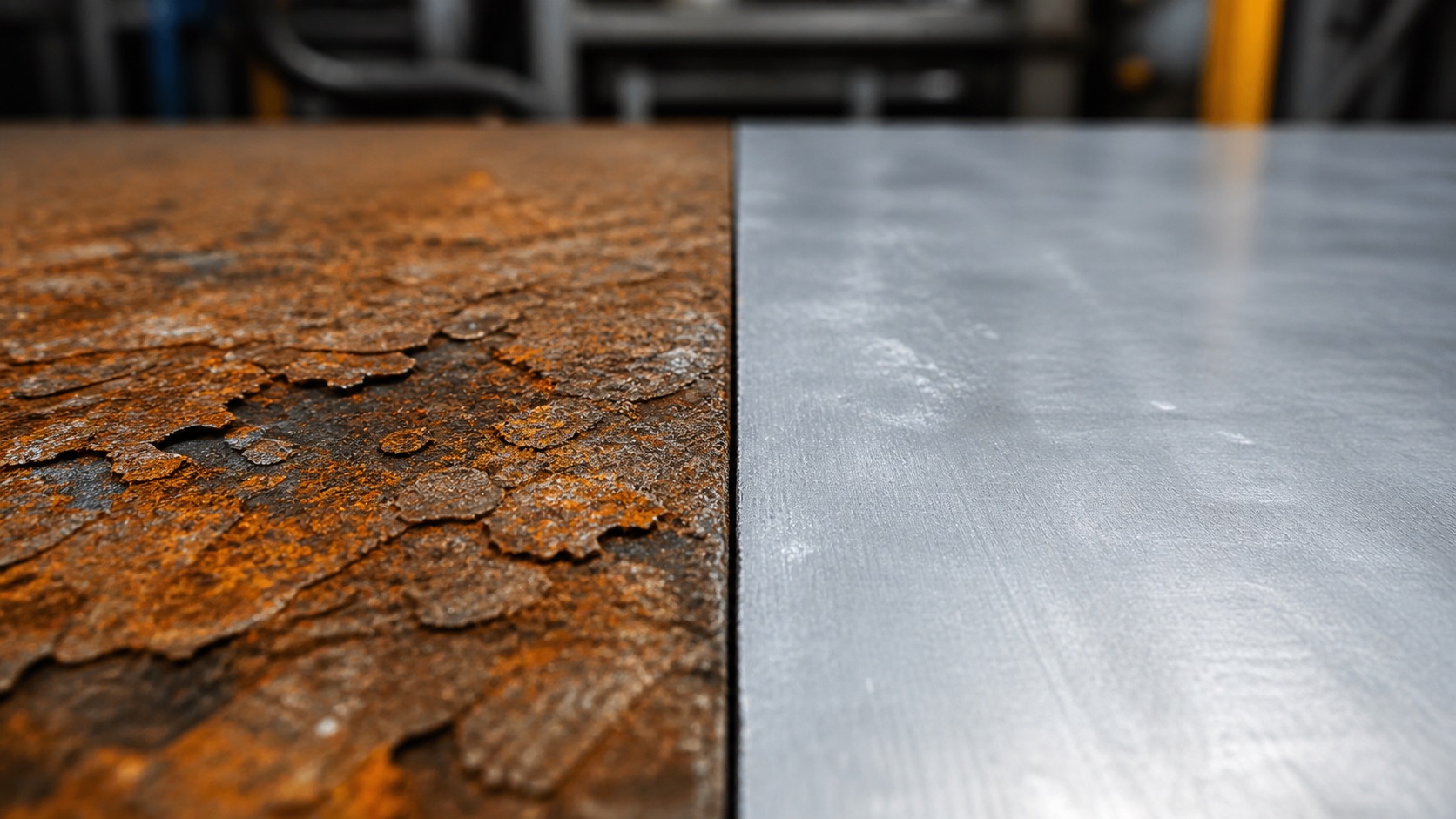
Do nonferrous metals rust? No—because rust requires iron, and these metals typically contain less than 1% iron by weight. Instead, they form stable oxide layers that protect against further damage. While they resist rust entirely, they can still corrode under specific environmental conditions.
This difference becomes especially important in engineering decisions, where choosing the wrong material based on a misunderstanding of corrosion behavior in different metals can lead to costly or even dangerous failures.
This is why many people mistakenly think aluminum or titanium can “rust”—because surface oxidation or corrosion can sometimes look like rust at first glance.
In real-world use, this distinction often determines whether a material lasts for decades or fails within months.
What Rust Actually Is
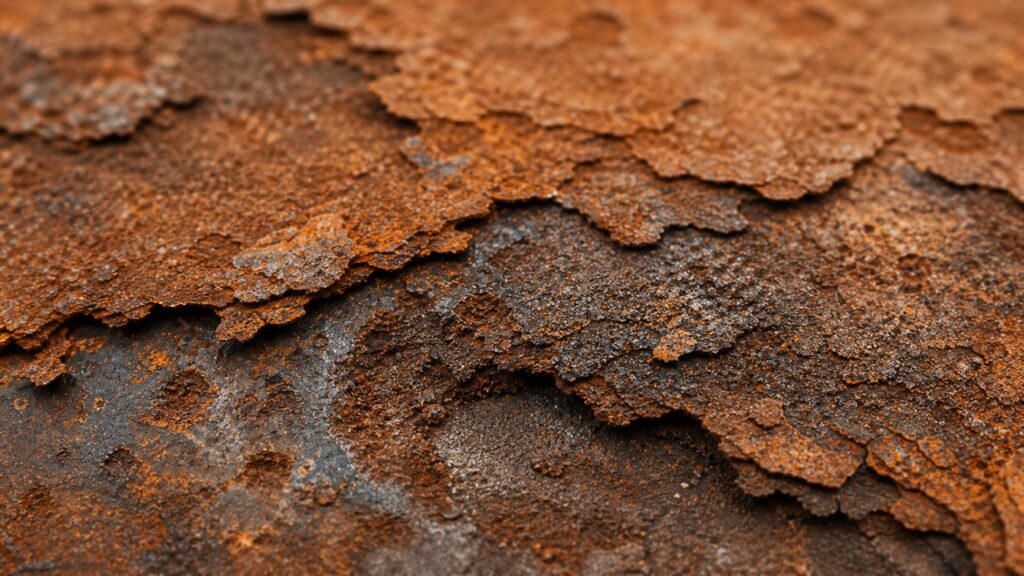
Rust is not just general surface damage or discoloration. It is a specific chemical reaction where iron combines with oxygen and moisture to form iron oxide (rust).
This process weakens the material over time, creating a flaky, brittle layer that continuously exposes fresh metal underneath. That’s why rust spreads and accelerates if left untreated.
For rust to occur, three elements must be present:
- Iron
- Oxygen
- Water or moisture
Remove iron from the equation, and true rust cannot form. This is the key difference that separates ferrous metals like steel and nonferrous metals in real-world applications.
Do Nonferrous Metals Rust or Corrode?
No—nonferrous metals do not rust.
This includes aluminum, titanium, copper, brass, and zinc. Technically, a metal is classified as nonferrous when it contains little to no iron—typically less than about 1% by weight. Since they lack iron, they cannot undergo the oxidation process that produces rust.
However, they can still corrode. This is where confusion often arises. In everyday language, people use “rust” to describe any kind of metal degradation, but in metallurgy, rust is a very specific subset of corrosion.
In industrial environments, this misunderstanding can lead to poor material selection. Choosing a “non-rusting” metal without understanding its actual corrosion behavior can still result in premature failure.
Why Nonferrous Metals Don’t Rust
The reason is simple at the surface level, but more important in how these materials behave over time.
Nonferrous metals do not rust because:
- No iron content — rust chemistry cannot occur
- Protective oxide formation — stable surface layer develops
- Strong adhesion — oxide bonds tightly to the base metal
- Self-limiting reaction — corrosion slows after layer formation
Unlike rust on steel, which flakes away and exposes fresh material, these oxide layers act as a protective barrier.
From experience in workshop environments, this is one of the most visible differences between material types. Steel degrades progressively, while aluminum or titanium often stabilizes after initial exposure.
Does Aluminum Rust or Just Oxidize?
A common question is: does aluminum rust?
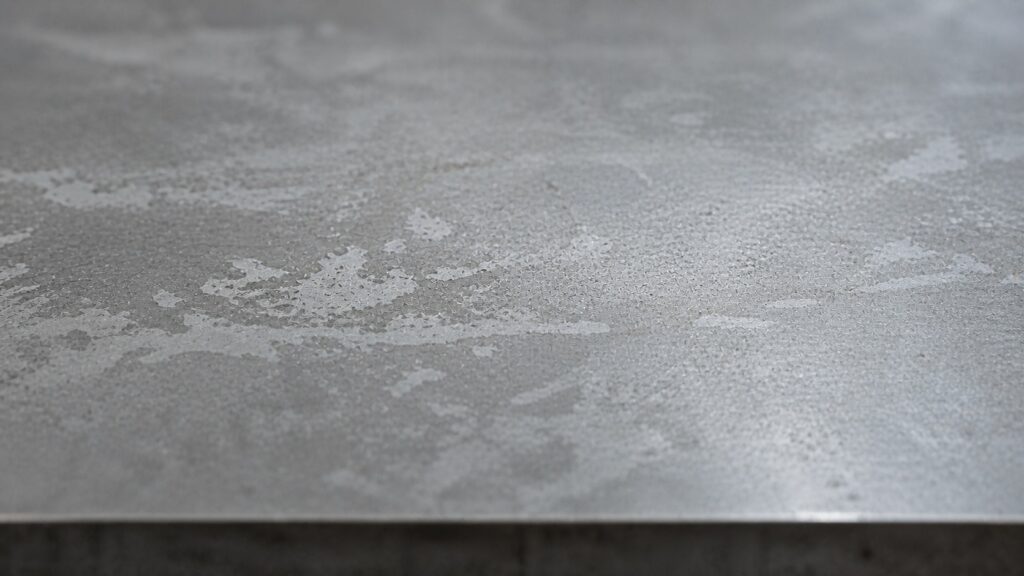
Aluminum does not rust, but it oxidizes almost instantly when exposed to air—especially when the material hasn’t been properly treated through processes like aluminum annealing. This oxidation is a form of corrosion—but a controlled and protective one.
When aluminum reacts with oxygen, it forms a thin aluminum oxide (Al₂O₃) layer that is amorphous and non-porous. This is a critical detail: unlike iron oxide (Fe₂O₃), which is porous and allows continued degradation, aluminum oxide seals the surface and prevents oxygen from penetrating deeper.
This layer:
- Forms within seconds
- Is hard and stable
- Bonds tightly to the base metal
In real workshop conditions, freshly machined aluminum quickly loses its bright finish. That dulling is not damage—it’s protection forming in real time.
However, aluminum’s weakness appears in chloride-rich environments, especially when structural integrity is affected by poor joining methods such as improper aluminum welding. Salt can locally break down the oxide layer, creating tiny active sites where corrosion accelerates. This is why pitting corrosion occurs—small, deep attacks that can compromise structural integrity without obvious surface warning.
Does Titanium Rust? Understanding Its Corrosion Resistance
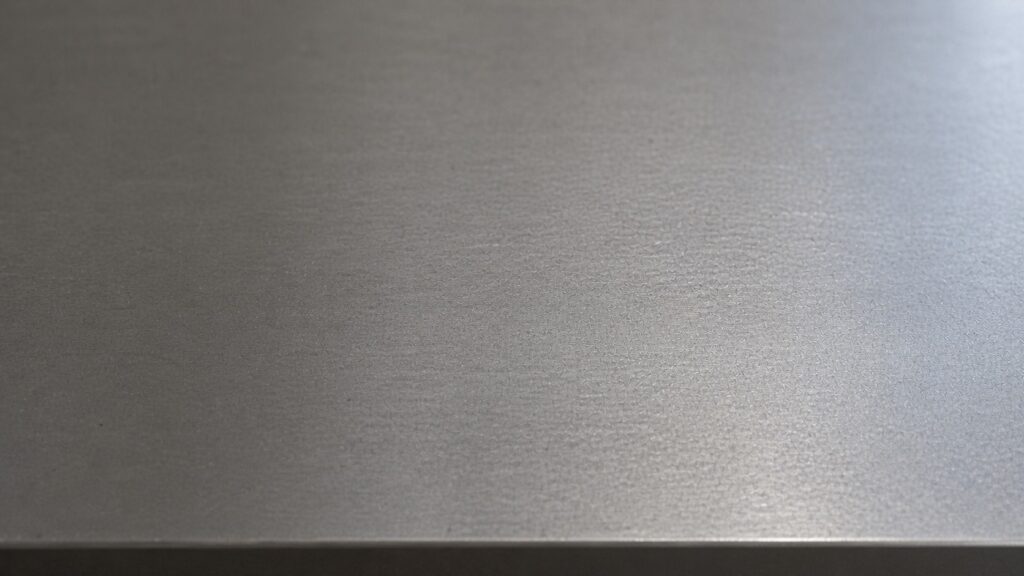
Does titanium rust? No—and it is one of the most corrosion-resistant structural metals available.
Titanium forms a titanium dioxide (TiO₂) layer that is typically about 1.5 to 10 nanometers thick, yet extremely effective. This layer is:
- Extremely stable
- Resistant to chemicals and saltwater
- Capable of reforming instantly if damaged
In industrial environments, especially where precision processes like CNC machining are used, this makes titanium ideal for extreme conditions, including marine systems and chemical processing equipment.
From experience, titanium components can operate in environments that rapidly destroy standard steel.
That is why titanium is often selected not because it is cheap or easy to machine, but because its corrosion resistance justifies the cost in demanding applications.
Rust vs Corrosion: What’s the Real Difference?
Rust is iron-specific oxidation; corrosion is the broader process of material degradation due to chemical or electrochemical reactions.
In other words, all rust is corrosion, but not all corrosion is rust.
Corrosion includes oxidation in aluminum, tarnishing in copper, and galvanic reactions between different types of metals. In practice, many failures occur not because a metal is weak, but because its corrosion mechanism is misunderstood.
Real-World Applications and Examples
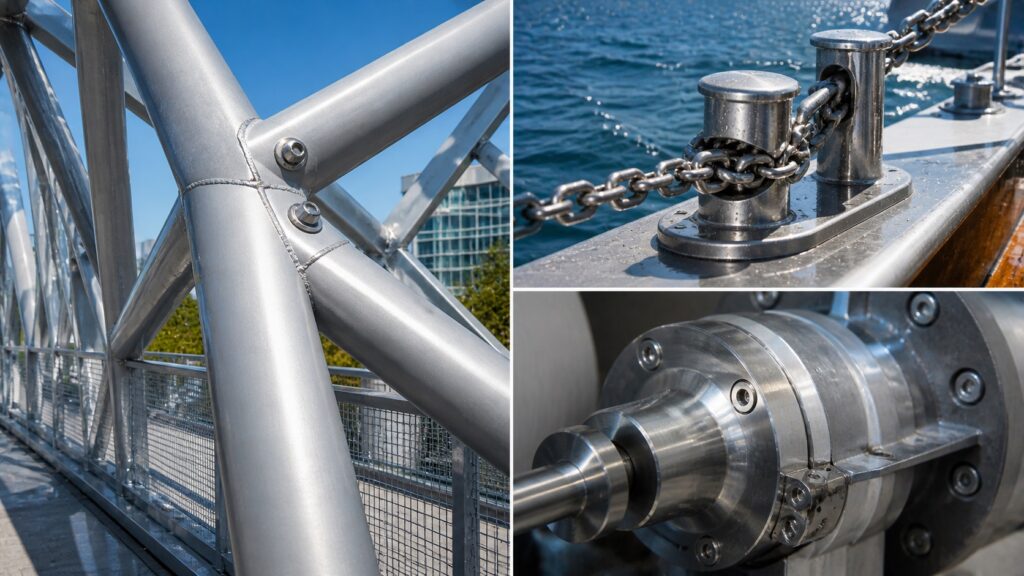
Nonferrous metals are widely used because they resist rust and manage corrosion effectively.
In most industrial applications, these materials are selected specifically because they avoid the destructive, progressive behavior seen in rusting steel.
Aluminum is common in construction, transportation, and outdoor applications due to its strength-to-weight ratio and natural corrosion resistance, especially when combined with proper metal cutting techniques.
Titanium is used in high-performance environments where reliability is critical, such as aerospace, marine systems, and medical implants.
Other Nonferrous Metals: Copper and Nickel
Copper does not rust. Instead, it forms a green patina over time—a stable corrosion layer that protects the underlying material.
Nickel is also highly corrosion-resistant and is often used in alloys or as a protective coating in harsh environments.
Unique Properties That Matter in Engineering
Many nonferrous metals are non-magnetic, which is essential in aerospace, electronics, and precision systems.
They also offer high electrical conductivity. From experience, copper and aluminum are chosen not just for corrosion resistance, but because they efficiently carry electrical current in real-world systems.
Corrosion Behavior of Common Metals
This quick comparison shows how different metals resist corrosion and why nonferrous metals outperform steel in many environments.
| Metal | Corrosion Resistance | Magnetic | Protective Layer | Common Applications |
|---|---|---|---|---|
| Aluminum | High | No | Aluminum Oxide (Al₂O₃) | Aerospace, automotive, structures |
| Titanium | Very High | No | Titanium Dioxide (TiO₂) | Aerospace, medical implants |
| Copper | Moderate | No | Patina (Cu compounds) | Electrical wiring, roofing |
| Steel | Low (unprotected) | Yes | Rust (Iron Oxide) | Construction, machinery |
This comparison highlights why nonferrous metals are preferred in environments where long-term corrosion resistance is critical.
When Nonferrous Metals Can Still Fail
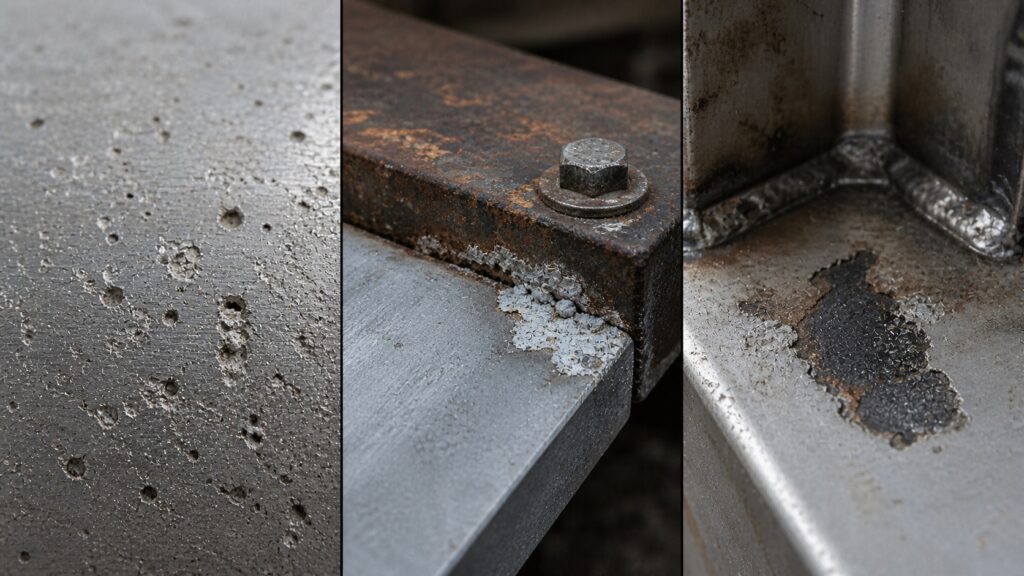
Even without rust, these metals can still fail under certain conditions.
- Pitting corrosion — localized attack in chloride environments that can penetrate deeply
- Stress corrosion cracking — cracking under combined stress and chemical exposure
- Galvanic corrosion — accelerated degradation when dissimilar metals are electrically connected
- Erosion-corrosion — material loss due to fluid flow and mechanical wear
A practical example is galvanic corrosion. When aluminum is paired with stainless steel fasteners in a wet environment, the aluminum corrodes preferentially, weakening the joint over time.
From experience, this is one of the most common hidden failure modes in mixed-metal assemblies.
Workshop Note: In wet environments, aluminum connected to stainless steel creates a galvanic cell. Without insulation, the aluminum sacrifices itself, often leading to joint failure before the main structure shows visible damage.
Misunderstanding corrosion behavior doesn’t just reduce lifespan—it can lead to sudden and unexpected structural failure.
How to Prevent Corrosion in Nonferrous Metals
Even corrosion-resistant materials require proper design and protection.
Key strategies include:
- Applying coatings or anodizing processes, especially for aluminum
- Avoiding direct contact between dissimilar metals
- Designing for drainage to eliminate trapped moisture
- Selecting the correct alloy for the operating environment
From experience, corrosion problems are rarely caused by the base metal alone. Design choices and environmental exposure play a much larger role, often requiring validation through methods like metal hardness testing.
Pro Tip: Surface Finish Matters
In workshop practice, surface finish directly affects oxide layer formation. Polished aluminum surfaces form more uniform oxide layers, while rough or bead-blasted surfaces increase surface area, which can accelerate localized corrosion in aggressive environments.
Do Nonferrous Metals Rust? FAQs
Do nonferrous metals rust or corrode?
They do not rust because they contain no iron. However, they can corrode through mechanisms such as oxidation, pitting, or galvanic reactions.
Does aluminum rust over time?
No. Aluminum oxidizes instead, forming a protective layer that limits further corrosion.
Can titanium rust in extreme conditions?
No. Titanium remains highly resistant due to its stable, self-healing oxide layer.
Why do people confuse rust with corrosion?
Because visible surface changes can look similar, even though the underlying chemical processes are different.
Are nonferrous metals completely corrosion-proof?
No. They resist degradation but can still fail under specific environmental or design conditions.
Are nonferrous metals recyclable?
Yes. They can be recycled repeatedly without losing their chemical or mechanical properties, making them highly valuable in sustainable manufacturing.
Final Answer: Do Nonferrous Metals Rust?
Nonferrous metals do not rust because they contain no iron, making rust formation impossible. Instead, they rely on stable oxide layers to protect themselves from further degradation.
Aluminum forms a fast, protective oxide layer, while titanium provides exceptional resistance through a highly stable and self-healing surface. Other metals like copper and nickel follow similar protective mechanisms.
The key takeaway is simple: they don’t rust—but misunderstanding how they corrode is where real failures begin.