
What Kind of Metal Are Railroad Spikes Made From? (Quick Answer)
Most people think railroad spikes are high carbon steel — but that’s completely wrong.
When you ask what kind of metal are railroad spikes made from, the real answer is this: they are made from low to medium carbon steel, typically containing 0.1% to 0.4% carbon. They’re engineered for toughness and flexibility, not hardness — meaning they bend under stress instead of snapping.
What Happens When You Actually Work With Railroad Spikes?
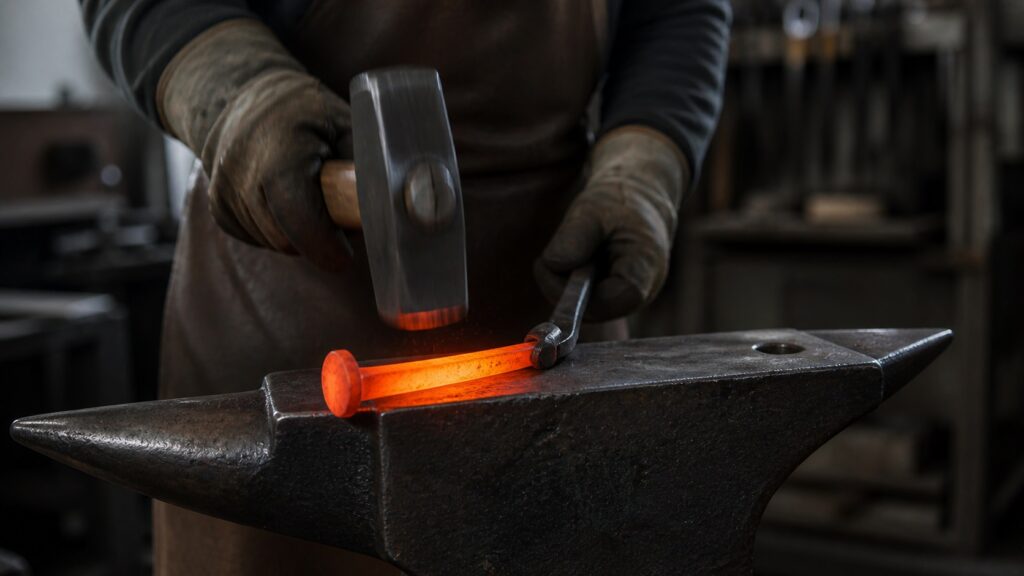
I’ve hammered dozens of railroad spikes on the anvil — drawing them out, twisting them, even trying to force them into knife shapes just to see their limits.
And one thing becomes obvious fast:
They don’t behave like high carbon steel.
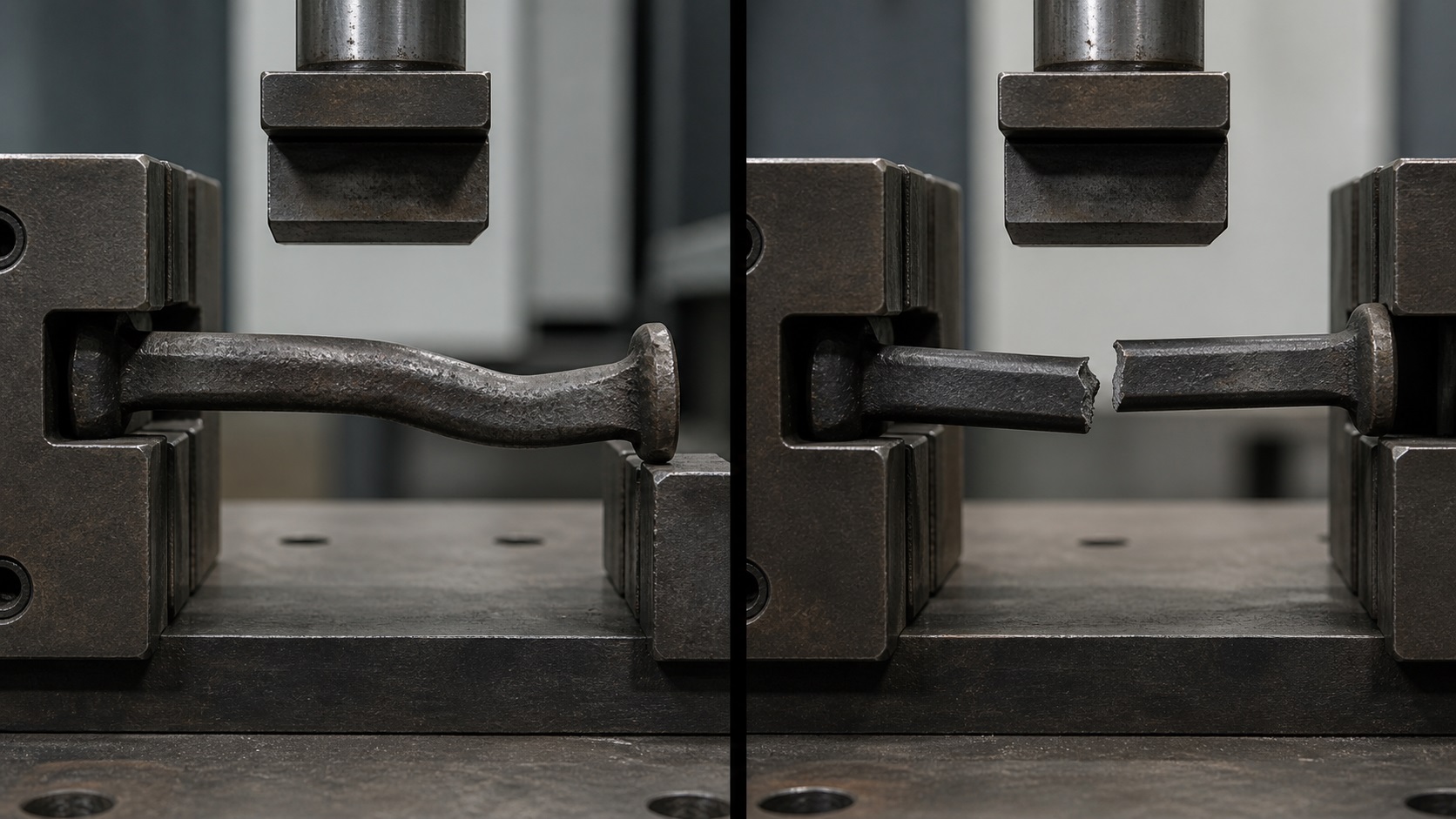
They move too easily. They don’t resist the hammer the way 1095 does. And when you test them — really test them — they bend long before they even think about breaking.
Ever tried bending one cold in a vise? That alone tells you everything.
These things are built to survive abuse, not hold an edge.
I’ve even quenched a few out of curiosity. The result? Slight hardening at best — nowhere near what you’d expect from true high carbon steel.
Railroad Spike Material Types and Carbon Content (Quick Table)
| Type | Carbon % | Properties | Use |
|---|---|---|---|
| Low Carbon Steel | ~0.1–0.2% | Soft, ductile, bendable | Most spikes |
| Higher Carbon (HC) | ~0.3–0.4% | Slightly stronger, still tough | Curves / heavy-load tracks |
| Structural Steel (A36 Equivalent) | ~0.25% | Tough, impact-resistant | General railroad use |
What Metal Are Railroad Spikes Made From? (Detailed Explanation)
Railroad spike material is defined by standards like ASTM A65, which prioritize mechanical performance over hardness.
The key idea is simple:
Spikes must absorb energy — not resist it rigidly.
They are designed for:
- Continuous vibration
- Heavy cyclic loading
- Thermal expansion and contraction
Why Are Railroad Spikes Not Made from High Carbon Steel?
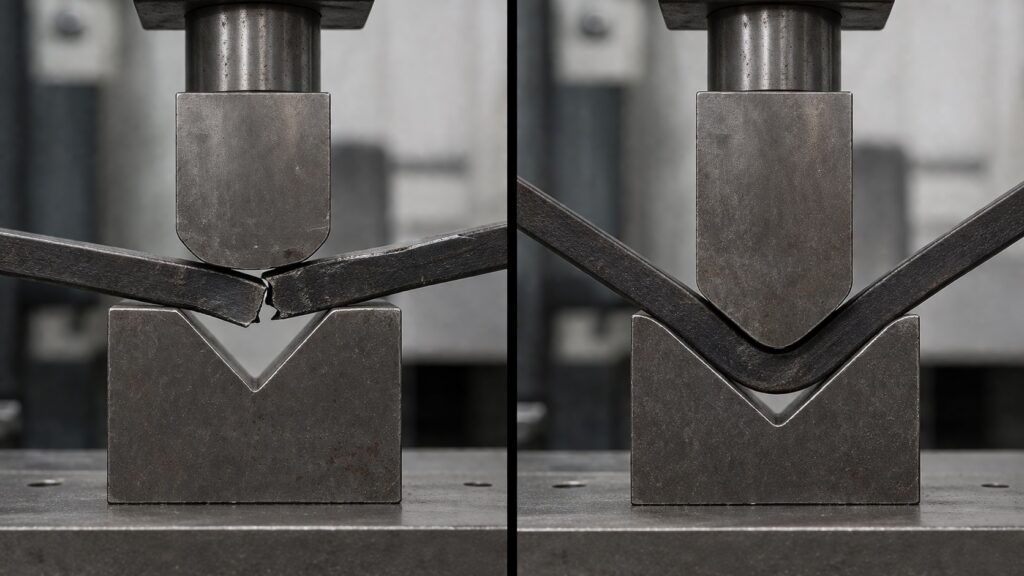
High carbon steel (like 1095) sits around ~0.9% carbon. That makes it:
- Very hard
- Wear-resistant
- But brittle under shock
Now picture that in a railroad spike.
Every passing train introduces:
- Impact forces
- Lateral movement
- Repeated stress cycles
If spikes were brittle, they would:
- Crack internally
- Fail without warning
- Potentially cause derailments
This is where most people get it wrong.
Railroad Spike Carbon Content vs Other Steels (Comparison)
| Steel Type | Carbon % | Behavior |
|---|---|---|
| Railroad Spike | 0.1–0.4% | Tough, ductile |
| 1045 Steel | ~0.45% | Medium strength |
| 1095 Steel | ~0.95% | Hard, brittle |
That difference isn’t small — it’s the entire point of the design.
What Would Happen If Railroad Spikes Were High Carbon Steel?
Let’s make it real for a second.
If railroad spikes were made from high carbon steel:
- Microcracks would form under vibration
- Those cracks would grow over time
- Eventually, the spike would snap — not bend
And when a spike snaps:
- Rail alignment loosens
- Track stability drops
- Derailment risk increases dramatically
Railroads don’t tolerate “maybe it’ll hold.”
They design for predictable deformation, not catastrophic failure.
Are Railroad Spikes High Carbon Steel? (No — Here’s Why)
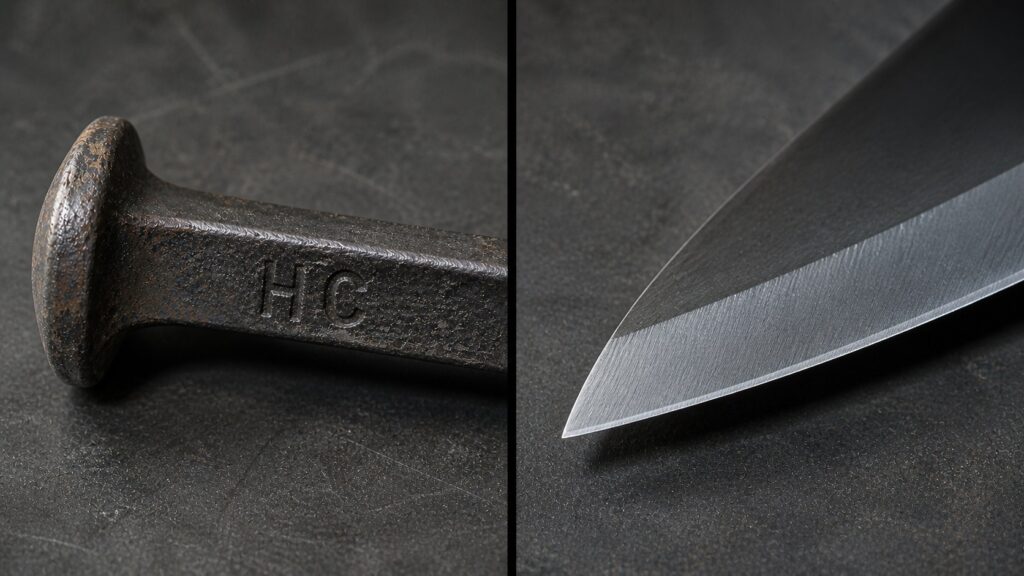
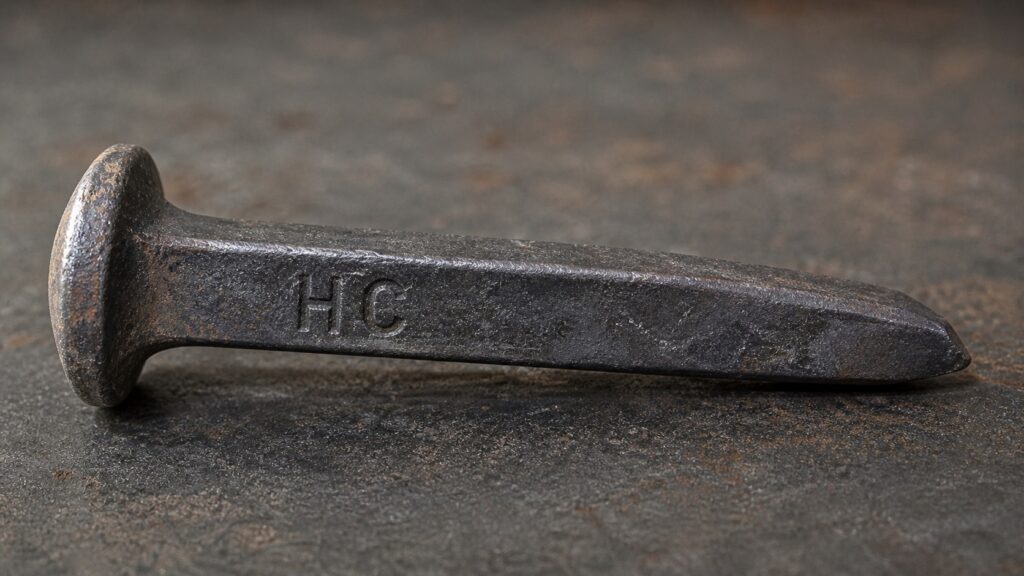
You’ve probably seen spikes stamped with “HC” and assumed it means high carbon.
It doesn’t.
What “HC” Actually Means
HC stands for “Higher Carbon” within railroad specifications.
That typically means:
- Around 0.30%–0.40% carbon
- Still far below knife-grade steel
Here’s what actually happens in real life:
Even HC spikes:
- Won’t harden like blade steel
- Won’t hold an edge long
- Still behave like tough structural steel
Why This Myth Won’t Die
Simple:
- “Railroad spike knife” sounds cool
- It’s popular on YouTube
- It’s visually appealing
But performance-wise?
It’s not even close to real knife steel.
Can You Make Knives from Railroad Spikes?
Short answer: You can — but they’re not good knives.
I’ve forged them. Heat treated them. Tested them.
They look great.
But:
- Edge retention is poor
- Hardness is limited
- They dull quickly
Even HC spikes can’t compete with steels like:
- 1084
- 1095
- D2
If you’re learning forging, they’re fantastic.
If you heat and forge spike steel often, it also helps to understand why steel changes color when heated, because color can give clues about temperature during basic shop work.
Better Uses for Railroad Spikes
Where they actually shine:
- Hooks
- Bottle openers
- Decorative forged items
- Basic tools that don’t rely on edge retention
They’re forgiving, cheap, and great for practice.
How Railroad Spike Steel Behaves in Forging and Machining
From a workshop perspective, railroad spike material behaves very similar to mild steel.
- Easy to forge
- Low cracking risk
- Wide temperature range
- Very forgiving under the hammer
If you’ve ever worked with rebar steel, you’ll notice the same kind of response — both materials prioritize ductility over hardness. For a deeper comparison, see our guide on what kind of metal rebar is.
And when heat is involved, the behavior stays predictable. Temperature control still matters in any metalworking process — just like it does when welding aluminum affects strength — but railroad spikes are far more forgiving.
If you want to soften the spike before drilling, cutting, or forging, annealing metal before working it can help reset the structure and make the steel easier to shape.
Why Aren’t Railroad Spikes Made from Stainless Steel?
Good question — and it comes up more often than you’d think.
At first glance, stainless steel seems like a better option:
- Corrosion resistant
- Strong
- Durable
But in real-world railway conditions, it’s not ideal.
The Real Trade-Off
1. Cost
Stainless steel is significantly more expensive. Multiply that across millions of spikes, and the cost becomes impractical.
2. Mechanical Behavior
Stainless steels:
- Can be stronger
- But are often less forgiving under cyclic loading
Railroad spikes need:
- Slight deformation
- Energy absorption
- Predictable behavior over time
3. Corrosion Reality
Railroads already manage corrosion through:
- Coatings
- Maintenance cycles
They don’t need full stainless performance.
For comparison, different types of stainless steel behave very differently depending on composition — and most of them simply don’t match the cost-performance balance needed for railroad spikes.
So carbon steel wins.
Not because it’s “better” — but because it’s perfect for the job.
Railroad Spike Steel vs Rebar Steel (What’s the Difference?)
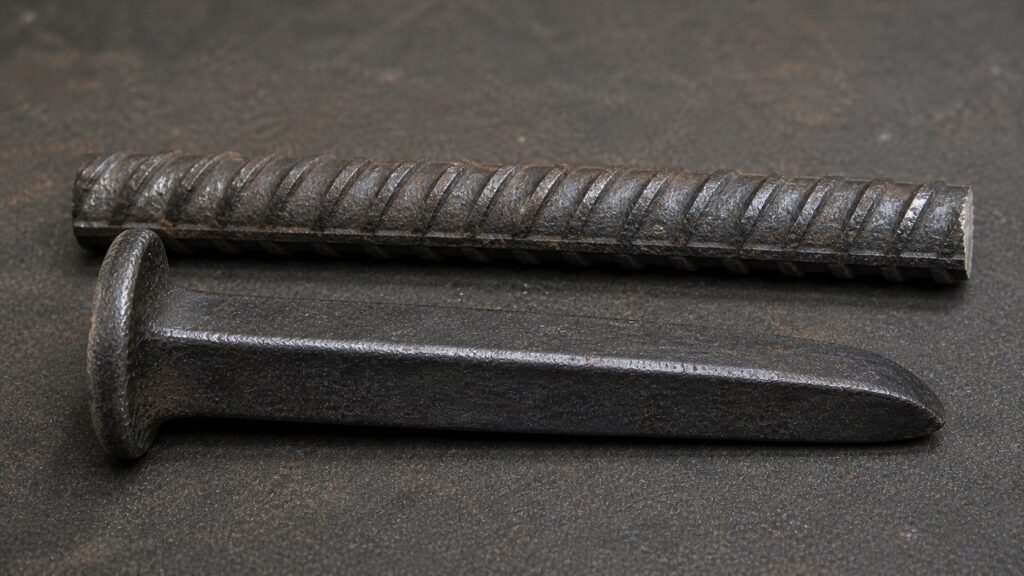
At a glance, railroad spikes and rebar look similar — and chemically, they’re not that far apart.
Similarities
- Both are low carbon steels
- Both prioritize ductility
- Both are designed to absorb stress, not resist it rigidly
Key Differences
1. Standards
- Railroad spikes follow ASTM A65
- Rebar follows different structural standards (like ASTM A615)
2. Load Conditions
- Spikes deal with vibration and dynamic loads
- Rebar handles static and tensile loads inside concrete
3. Geometry & Function
- Spikes secure rails mechanically
- Rebar reinforces structures internally
Practical Insight
Here’s the bottom line:
Rebar is designed to stretch and hold concrete together.
Spikes are designed to flex and keep rails in place under constant abuse.
Similar chemistry — completely different job.
Material Variations (Global Manufacturing Differences)
Not all railroad spike material is identical worldwide.
Depending on region, you’ll see equivalents like:
- Q235 steel → low carbon, similar to mild steel
- Q345 steel → higher strength, slightly improved performance
- A36 steel → common structural steel in the U.S.
Alloy Additions
Small tweaks may include:
- Manganese (Mn) → improves toughness
- Copper (Cu) → improves corrosion resistance
- Silicon (Si) → strengthens structure
These don’t turn spikes into alloy steel — they just fine-tune performance.
Why Railroad Spikes Are Designed for Toughness, Not Hardness
Railroad environments are unforgiving.
Spikes deal with:
- Constant vibration
- Temperature changes
- Heavy axle loads
- Repeated shock
If they were hard and brittle, they’d fail quickly.
Instead, they:
- Flex slightly
- Maintain grip
- Absorb energy over time
That’s the goal.
Not strength alone — controlled resilience.
Frequently Asked Questions About Railroad Spike Metal
Are railroad spikes mild steel?
Yes. Most railroad spikes are essentially mild steel, with low carbon content around 0.1%–0.2%, designed for flexibility and toughness.
Can you harden railroad spikes?
You can harden them slightly, especially HC types — but they will never reach true high carbon hardness levels.
Are railroad spikes good for knives?
No. They lack sufficient carbon to hold a durable edge. They are better suited for decorative or practice forging.
What does HC mean on railroad spikes?
HC means “Higher Carbon” within railroad standards, not high carbon steel in the knife-making sense.
Are railroad spikes stainless steel?
No. They are carbon steel and will rust without protection.
How long do railroad spikes last?
In real-world conditions, railroad spikes can last years to decades, depending on:
Load conditions
Environmental exposure
Maintenance practices
They rarely fail suddenly — they gradually loosen or deform over time.
Final Thoughts: Why Railroad Spike Steel Is Designed to Bend, Not Break
Railroad spikes are one of those materials that make perfect sense once you stop thinking like a knife maker — and start thinking like an engineer.
They’re not designed to impress.
They’re designed to not fail.
After years in the shop — forging them, bending them, testing their limits — one thing stands out:
A spike that bends is doing exactly what it was designed to do.
A spike that breaks?
That’s a problem you never want on a live track.