
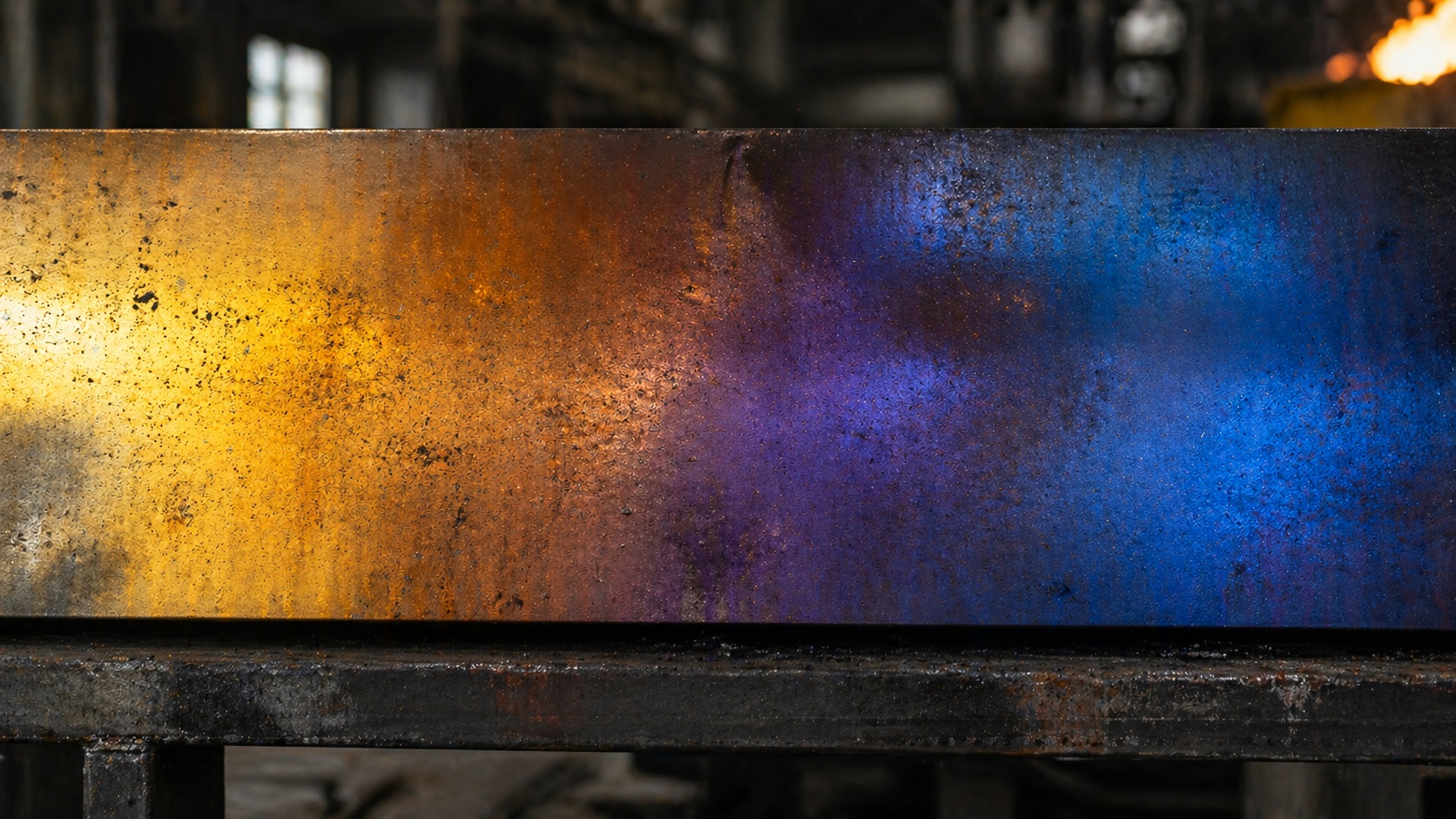
Why does steel turn blue when heated? Steel turns blue when heated because a thin oxide layer forms on its surface. As temperature rises, this layer changes thickness, causing thin film interference—light reflecting at different wavelengths. The result is visible color shifts, with blue typically appearing around 280–320°C (536–608°F).
Real Shop Experience: Seeing Blue Steel in Practice
I still remember the first time I saw blue chips flying off a lathe. My first thought?
“Did I just ruin my tool?”
Then a second question hit right after:
“Or is this actually a perfect cut?”
This is exactly where most people get confused. When you see steel turning blue when heated, it can feel like a warning sign—or a sign you’re doing everything right.
And the truth is… it can be both.
Once you understand what causes that blue color, you stop guessing and start reading the metal like a pro — especially in real-world CNC machining processes
The Real Science Behind Blue Steel
This is where things get interesting—and where most explanations fall short.
The oxide layer forming on steel isn’t thick like rust. It’s incredibly thin—typically around 200–400 nanometers (nm).
To put that into perspective, that’s thousands of times thinner than a human hair.
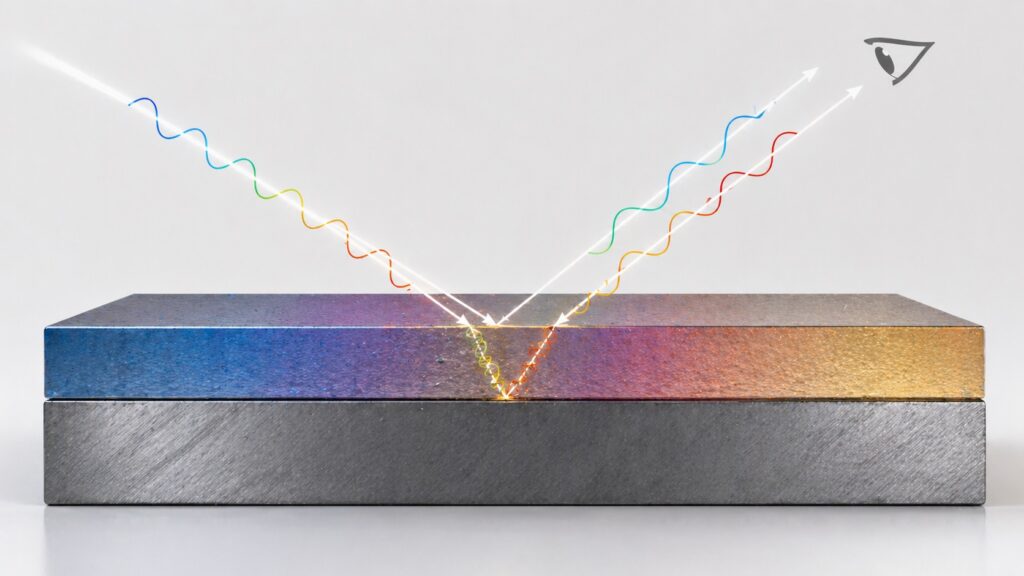
How Light Creates Color
When light hits this thin oxide layer:
- Some light reflects off the top surface
- Some passes through and reflects off the steel underneath
These two reflections interact.
Depending on the oxide thickness, certain wavelengths cancel out while others are amplified.
Why Blue Appears
Blue light has a wavelength of roughly ~470 nm.
At specific oxide thicknesses:
- 1/4 wavelength cancellation: some colors cancel out
- 1/2 wavelength reinforcement: blue wavelengths become stronger
The result?
Your eye sees blue.
Important detail: the steel itself isn’t changing color internally. This is purely a surface optical effect.
What Temperature Turns Steel Blue? (Steel Heat Color Chart)
This is one of the most practical tools in machining and heat treatment.
| Color | Temperature (°C) | Temperature (°F) | Meaning |
|---|---|---|---|
| Light Yellow | 200°C | 392°F | Initial oxidation |
| Straw / Brown | 220–240°C | 428–464°F | Early tempering |
| Purple | 260–280°C | 500–536°F | Transition phase |
| Blue | 280–320°C | 536–608°F | Stable oxide layer |
| Grey / Dull | 350°C+ | 662°F+ | Overheating / scaling |
This progression is often called a steel heat color chart, and experienced machinists use it as a visual thermometer.
Is Blue Steel Bad? (Critical Answer Most Articles Miss)
Blue steel is NOT automatically bad.
When It’s Good
- Efficient heat removal in machining
- Controlled tempering
- Intentional surface treatments
Pro Insight: In CNC machining, blue chips often mean heat is leaving with the chip instead of damaging the tool.
When It’s Bad
- Cutting tool overheating (loss of hardness)
- Excessive heat in weld zones
- Uncontrolled heat treatment
Shop Tip: If your cutting tool itself turns blue—not the chips—you’re overheating and reducing tool life fast.
What Causes the Oxide Layer?
This is a simple chemical reaction:
- Heat accelerates oxidation
- Oxygen reacts with iron
- Thin oxide films form and grow
Main Oxides
- Fe₂O₃ → reddish tones
- Fe₃O₄ → darker, contributes to blue/black
These layers are what create steel oxidation colors.
Steel Heat Color Chart Explained
Each color stage represents a specific oxide thickness and temperature.
- Yellow: early oxidation
- Brown: increasing thickness
- Purple: transition phase
- Blue: stable interference condition
- Grey: over-oxidation
This is also closely related to steel tempering colors.
Bluing vs Overheating (Critical Difference)
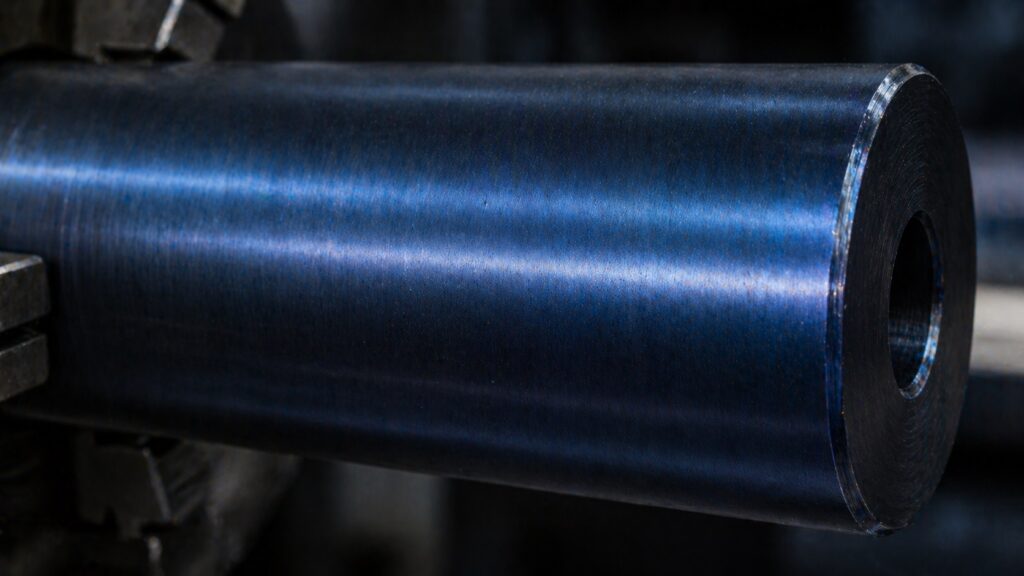
Bluing (Controlled)
- Intentional process
- Uniform color
- Improves corrosion resistance
Overheating (Uncontrolled)
- Irregular colors
- Potential structural damage
- Loss of hardness
Real-World Note: Professional gunsmiths use controlled bluing, while machinists try to avoid overheating tools.
Where You See Blue Steel in Real Life (Machining, Welding, Heat Treatment)
Machining (Blue Chips)
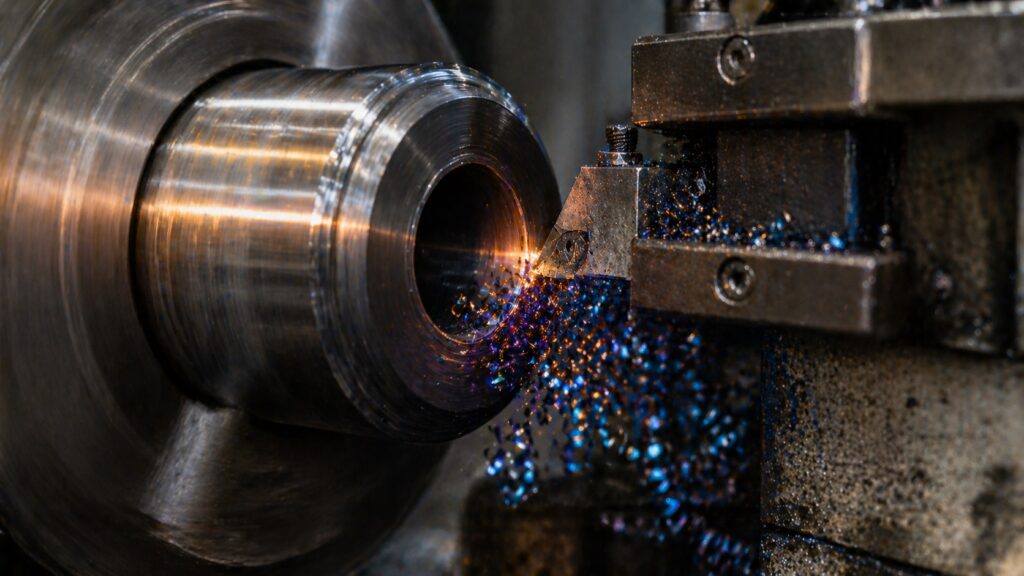
When cutting steel properly in CNC machining, chips often turn blue.
- Heat is concentrated in the chip
- Tool stays cooler
- Cutting efficiency increases
Shop Tip: Blue chips = good. Blue tool = bad.
Welding (Heat Affected Zone)
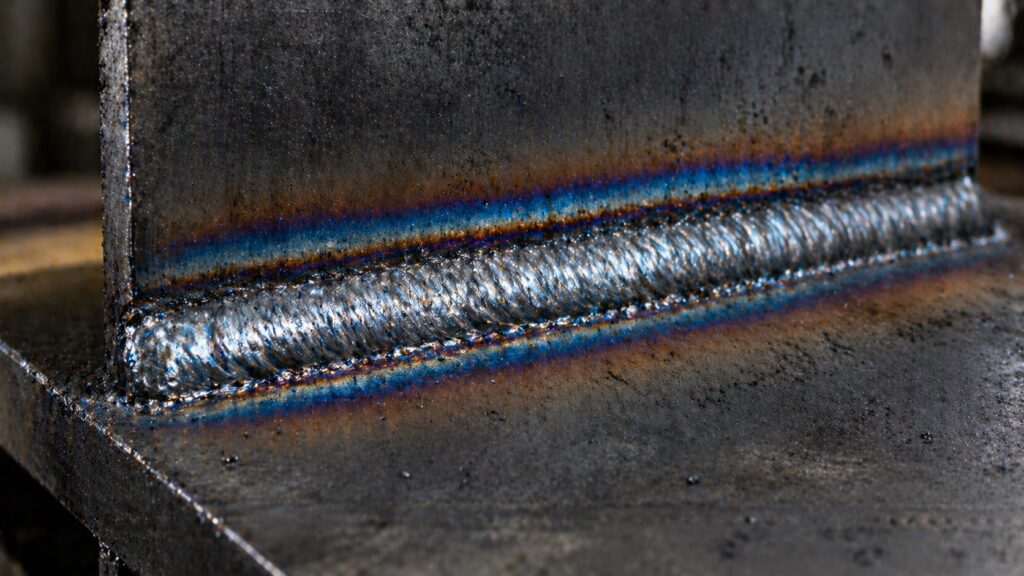
After welding, you’ll often see blue and rainbow colors around the weld.
This is the heat affected zone (HAZ), something you’ll often notice when learning how to reduce welding spatter in real welding conditions.
- Indicates temperature exposure
- Shows thermal gradient
- Can signal overheating if excessive
Learn more about this in welding-related guides and how heat affects structure.
Heat Treatment
During tempering, color indicates hardness levels.
Blue typically means softer, more ductile steel compared to straw-colored harder steel.
This is conceptually similar to processes like annealing aluminum, where heat controls material properties.
Do Other Metals Turn Blue When Heated?
Yes—and sometimes even more dramatically.
Stainless Steel
Yes, stainless steel turns blue when heated, but at slightly different temperatures due to chromium content.
Explore more about stainless steel types to understand why.
Titanium
- Produces vibrant colors
- Used decoratively
- Same thin film interference principle
How to Prevent Steel from Turning Blue
- Reduce cutting speed
- Use coolant effectively
- Improve lubrication
- Limit oxygen exposure
Controlling heat is the key factor.
Frequently Asked Questions About Blue Steel
Why does steel turn purple before blue?
Because the oxide layer gradually thickens. Purple appears at slightly lower thickness before reaching the blue interference range.
Does stainless steel turn blue when heated?
Yes, but at slightly higher temperatures due to its alloy composition.
Can overheating permanently damage steel?
Yes. Excessive heat can reduce hardness, alter microstructure, and weaken the material.
Why do steel chips turn blue during machining?
Because they reach high temperatures and form oxide layers while being ejected from the cut.
At what temperature does steel turn blue?
Around 280–320°C (536–608°F).
Is blue steel stronger?
No. It often indicates heat exposure, which may reduce hardness.
Can you reverse the color?
Yes, by removing the oxide layer—but underlying heat effects may remain.
Final Takeaway (Expert-Level Conclusion)
So, why does steel turn blue when heated?
Because of a microscopic oxide layer that changes how light reflects from the surface.
But more importantly—
It’s a signal.
To a beginner, it’s confusing.
To a professional, it’s information.
This is how experienced machinists, welders, and metallurgists read steel in real time.
Once you understand this, you stop guessing.
You start making decisions based on what the metal is telling you.