
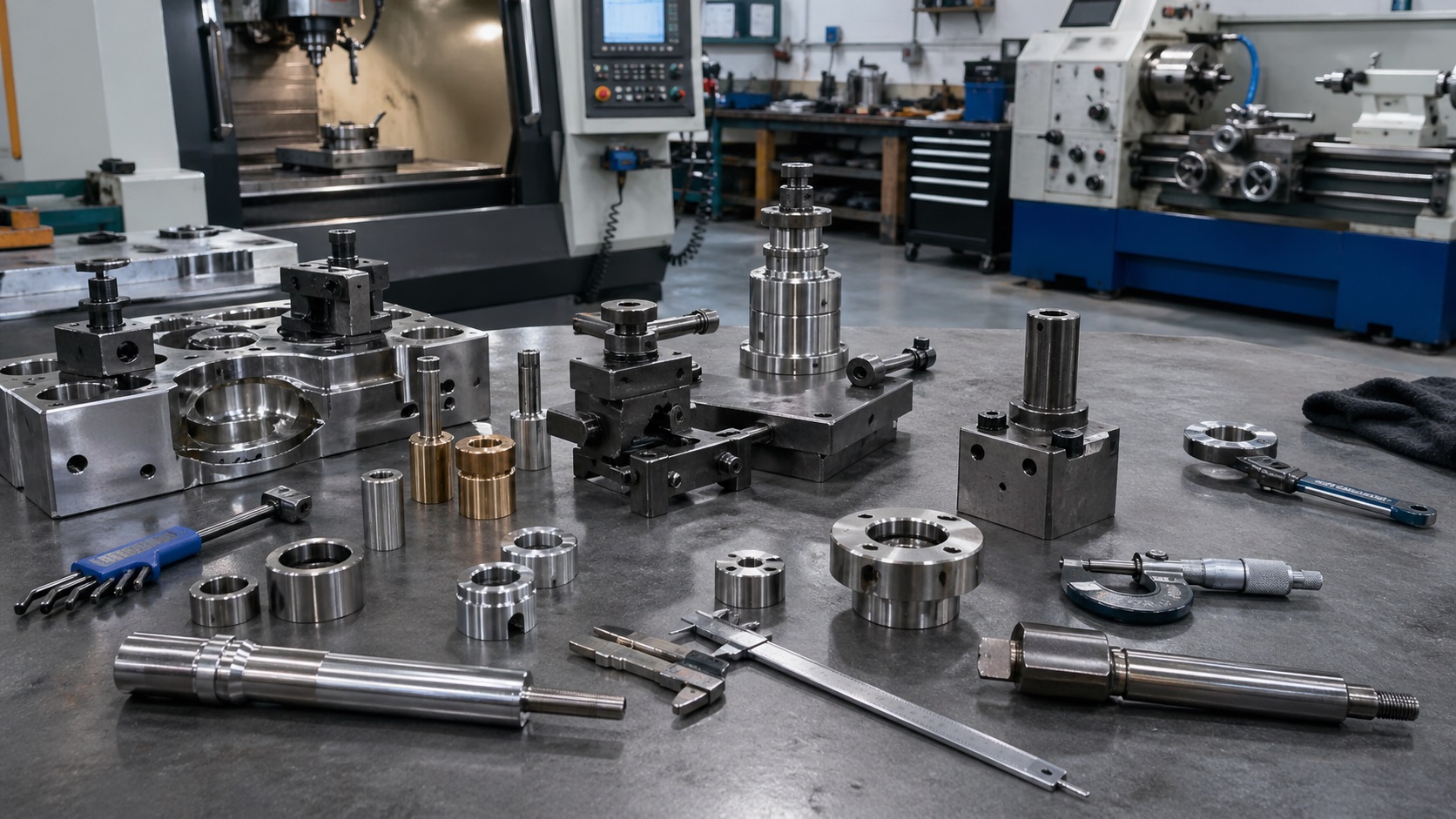
If you’ve been searching for machining projects, you’ve probably run into the same problem I see all the time in this industry:
Most guides are either too basic, too decorative, or completely disconnected from real machining skills.
You’ll find people making random trinkets…
But not learning how to hold tolerance.
Not learning proper setup.
Not learning how real parts are made.
In my experience, this is exactly why many beginners get stuck.
I’ve personally seen people spend weeks on projects that looked impressive — but didn’t improve their machining at all. Once they switched to practical parts, their progress changed completely.
They spend hours in the shop — but their skills don’t improve.
This guide is different.
Here, you’ll find practical, skill-driven machining projects — from beginner to advanced — designed to actually make you better at machining.
Not just busy. Better.
Quick Answer: What Are the Best Machining Projects?
The best machining projects are practical components like bushings, clamps, tool holders, and precision assemblies that teach core skills such as turning, drilling, threading, and tolerance control. These projects provide real-world value and accelerate skill development far more than decorative items.
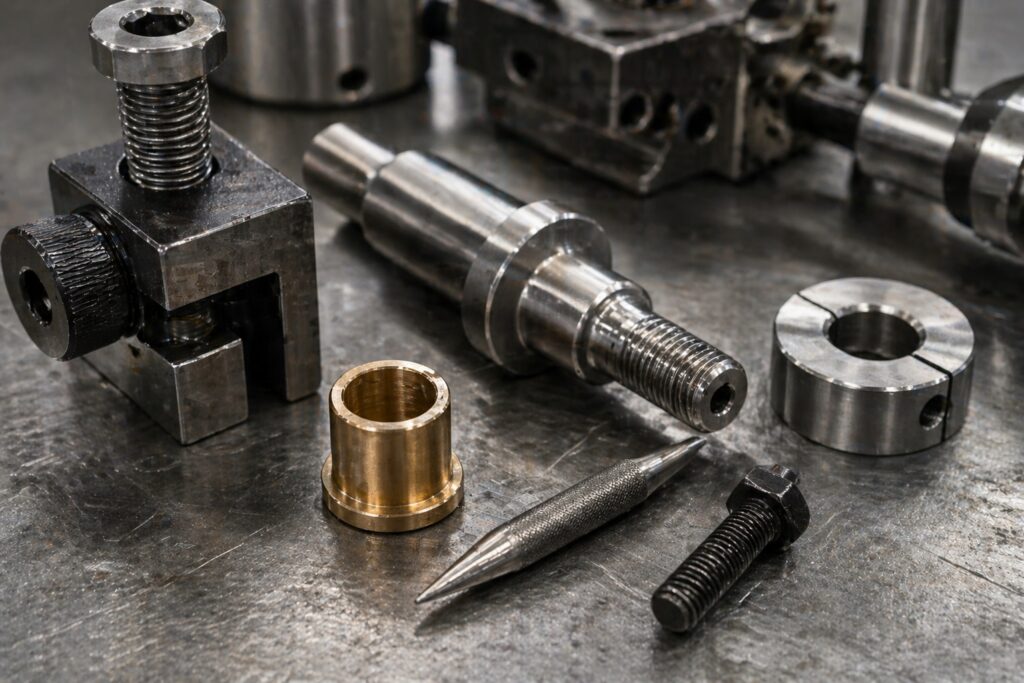
How to Choose the Right Machining Project
One mistake I see often is people choosing projects based on appearance instead of learning value.
That’s backwards.
1. Match Your Skill Level
If you’re just starting out:
- Focus on simple geometries
- Avoid tight tolerances
- Prioritize repeatable operations
Most beginners struggle because they jump into advanced builds too early.
2. Choose Based on Machine Type
Your machine defines your learning path:
- Lathe projects → shafts, bushings, threaded parts
- Milling machine projects → flat surfaces, slots, precision blocks
- CNC machining projects → repeatability, complex contours (see our guide on CNC machining)
If you’re unsure, start with manual machines. CNC comes later.
3. Material Selection Matters More Than You Think
In my experience, material choice can make or break a project. I still remember struggling with stainless steel early on — tools wore out fast and nothing felt consistent. Switching to brass and aluminum made learning much smoother.
Start with:
- Aluminum → forgiving, easy cutting (learn more about annealing aluminum for better machinability)
- Brass → clean finish, low friction
Avoid early:
- Tool steel → punishes mistakes
- Stainless → work hardens quickly
(See our guide on steel types for machining and material behavior)
4. Time vs Complexity
Some “simple” projects are actually precision traps.
Ask:
- Does this require multiple setups?
- Does it demand tight tolerance?
This is where things usually go wrong — underestimating complexity.
Recommended First Projects for Beginners
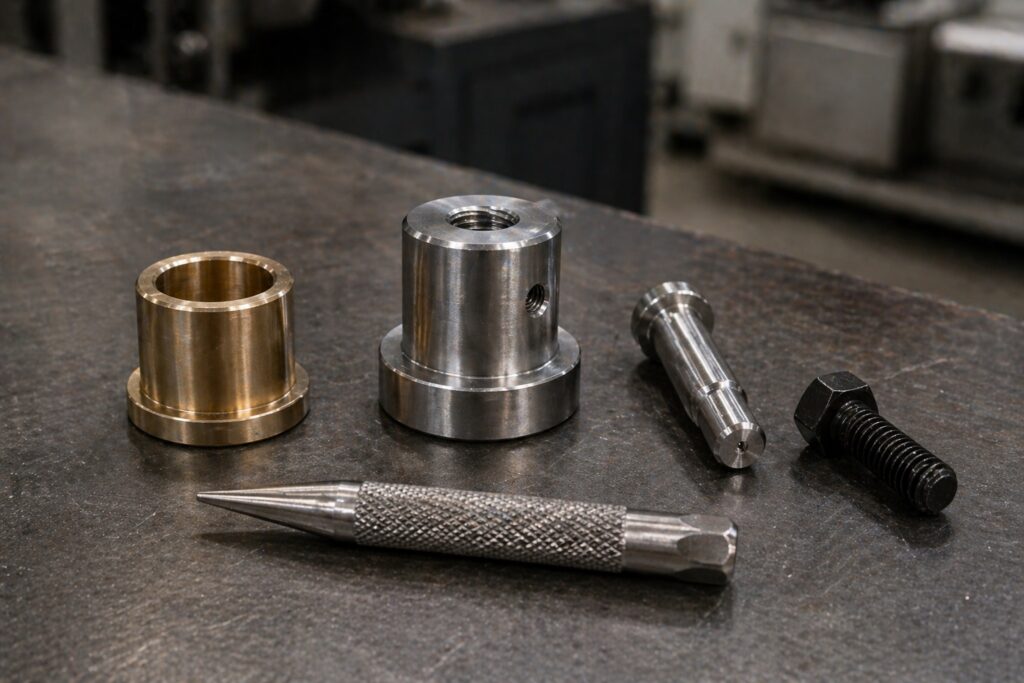
If you’re just starting out, don’t overthink it. These are the best machining projects to begin with:
- Center Punch
- Simple Bushing
- Tap Guide
- Simple Shaft
- Threaded Bolt
These projects build core skills fast without overwhelming complexity.
Beginner Machining Projects
These are the best machining projects for beginners — focused on real skills, not decoration.
1. Center Punch
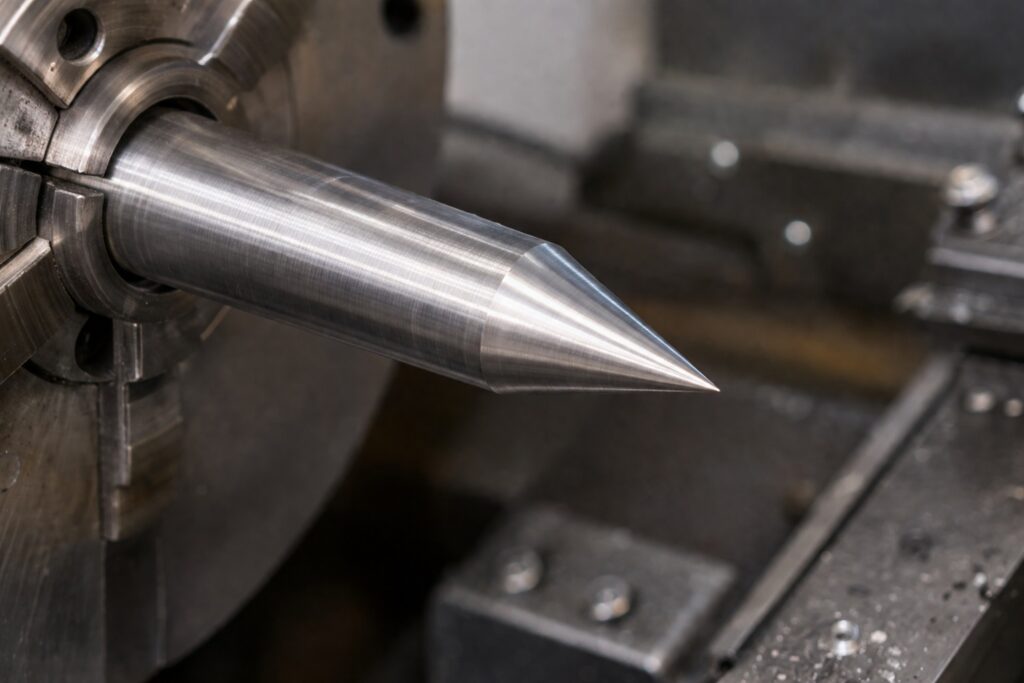
What it is: Tool for marking drill points
Why it matters: Used in nearly every project
Skills learned: Turning, tapering, heat awareness
Machine: Lathe
Difficulty: Easy
This was one of the first projects I ever made, and it taught me more about tool control than I expected.
2. Simple Bushing
What it is: Cylindrical sleeve
Why it matters: Teaches tolerance fundamentals
Skills learned: Turning, boring
Machine: Lathe
Difficulty: Easy
3. Machinist Scribe
What it is: Layout marking tool
Why it matters: Precision starts with layout
Skills learned: Grinding, shaping
Machine: Lathe + Grinder
Difficulty: Easy
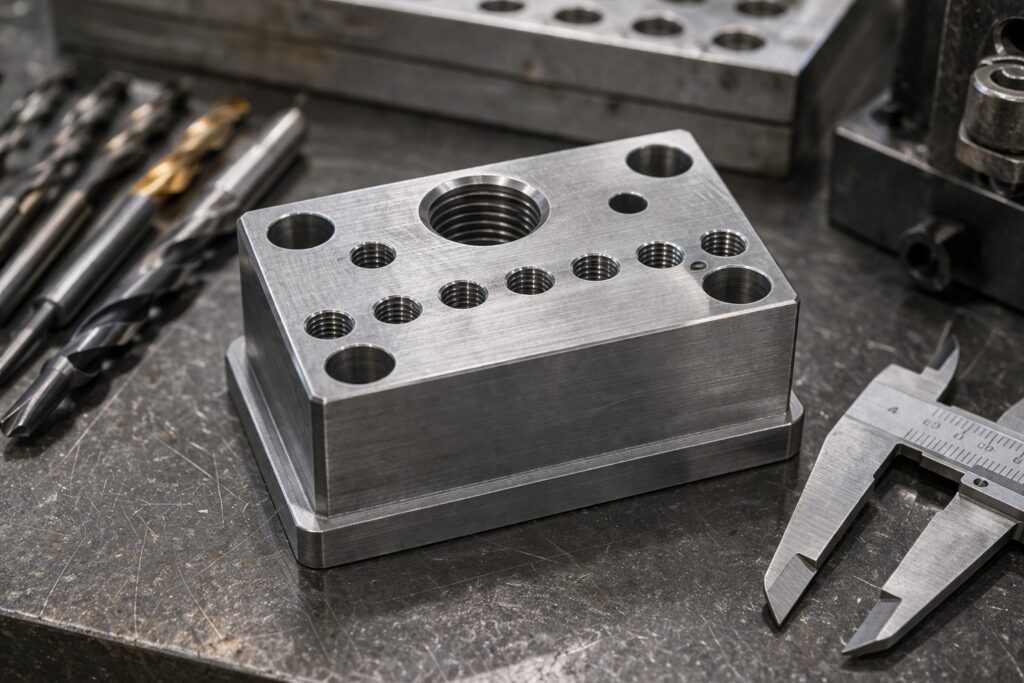
4. Tap Guide
What it is: Tool to keep taps aligned
Why it matters: Prevents broken taps
Skills learned: Drilling alignment
Machine: Lathe
Difficulty: Easy
Materials (BOM)
- Mild steel block (approx. 100x25x25 mm)
- Drill bits (various sizes)
- Optional hardened insert
5. Simple Shaft
What it is: Basic turned rod
Why it matters: Foundation of many parts
Skills learned: Facing, turning
Machine: Lathe
Difficulty: Easy
6. Aluminum Hammer
What it is: Soft-face hammer
Why it matters: Protects workpieces
Skills learned: Press fits
Machine: Lathe
Difficulty: Medium
Materials (BOM)
- Aluminum round bar (Ø30–40 mm for head)
- Steel or aluminum rod (handle)
- Optional brass insert (for durability)
- Press fit or light interference fit
7. Basic Tool Holder
What it is: Holds cutting tools
Why it matters: Improves workflow
Skills learned: Drilling, slotting
Machine: Mill
Difficulty: Medium
8. Dice (Precision Cube)
What it is: Machined cube
Why it matters: Teaches squareness
Skills learned: Milling accuracy
Machine: Mill
Difficulty: Medium
9. Simple Threaded Bolt
What it is: Basic fastener
Why it matters: Introduces threading
Skills learned: Thread cutting
Machine: Lathe
Difficulty: Medium
Intermediate Machining Projects
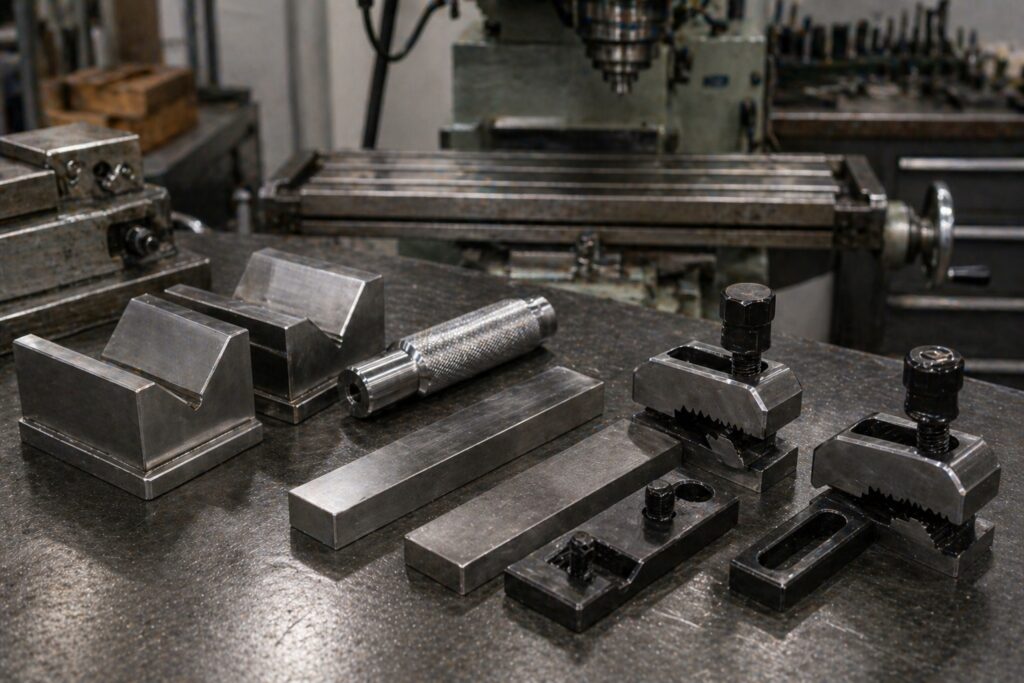
This is the stage where machining starts to feel real. It’s also where I personally made the most mistakes — especially with setups and tolerances.
10. Knurled Handle
Skills: Knurling, finishing
Machine: Lathe
11. Adjustable Clamp
Skills: Threading, alignment
Machine: Lathe + Mill
Materials (BOM)
- Mild steel block (approx. 100x40x20 mm)
- Threaded rod or bolt (M10 or 3/8″)
- Nut and washer
- Set screws
12. Mini Vise
Skills: Flatness, assembly
Machine: Mill
13. Precision Parallels
What it is: Matching flat bars
Why it matters: Teaches parallelism
Skills learned: Surface accuracy
Difficulty: Hard
14. V-Blocks
What it is: Workholding blocks
Why it matters: Essential shop tool
Skills learned: Angular precision
Machine: Mill
15. Edge Clamps
What it is: Workholding clamps
Why it matters: Real workshop use
Skills learned: Threading + milling
16. Fly Cutter
Skills: Tool geometry
Machine: Lathe + Mill
17. Stepped Shaft
Skills: Precision diameters
Machine: Lathe
Advanced Machining Projects
These advanced machining projects simulate real-world parts.
At this level, small errors are no longer forgiving. I’ve had parts fail after hours of work because of a single tolerance issue.
18. Screw Jack
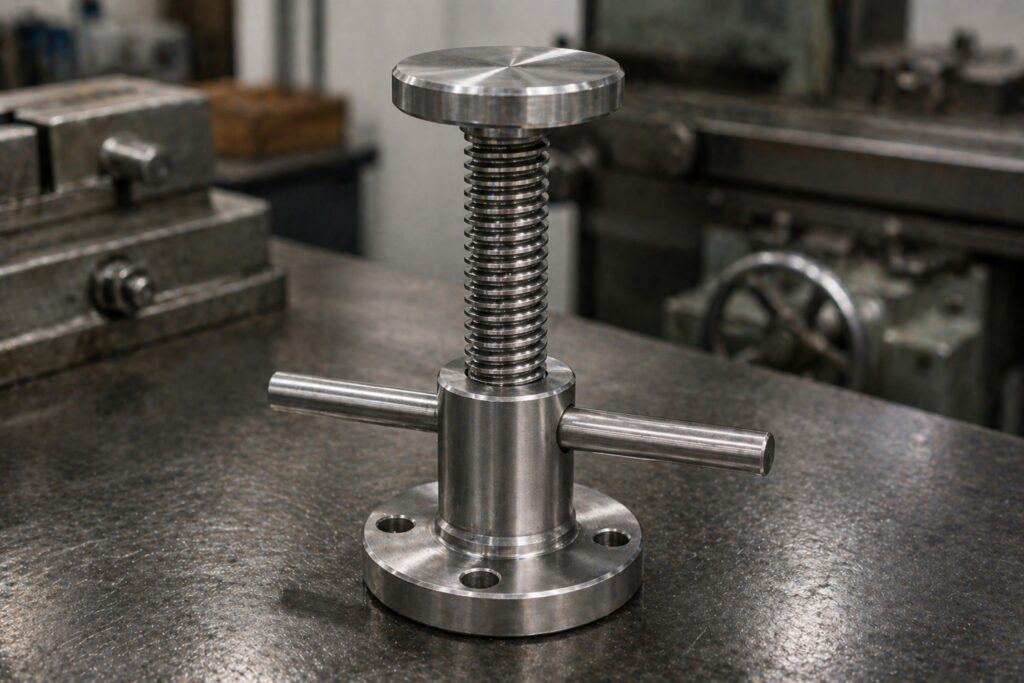
What it is: Mechanical lifting device
Skills: Threading, load design
Difficulty: Very Hard
Materials (BOM)
- 4140 steel round bar (Ø25–50 mm)
- Threaded rod (Acme or standard thread)
- Steel base plate
- Handle bar (steel rod)
19. Toolmaker’s Clamp
Skills: Extreme precision
Machine: Mill + Lathe
20. Gear Set
Skills: Indexing, tooth cutting
Machine: Mill / CNC
21. Mini Steam Engine
Skills: Full system integration
Machine: Multi-machine
22. CNC Production Part
Skills: CAM, repeatability
Machine: CNC
(See our guide on CNC machining…)
Project Comparison Table
| Project | Skill Level | Machine | Skills Learned | Difficulty |
|---|---|---|---|---|
| Center Punch | Beginner | Lathe | Turning, tapering | Easy |
| Simple Bushing | Beginner | Lathe | Boring, tolerance | Easy |
| Machinist Scribe | Beginner | Lathe + Grinder | Shaping, finishing | Easy |
| Tap Guide | Beginner | Mill | Alignment, drilling | Easy |
| Simple Shaft | Beginner | Lathe | Facing, diameter control | Easy |
| Aluminum Hammer | Beginner | Lathe | Press fits, assembly | Medium |
| Tool Holder | Beginner | Mill | Slotting, drilling | Medium |
| Dice (Cube) | Beginner | Mill | Squareness, indexing | Medium |
| Threaded Bolt | Beginner | Lathe | Thread cutting | Medium |
| Knurled Handle | Intermediate | Lathe | Knurling, finishing | Medium |
| Adjustable Clamp | Intermediate | Lathe + Mill | Threading, alignment | Medium–Hard |
| Mini Vise | Intermediate | Mill + Lathe | Flatness, assembly | Hard |
| Parallels | Intermediate | Mill | Precision, parallelism | Hard |
| V-Blocks | Intermediate | Mill | Angular accuracy | Hard |
| Edge Clamps | Intermediate | Mill | Threading, workholding | Medium |
| Fly Cutter | Intermediate | Lathe + Mill | Tool geometry | Medium |
| Stepped Shaft | Intermediate | Lathe | Multi-diameter precision | Medium |
| Screw Jack | Advanced | Lathe + Mill | Threading, load design | Very Hard |
| Toolmaker’s Clamp | Advanced | Mill + Lathe | High precision | Very Hard |
| Gear Set | Advanced | Mill / CNC | Indexing, gear cutting | Very Hard |
| Mini Steam Engine | Advanced | Multi-machine | Assembly, sealing | Expert |
| CNC Production Part | Advanced | CNC | CAM, repeatability | Advanced |
Step-by-Step Project: Simple Bushing (Expanded)
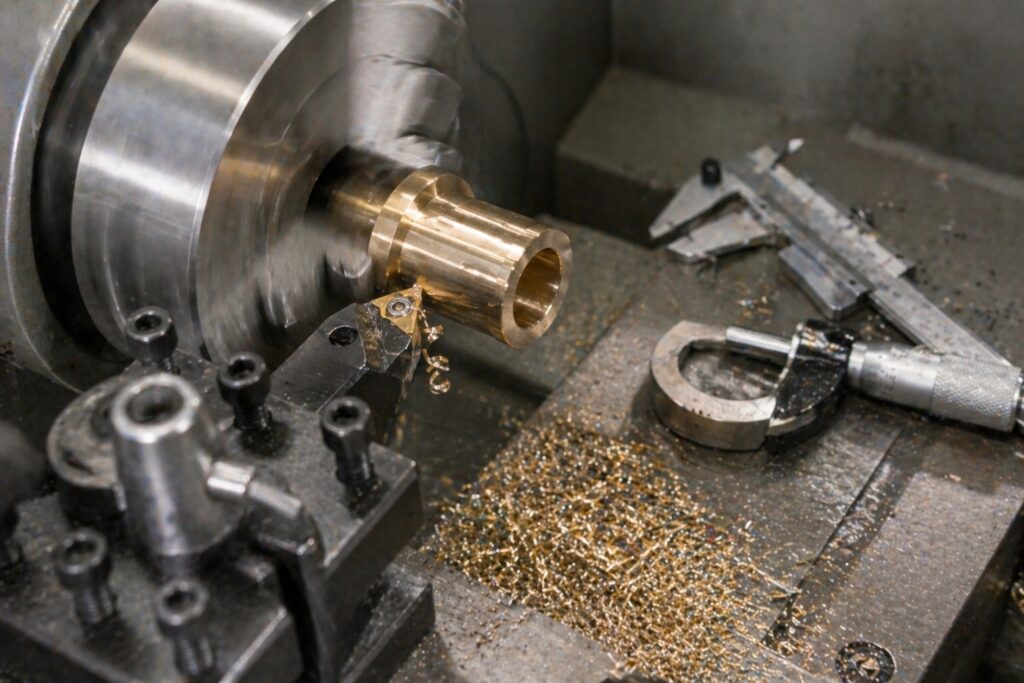
This is one of the most important easy machining projects you can do.
Materials
- Aluminum or brass round stock (Ø20–30 mm)
- Cutting fluid (recommended for better surface finish)
Tools Required
- Lathe
- Drill bits
- Boring bar
- Micrometer (not optional if you want accuracy)
Step 1: Facing
Square the stock.
Why it matters:
If your face isn’t square, every measurement after this is wrong.
Step 2: Rough Turning
Remove material to near final diameter.
Pro tip:
Leave 0.2–0.3 mm for finishing.
One mistake I see often:
Trying to hit final size in one pass → leads to chatter.
Step 3: Center Drilling
Always center drill first.
Without it:
Your drill will wander.
Step 4: Drilling
Drill undersize.
Why:
Drills are not precision tools.
Step 5: Boring (CRITICAL STEP)
Bring hole to final dimension.
This is where real machining begins.
Tips:
- Take light cuts
- Check measurements frequently
- Watch for tool deflection
This is the step where I see most beginners struggle. Even small mistakes here can ruin the entire part.
Step 6: Finishing Pass
Take a light final cut.
Goal:
Surface finish + accuracy.
Step 7: Parting Off
This is where many beginners fail.
Common issues:
- Chatter
- Tool digging in
Fix:
- Slow feed
- Proper tool height
In my experience, this is one of the most frustrating steps early on — until you understand tool height and feed properly.
Step 8: Final Facing & Deburring
Clean edges.
Always deburr — sharp edges are dangerous.
What Skills You Develop
Every good machining project should build core abilities.
Turning
- Diameter accuracy
- Surface finish
Milling
- Flatness
- Alignment
Drilling
- Straight holes
- Centering
Threading
- Fit control
- Precision
Measurement & Tolerance
- Micrometer use
- Fit classes
Common Mistakes to Avoid
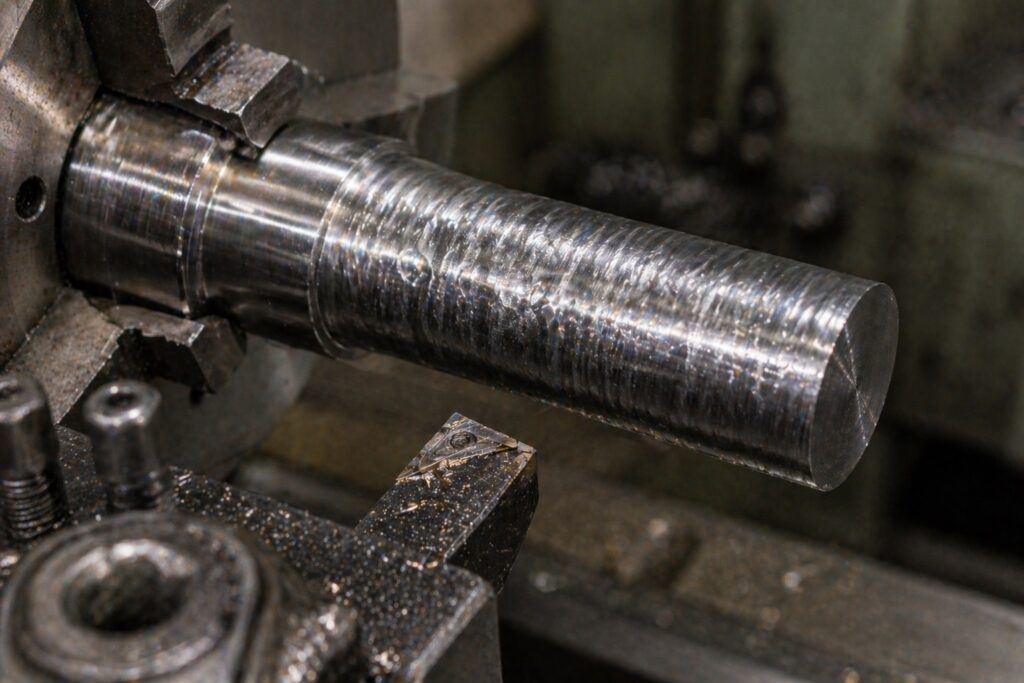
Most of these mistakes aren’t obvious at first. I’ve made every one of them at some point, and they’re part of the learning process. This is where most beginners struggle.
1. Chatter
Caused by:
- Too much depth of cut
- Poor rigidity
Fix:
- Reduce cut
- Improve setup
2. Wrong Cutting Speed
Too fast:
- Burns tools
Too slow:
- Poor finish
3. Tool Wear
Dull tools ruin everything.
In my experience:
Beginners ignore this too long.
4. Poor Setup Alignment
If your part isn’t aligned, nothing will be accurate.
5. Measurement Errors
Measuring wrong = machining wrong.
6. Rushing the Process
Machining punishes impatience.
Best Materials for Machining Projects
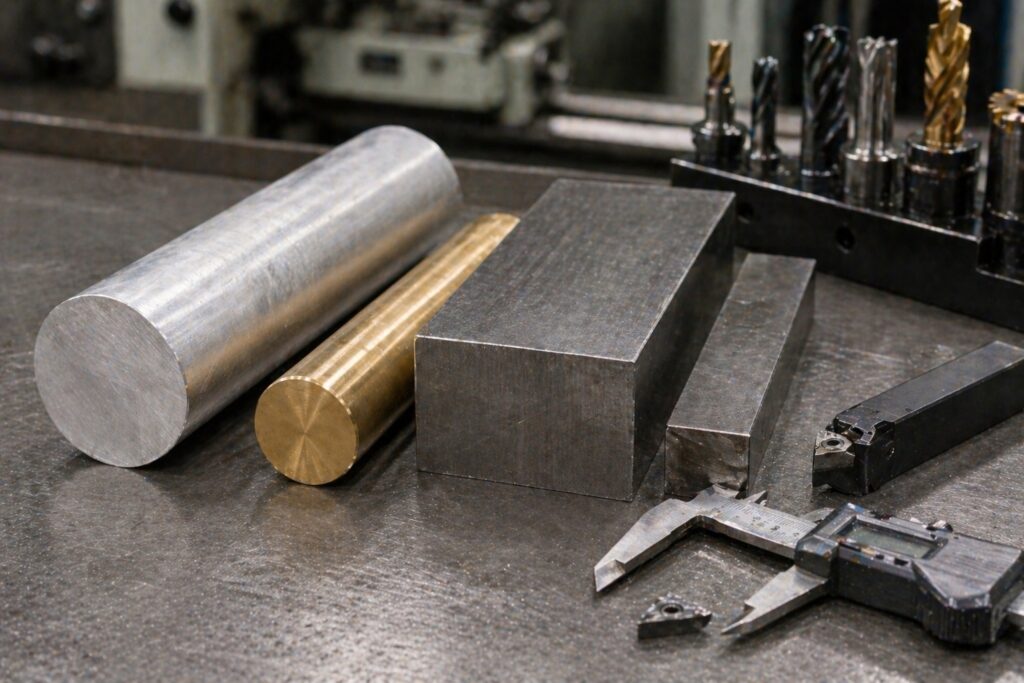
Aluminum
- Best for beginners
- Forgiving
Mild Steel
- Stronger
- Slightly harder
Brass
- Excellent finish
- Ideal for precision
Tool Steel
- Advanced only
(Learn more about material selection here…)
What Can You Make with a Lathe?
You can make bushings, shafts, threaded rods, handles, spacers, and precision components. Most metal lathe projects revolve around cylindrical parts and are essential for building core machining skills.
Easy Machining Projects for Beginners
The best easy machining projects include center punches, bushings, tap guides, and simple shafts. These teach fundamental operations like turning, drilling, and measuring.
Best Machining Projects to Learn Skills
Projects like vises, clamps, parallels, and threaded assemblies are the most effective machining projects for real skill development.
FAQ (Featured Snippet Optimized)
What is the easiest machining project?
A center punch or simple bushing is the easiest project. Both teach basic turning and require minimal setup.
What can you make with a lathe?
You can make shafts, bushings, threaded parts, handles, and precision components used in real mechanical assemblies.
How do beginners start machining?
Start with simple lathe projects using aluminum or brass, focus on measurement, and build skills step by step.
What tools are needed for machining projects?
Basic tools include a lathe or mill, cutting tools, measuring tools (calipers, micrometer), and workholding equipment.
Are CNC projects better for beginners?
No. Manual machining builds foundational skills first. CNC should come after understanding basic operations.
Conclusion
If you want to improve fast, your choice of machining projects matters more than anything.
Start simple.
Focus on precision.
Build real parts.
In my experience, the machinists who progress the fastest are not the ones doing flashy projects — they’re the ones repeating fundamentals until they master them.
That’s the difference between hobby-level and professional skill.
Looking back, the biggest improvement in my own machining came from repeating simple projects until they were nearly perfect.
So don’t overthink it.
Pick a project.
Get in the shop.
And start cutting.