
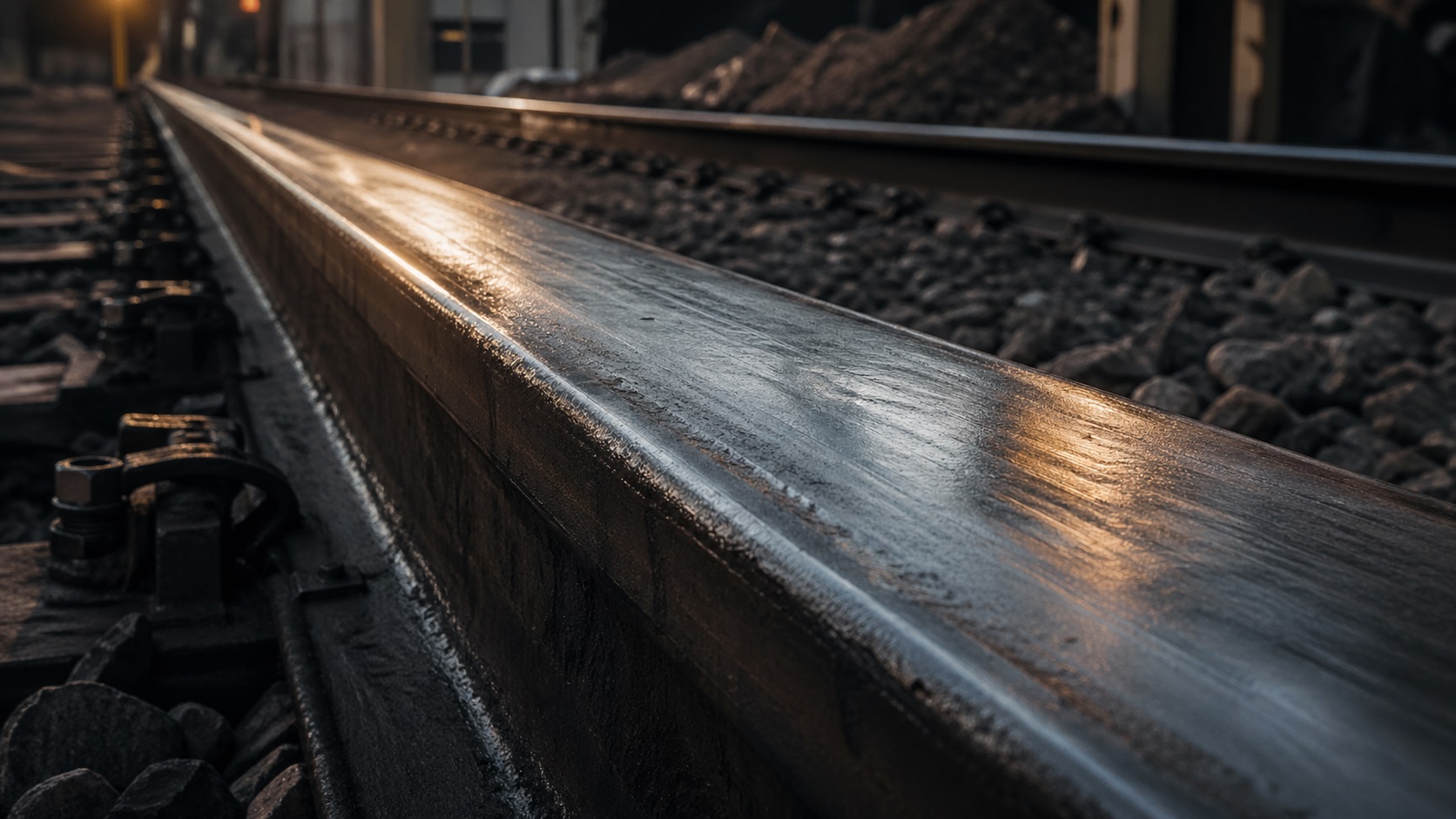
Most websites will tell you that railroad tracks are made from “1084 steel.”
That’s not entirely wrong — but it’s far from the full story.
Railroad tracks are typically made from high-carbon steel containing around 0.70–0.85% carbon and 0.70–1.20% manganese, which makes them behave similarly to 1084. However, modern rail is not defined by AISI grades, but by engineering standards like UIC900A, AREMA rail grades, JIS standards, or U71Mn depending on region and application.
If you are new to manufacturing terminology, it also helps to understand what CNC machining is because steel grade, hardness, and machinability often matter together in real-world metalworking.
Quick Answer:
Railroad track is typically made from high-carbon rail steel, often similar to 1084 steel, with about 0.70–0.85% carbon and 0.70–1.20% manganese. However, modern rail is usually classified by rail standards such as UIC900A, AREMA/AREA, JIS, or U71Mn rather than by a simple AISI steel grade.
What Grade of Steel is Railroad Track?
The simple answer is this:
Railroad track is usually made from high-carbon steel similar to 1084 steel, but modern rail steel is more accurately described by rail-specific standards such as UIC900A, AREMA carbon rail grades, JIS rail steels, or Chinese U71Mn.
That is the part many short answers get wrong.
They say:
“Railroad track is 1084 steel.”
That is partly true, but not complete.
From a practical blacksmithing or knife-making perspective, many railroad tracks behave somewhat like 1084 high-carbon steel because they often contain roughly 0.7–0.85% carbon and a meaningful amount of manganese. That combination gives rail steel good hardness, wear resistance, and toughness after proper processing.
But from an industrial metallurgy perspective, railroad track is not usually purchased as “AISI 1084.” Rail manufacturers and railway operators specify rails according to rail standards.
So the better answer is:
Railroad track steel is generally a high-carbon, manganese-containing pearlitic steel, often comparable to 1084, but identified by rail grades such as UIC 900A, R260, R350HT, AREMA rail grades, JIS E1101 grades, or U71Mn depending on the country and application.
If you are asking because you found an old piece of rail and want to forge it, treat it as unknown high-carbon rail steel, not guaranteed 1084.
If you are asking from an engineering perspective, the exact grade depends on:
- Country
- Rail age
- Rail profile
- Load requirement
- Heat treatment
- Manufacturer specification
- Standard used at the time of production
That is why the phrase railroad track steel grade needs a more careful answer than just one number.
Is Railroad Steel Always 1084?
No, railroad steel is not always exactly 1084.
This is probably the most important clarification in the whole article.
At first, I assumed railroad steel was simply 1084 because that is the answer you often see in forging forums and metalworking discussions. But once you look at actual rail standards, the picture becomes more nuanced.
The reason 1084 is commonly referenced is because many rail steels have a similar carbon and manganese range:
Steel Comparison: 1084 vs Railroad Steel vs U71Mn
| Steel Type | Carbon Content | Manganese | Typical Use | Key Property |
|---|---|---|---|---|
| 1084 Steel | 0.80–0.93% | 0.60–0.90% | Knives, blades | Easy to harden, good edge retention |
| Railroad Steel | 0.70–0.85% | 0.70–1.20%+ | Train tracks | High wear resistance, fatigue strength |
| U71Mn (Rail Steel) | ~0.70% | High Mn | Railway systems | Tough, durable under heavy load |
As you can see, railroad steel is often similar to 1084 in composition, but it is specifically engineered for wear resistance and long-term durability rather than cutting performance.
So when someone asks, “is railroad steel 1084?”, the realistic answer is:
Sometimes it is close to 1084 in chemistry and behavior, but railroad track is usually made to rail-specific grades rather than sold as AISI 1084.
Older rails may be lower carbon. Some modern heavy-haul rails may be higher strength, heat-treated, alloyed, or designed around pearlitic/bainitic microstructures.
The age of the rail matters too.
An old rail from a branch line, a crane rail, a mine rail, and a modern high-speed rail are not automatically the same steel.
In real-world applications, rail steel is selected for repeated wheel loading, rolling contact fatigue, head wear, impact resistance, and long service life. That is a different design target than a knife blade, spring, or structural beam.
Chemical Composition of Railroad Steel
Most railroad track steel is a carbon-manganese steel.
The two most important elements are:
- Carbon, which increases hardness and wear resistance
- Manganese, which improves strength, hardenability, and toughness
Rail steel also contains controlled amounts of silicon, phosphorus, sulfur, and sometimes chromium, vanadium, molybdenum, or other alloying elements.
Unlike different types of stainless steel, railroad steel is not primarily designed for corrosion resistance; it is mainly engineered for strength, wear resistance, and fatigue performance.
Here is a simplified composition table.
Typical Chemical Composition of Railroad Track Steel
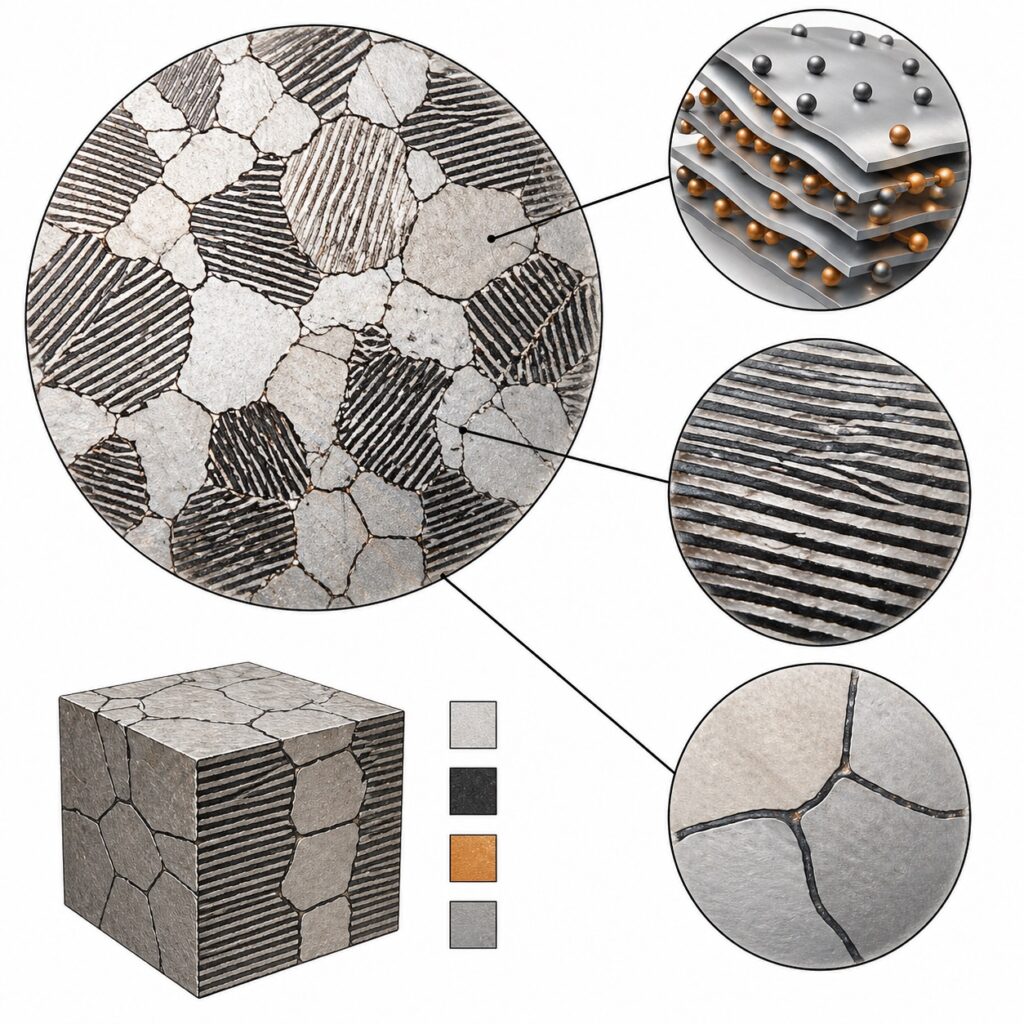
Railroad track steel is primarily a carbon-manganese steel, with carefully controlled elements to balance hardness, toughness, and long-term durability.
| Element | Typical Range | Role in Rail Steel | Why It Matters |
|---|---|---|---|
| Carbon (C) | 0.50–0.85% | Hardness & strength | Increases wear resistance under heavy wheel contact |
| Manganese (Mn) | 0.70–1.30%+ | Toughness & hardenability | Helps steel resist impact and fatigue cracking |
| Silicon (Si) | 0.10–0.60% | Strength & deoxidation | Improves structural stability during manufacturing |
| Phosphorus (P) | Very low | Impurity control | Too much causes brittleness |
| Sulfur (S) | Very low | Impurity control | Excess leads to cracking risk |
| Chromium (Cr) | Optional | Wear resistance | Improves surface durability |
| Vanadium (V) | Optional | Grain refinement | Enhances strength and fatigue resistance |
| Molybdenum (Mo) | Optional | Heat resistance | Improves performance under stress |
In real-world railway applications, this balance is essential. A rail that is too soft will wear quickly, while a rail that is too hard may crack under stress. Modern rail steel is engineered to sit precisely between these extremes.
The railroad track carbon content is one reason rail steel is so useful and so misunderstood.
It is high enough to harden, but not so high that the steel becomes uselessly brittle under heavy wheel loads.
That balance is critical.
Train wheels repeatedly contact the rail head under huge pressure. The steel has to resist:
- Wear
- Deformation
- Cracking
- Rolling contact fatigue
- Impact loads
- Temperature changes
A soft steel would wear too quickly.
A very brittle steel would crack.
Rail steel sits in the middle: hard enough to resist wear, tough enough to survive abuse.
Rail Steel Standards Around the World (UIC, AREMA, JIS Explained)
Most people think railroad steel is just one type of metal — but in reality, it is defined by international rail standards rather than a single steel grade.
Different regions use different systems to classify rail steel based on strength, wear resistance, and service conditions.
Major Rail Steel Standards
| Standard | Region | Example Grades | Key Focus |
|---|---|---|---|
| UIC | Europe | UIC900A, R260, R350HT | Strength & wear resistance |
| AREMA (AREA) | USA | Carbon rail grades | Performance & heavy load |
| JIS | Japan | JIS rail steels | Precision & high-speed rail |
| GB/T (China) | China | U71Mn, U75V | Strength & durability |

UIC Rail Steel Grades
UIC standards are widely used across Europe and classify rail steel based on strength levels. Grades like UIC900A or R350HT are designed for higher wear resistance and longer service life.
UIC standards are widely associated with European rail specifications.
You may see grades such as:
- UIC 700
- UIC 800
- UIC 900A
- UIC 1100
The number generally relates to strength class. For example, UIC documents commonly reference minimum tensile strength classes around 700, 900, and 1100 N/mm² depending on grade.
UIC900A is one of the commonly discussed rail steel grades. It is a high-strength rail steel used where better wear resistance is needed compared with softer rail grades.
In simple terms:
UIC900A is not “1084,” but it can behave like a high-carbon rail steel with strong wear resistance.
AREMA / AREA Rail Steel Standards
In North America, rail steel is specified by AREMA standards, which focus more on performance requirements such as load capacity, fatigue resistance, and durability rather than just chemical composition.
In North America, you will often see references to AREA rail steel standards or the modern AREMA standards.
AREA stands for the older American Railway Engineering Association. AREMA is the American Railway Engineering and Maintenance-of-Way Association.
Rail standards in this system focus on rail section, chemistry, hardness, tensile strength, and service application.
AREMA rail steels are usually carbon or low-alloy steels designed for:
- Mainline rail
- Heavy-haul freight
- Crane rail
- Industrial track
- Transit systems
The important point:
AREMA rail steel standards do not simply say “use 1084.” They specify rail performance and chemistry suitable for railway service.
JIS Rail Steel Standards
JIS rail steels are known for precision and consistency, especially in high-speed rail systems where tight tolerances and reliability are critical.
Japan uses JIS standards for rail.
JIS rail steels are commonly used for railway, crane, and industrial track applications. Japanese rail manufacturers also produce a wide variety of rail steels for heavy haul, high-speed, and special applications.
The exact JIS grade depends on the rail profile and performance requirement.
Chinese Rail Steel Grades: U71Mn and Others
Chinese rail steel grades like U71Mn are widely used and represent high-carbon manganese rail steel optimized for strength, wear resistance, and long-term stability.
In China, one of the most common rail steel grades is U71Mn.
The name gives a clue:
- U = rail steel designation
- 71 = carbon class around 0.71%
- Mn = manganese-containing steel
U71Mn is a high-carbon manganese rail steel used in many railway and industrial rail systems. It is valued for strength, wear resistance, and stability under repeated loading.
Other Chinese grades may include:
- U71Mn
- U75V
- U76CrRE
- U78CrV
- UIC-equivalent rail steels
Again, this proves the main point:
Rail steel is a family of engineered steels, not one single universal grade.
Why Railroad Steel is So Strong
Railroad steel is strong because it combines high carbon content, manganese, controlled rolling, microstructure control, and sometimes heat treatment.
The strength does not come from one element alone.
It comes from the whole system.
1. High Carbon Content
This is also why railroad track steel behaves very differently from what kind of metal rebar is. Rebar is designed mainly for reinforcing concrete, while rail steel is designed for rolling contact, wear resistance, and repeated wheel loading.
Carbon increases hardness and wear resistance.
That matters because train wheels do not just sit on the rail. They roll, slide slightly, brake, accelerate, vibrate, and repeatedly stress the rail surface.
Low-carbon steel would deform and wear too fast.
High-carbon rail steel resists that damage better.
2. Manganese Improves Toughness and Hardenability
Manganese helps rail steel handle impact and repeated stress.
It also improves hardenability, meaning the steel can respond better to heat treatment.
That is why many rail steels contain more manganese than simple plain carbon steels.
3. Pearlitic Microstructure
Most traditional rail steels are pearlitic rail steel.
Pearlite is a layered structure of ferrite and cementite. Under a microscope, it looks like fine alternating plates.
That structure gives rail steel a useful combination of:
- Hardness
- Wear resistance
- Strength
- Some toughness
Pearlitic rail steel is one reason modern rails can survive years of traffic.
4. Heat Treatment
Some rails are heat treated rail steel.
Heat treatment can improve the rail head, where wheel contact occurs. Head-hardened rails are common in demanding locations such as:
- Curves
- Heavy-haul lines
- High-wear sections
- Steep grades
- High-tonnage freight routes
Heat-treated rail steel can have better surface hardness and longer wear life.
5. Fatigue Resistance
Rail steel also has to resist fatigue.
Every wheel load creates stress. One train is not the issue. Millions of wheel passes are.
A rail can fail from repeated microscopic cracking if the steel, maintenance, or track geometry is wrong.
That is why rail steel must be strong, but also clean, consistent, and carefully manufactured.
Types of Railroad Steel
There are several major types of rail steel.
Carbon Rail Steel
This is the basic traditional category.
Carbon rail steel relies mostly on:
- Carbon
- Manganese
- Silicon
- Controlled impurities
It is commonly used in general railway applications.
It is relatively economical and performs well when properly matched to service conditions.
Alloy Rail Steel
Alloy rail steels include additional elements such as:
- Chromium
- Vanadium
- Molybdenum
- Nickel
- Rare earth additions in some systems
These elements can improve:
- Wear resistance
- Hardness
- Fatigue behavior
- Grain refinement
- Toughness
- Heat-treatment response
Alloy rail steel is more likely to be used where standard carbon rail is not enough.
Heat-Treated Rail Steel
Heat-treated rail steel is processed to improve hardness and wear resistance, especially at the rail head.
This is common in high-wear areas.
The goal is not to make the entire rail glass-hard. That would be dangerous.
The goal is to create a rail that resists surface wear while still maintaining enough toughness to avoid catastrophic cracking.
Modern Rail Steel Innovations
Rail steel has evolved far beyond simple carbon steel.
Modern railway systems need rails that can handle heavier axle loads, faster trains, tighter curves, and longer service intervals.
That has pushed innovation in metallurgy.
Pearlitic Rail Steel
Traditional high-performance rail steel is usually pearlitic.
Pearlitic rail steel is still widely used because it gives an excellent balance of hardness and wear resistance.
Most conventional rail steels are pearlitic because pearlite performs very well under rolling contact.
For many lines, pearlitic steel is still the practical standard.
Bainite Rail Steel
Bainite rail steel is one of the major innovations in modern rail metallurgy.
Bainite is a different microstructure from pearlite. It can offer improved toughness and resistance to certain types of fatigue cracking.
Bainitic rail steels are often studied or used where rail cracking and rolling contact fatigue are major problems.
The advantage of bainitic rail steel is not simply “more hardness.” It is the balance of strength, toughness, and crack resistance.
In plain English:
Bainitic rail steel is designed to be strong without becoming too brittle.
Martensitic Rail Steel
Martensite is very hard, but it can also be brittle if not tempered properly.
You generally do not want an entire railroad rail to behave like an untempered martensitic knife blade. That would be too crack-sensitive.
However, controlled martensitic or tempered martensitic structures may appear in certain specialized rail or surface treatment contexts.
For regular railway rail, pearlitic and bainitic structures are more commonly discussed.
Head-Hardened Rail
Head-hardened rail is not necessarily a completely different steel grade. It is often a rail processed so the top part of the rail has improved hardness.
This is useful in:
- Curves
- Heavy freight corridors
- High-contact stress areas
- Switches and crossings
The rail head takes the punishment, so hardening the head makes sense.
Real-World Case Study: What Happens When You Forge Railroad Track Steel?
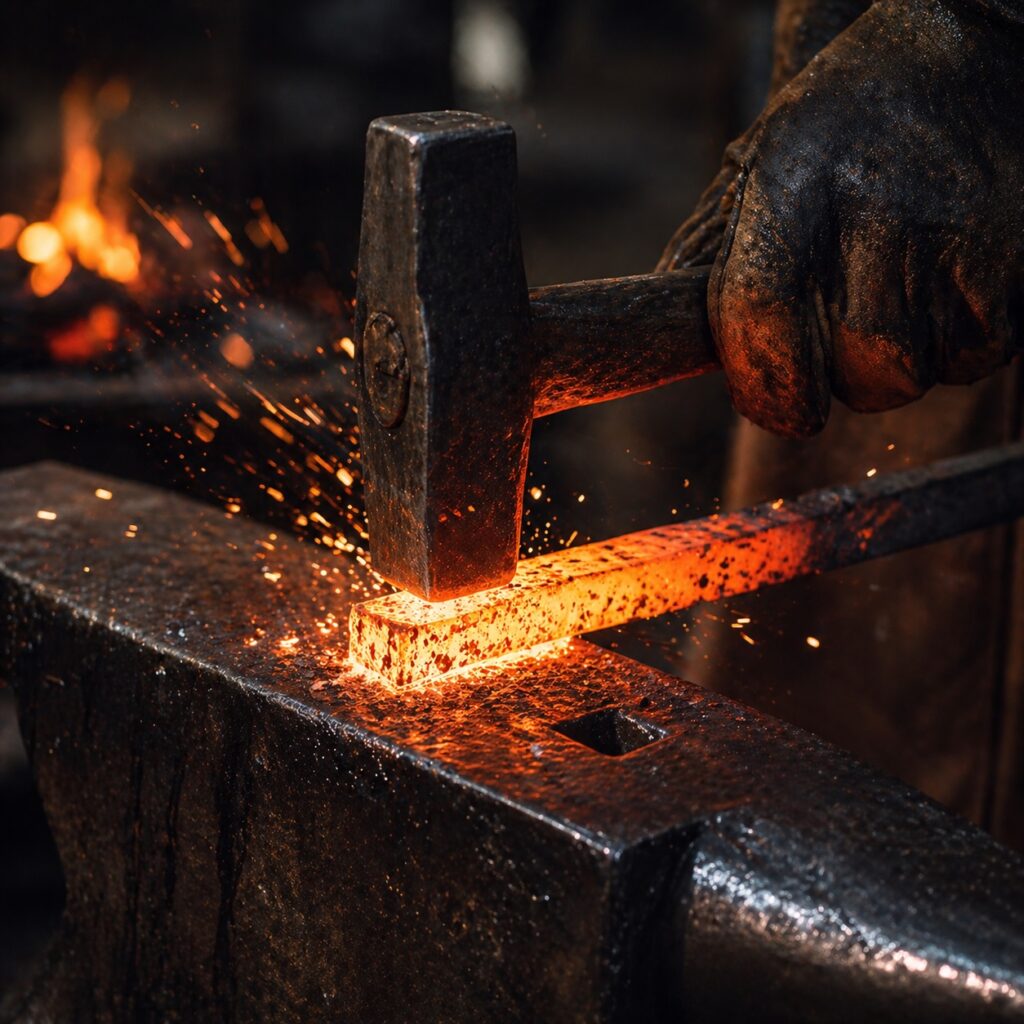
At one point, I wanted to test something that gets repeated all the time:
“Railroad track steel is basically 1084.”
So I decided to try it myself.
I got a small piece of railroad track (legally sourced scrap) and cut a section from the rail head — the part that actually contacts the train wheels.
Step 1: Spark Test
The first thing I did was a spark test.
Compared to mild steel, the sparks were much more active and branching. That immediately told me one thing:
This was definitely a medium-to-high carbon steel.
Not exact proof of grade — but enough to continue.
Step 2: Forging
Once I started forging, the difference became obvious.
The steel didn’t move like mild steel. It felt stiffer, more resistant under the hammer.
At first, I assumed I was just not heating it enough.
But after adjusting temperature, it became clear:
👉 Railroad steel is tougher to forge — and less forgiving.
If you go too cold, it starts to resist and risks cracking.
Step 3: Normalizing (This Was Critical)
After rough shaping, I normalized the steel multiple times.
This step made a huge difference.
Without normalizing, the steel felt unpredictable.
After normalizing:
✔ grain structure improved
✔ stress reduced
✔ behavior became more consistent
Step 4: Quench Test
Before committing to a full blade, I tested a small piece.
I heated it to critical temperature and quenched in oil.
After cooling, I ran a file across the surface.
The file didn’t bite — it skated.
That meant one thing:
👉 The steel hardened successfully.
Step 5: First Attempt (Failure)
I finished a rough blade and heat treated it.
But the result wasn’t perfect.
The edge held initially — but during light testing, I noticed slight chipping.
That’s when I realized:
This wasn’t behaving exactly like clean 1084 stock.
Step 6: Adjustment
So I changed approach:
- More careful temperature control
- Better normalization cycles
- Slightly softer temper
This time, the result improved significantly.
Final Result
✔ The blade worked
✔ It held an edge reasonably well
✔ It was tough enough for utility use
But here’s the truth:
❌ It wasn’t as predictable as real 1084
❌ Heat treatment required trial and error
Key Insight
From that experience, one thing became very clear:
Railroad track steel can behave like 1084 — but it is not consistent enough to be treated as identical.
If you’re forging it:
👉 Treat it as unknown high-carbon steel
👉 Always test before committing
👉 Expect variation
That’s the difference between theory and real-world steel.
Can You Forge Railroad Track Steel?
Yes, you can forge railroad track steel.
But there are limitations.
Rail steel is often high-carbon and manganese-bearing, so it can be forgeable and hardenable. That is why blacksmiths use old rail for:
- Anvils
- Hardy tools
- Fullers
- Small blades
- Shop tools
- Hammers
- Decorative metalwork
But there are important warnings.
Pros of Forging Railroad Track Steel
Railroad steel can be:
- Tough
- Wear resistant
- Hardenable
- Readily available as scrap
- Useful for tools
- Good for practice forging
It also has enough mass to be useful for improvised anvils.
Cons of Forging Railroad Track Steel
The drawbacks are real:
- Exact grade may be unknown
- Old rails may contain defects
- Microcracks can exist
- Heat treatment is uncertain
- Different rail sections may behave differently
- It may be hard to cut and grind
- Legal ownership of rail scrap matters
If you are working with scrap metal at home, the basic safety mindset is similar to how to cut rebar with simple tools: secure the material, choose the right cutting method, and avoid forcing the tool.
Never take rail from active or abandoned tracks without permission. That is dangerous and often illegal.
Heat Treatment Behavior
If the rail steel is similar to 1084, it may respond well to oil quenching.
But because the exact chemistry is unknown, a test coupon is the best approach.
A practical heat-treatment sequence would be:
The idea of softening or conditioning metal before further work is also used in other materials; for example, how to anneal aluminum follows a different process, but the purpose is still to make the material easier to shape or work with.
- Cut a small sample
- Normalize
- Harden in oil
- Test with file
- Break test if needed
- Adjust quench and tempering
- Only then heat treat the final piece
For knives, the biggest problem is not whether rail steel can harden.
The problem is repeatability.
Certified knife steels are simply more predictable.
Railroad Steel Properties: Hardness, Strength, and Toughness
Railroad steel properties vary by grade, but most rail steels are designed for high strength and wear resistance.
Railroad Steel Hardness
Typical railroad steel hardness may fall roughly in the range of:
- Around 250–320 HB for many standard rail steels
- Around 320–390 HB or higher for head-hardened or premium rails
Converted loosely, that may correspond to the high 20s to low/mid 40s HRC depending on grade and condition.
Knife makers should note:
Rail hardness in service is not the same as fully hardened knife hardness.
A rail is not designed to be 60 HRC across the whole section. That would be too brittle for railway use.
Because rail steel can be hard and abrasive, machining or drilling it requires more care than mild steel. In CNC work, deep-hole operations often rely on controlled chip evacuation methods such as the G83 peck drilling cycle.
Tensile Strength
Rail tensile strength often ranges from around:
- 700 MPa class
- 900 MPa class
- 1100 MPa class
- Higher in premium rail steels
UIC strength classes commonly reflect these types of ranges.
Yield Strength
Yield strength is also important because the rail must resist permanent deformation.
If rail steel yields too easily, the rail head can mushroom, deform, or develop unsafe geometry.
Wear Resistance
Wear resistance is one of the most important properties.
The top of the rail is constantly loaded by steel wheels. In curves, friction and side forces increase wear dramatically.
That is why harder, heat-treated, or premium rails are often installed in high-wear areas.
Toughness
Toughness is just as important as hardness.
A rail must resist crack growth.
A very hard rail that cracks easily is not acceptable.
This is one reason rail steel is carefully balanced. It must be hard enough to resist wear but tough enough to survive dynamic loading.
Is Railroad Steel Good for Knives?
Railroad steel can make a usable knife, but it is not ideal if you want predictable performance.
The phrase “is railroad steel good for knives” needs a practical answer.
Yes, It Can Work
If the rail steel has enough carbon and is properly heat treated, it can make a functional blade.
A rail-head knife can be tough, durable, and interesting.
For a rustic shop knife, camp tool, or experimental blade, it can be a fun project.
But It Is Not the Best Choice
For serious knife making, known steels are better:
- 1084
- 1095
- 5160
- 80CrV2
- O1
- W2
- 52100
Why?
Because the heat treatment is known.
With railroad steel, you are guessing unless you test it.
A knife made from unknown rail steel may:
- Harden unevenly
- Crack during quench
- Fail to hold an edge as expected
- Contain hidden defects
- Require trial-and-error tempering
So the honest answer is:
Railroad steel can be good for knives, but certified knife steel is better if performance and consistency matter.
What Steel Are Train Tracks Made Of?
Train tracks are made of high-carbon rail steel, usually carbon-manganese steel with a pearlitic microstructure.
In older or simpler terms, people compare it to 1084 steel.
In modern standards, it may be closer to:
- UIC900A
- R260
- R350HT
- U71Mn
- AREMA rail steel
- JIS rail steel
- Other regional rail grades
The exact answer depends on where the rail was made and what service it was designed for.
A heavy-haul freight rail and a light industrial rail may not use the same steel.
Why Railroad Steel Does Not Rust Away Quickly
Railroad steel does rust, but it usually does not rust away quickly in normal service.
There are a few reasons.
First, rails are massive. Surface rust does not immediately destroy the section.
Second, train wheels polish the rail head. The top contact surface often appears shiny because passing wheels continually remove oxide.
Third, rail steel is dense, high-carbon steel with controlled chemistry. It is not stainless steel, but it is made for outdoor service.
Still, rail can corrode badly in harsh environments, especially where moisture, salt, industrial chemicals, or poor drainage are present.
So the answer is:
Railroad steel does rust, but the rail head often stays shiny because wheel contact constantly cleans it. The rest of the rail can and does corrode over time.
Can You Weld Railroad Track Steel?
Yes, railroad track can be welded, but it requires correct procedure.
Rail welding is specialized because rail steel has high carbon content.
High-carbon steel is more crack-sensitive during welding than mild steel.
Common rail welding methods include:
- Flash-butt welding
- Thermite welding
- Enclosed arc welding
- Repair welding with controlled preheat
For casual shop welding, railroad steel can be difficult.
When welding difficult steels, technique matters a lot; even basic issues like heat control and cleanup are easier to understand if you already know how to reduce welding spatter like a pro.
You may need:
- Preheating
- Low-hydrogen electrodes
- Controlled cooling
- Post-weld treatment
- Proper filler selection
If you weld rail like mild steel, cracking is possible.
For actual track service, rail welding should only be done by trained professionals following railway procedures.
Railroad Steel vs Spring Steel
Railroad steel and spring steel are not the same.
Spring steel, such as 5160, is designed for elastic flexing and shock resistance. It commonly contains chromium and has very good toughness.
Railroad steel is designed for rolling contact wear, compressive strength, and fatigue resistance under train wheels.
Railroad Steel Advantages
- Excellent wear resistance
- High compressive strength
- Good durability under rolling contact
- Useful for shop tools and anvils
Spring Steel Advantages
- Better known for blades and springs
- Excellent toughness
- More predictable if purchased as certified stock
- Often easier to heat treat using known recipes
For knives, spring steel like 5160 is usually a more predictable choice.
For wear surfaces, rail steel has an advantage.
Final Answer: What Grade of Steel is Railroad Track?
Railroad track is commonly described as 1084 or 1084-equivalent high-carbon steel, but that is only a simplified answer.
The more accurate answer is:
Railroad track is usually high-carbon manganese rail steel with a pearlitic microstructure. Depending on the country and specification, it may be identified as UIC900A, R260, R350HT, AREMA rail steel, JIS rail steel, U71Mn, or another rail-specific grade.
Most rail steels contain roughly:
- 0.50–0.85% carbon
- 0.70–1.30% manganese
- Small amounts of silicon
- Low phosphorus and sulfur
- Sometimes chromium, vanadium, or other alloying elements
So, is railroad steel 1084?
Sometimes it is close to 1084, but not always exactly 1084.
That distinction matters.
For general understanding, “1084-like high-carbon steel” is fine.
For engineering, welding, forging, or knife making, you should treat railroad track as unknown rail steel unless you have the actual grade certificate or lab analysis.
Key Takeaways
- Railroad track steel is not always 1084, even if it behaves similarly
- Most rail steel contains ~0.70–0.85% carbon and high manganese
- Modern railroad tracks are defined by UIC, AREMA, JIS, or GB/T standards
- Rail steel is engineered for wear resistance and fatigue strength, not cutting performance
- Scrap railroad track should always be treated as unknown high-carbon steel
FAQ About Railroad Track Steel Grade
Is railroad steel high carbon?
Yes. Most railroad track steel is medium-to-high carbon steel. Many rail steels contain around 0.70–0.85% carbon, although the exact amount depends on the grade and standard.
Is railroad track steel good for knives?
Railroad track steel can be used for knives, especially if it comes from a high-carbon rail head and is properly heat treated. However, it is not as predictable as certified knife steel such as 1084, 1095, 5160, or 80CrV2.
Is railroad steel 1084?
Railroad steel is often similar to 1084 in carbon and manganese content, but it is not always literally AISI 1084. Modern rails are usually specified by rail standards such as UIC, AREMA, JIS, or GB/T.
What is the carbon content of railroad track?
The railroad track carbon content is commonly around 0.50–0.85%, with many high-carbon rail steels falling near 0.70–0.82% carbon. Some grades may vary depending on age, region, and application.
Why is railroad steel so strong?
Railroad steel is strong because it combines high carbon, manganese, controlled rolling, pearlitic microstructure, and sometimes heat treatment. This gives it wear resistance, fatigue resistance, and high load-carrying ability.
How hard is railroad steel?
Standard rail steel may be around 250–320 HB, while head-hardened rail can be higher, often around 320–390 HB or more depending on grade. Exact hardness depends on rail type and treatment.
Can you forge railroad track steel?
Yes, railroad track steel can be forged. It is commonly used for blacksmithing tools, anvils, and experimental knives. However, because the exact grade is often unknown, test pieces should be hardened and tempered before making a final blade or tool.
Can you weld railroad track?
Yes, but welding railroad track requires proper procedure because rail steel is high carbon and crack-sensitive. Professional rail welding often uses flash-butt welding or thermite welding. Shop welding requires preheat, correct filler, and controlled cooling.
Why doesn’t railroad steel rust?
Railroad steel does rust. The rail head often looks shiny because train wheels continuously polish the top surface. The web and base can still corrode, especially in wet, salty, or poorly drained environments.
Is railroad steel better than spring steel?
Not universally. Railroad steel is excellent for wear resistance and compressive loading. Spring steel is usually better for flexible, shock-resistant tools and predictable knife making. The better steel depends on the application.