
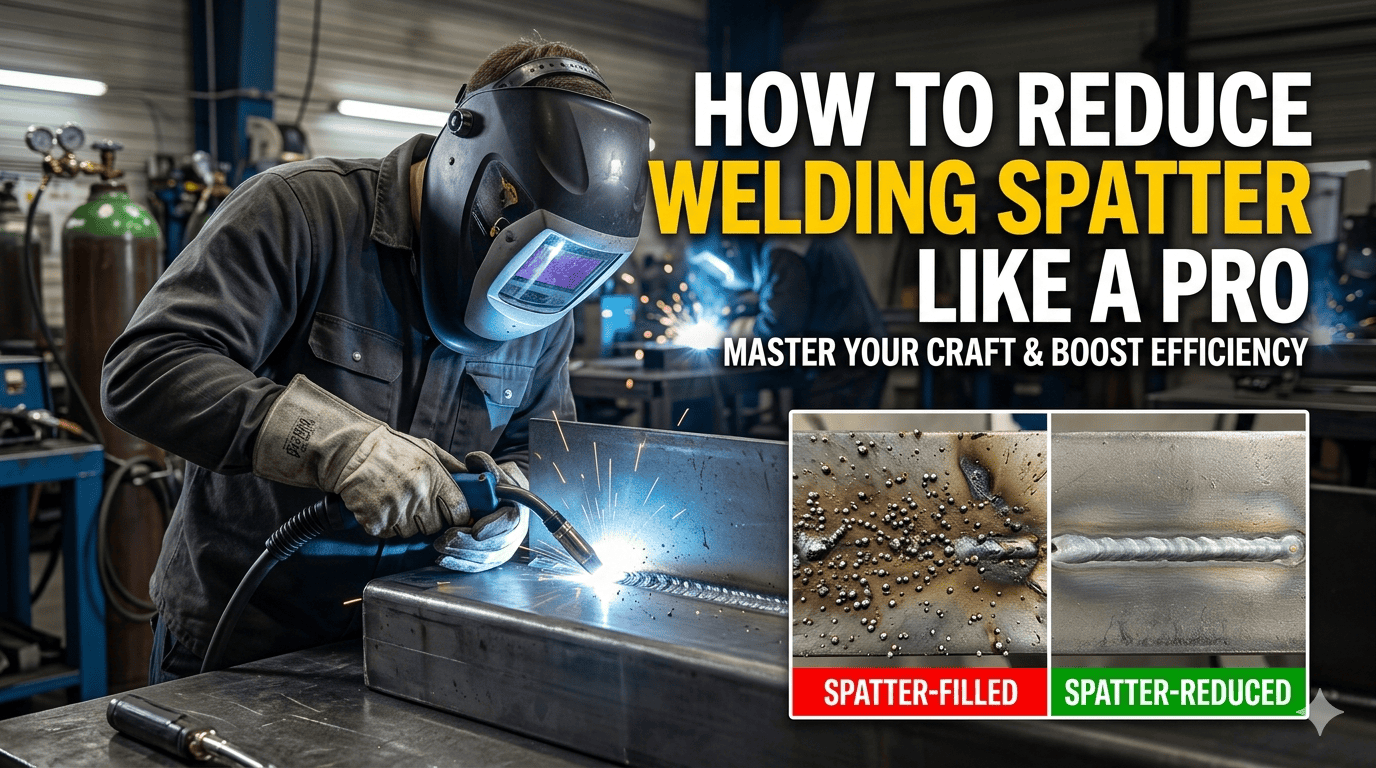
Most people mess this up by blaming the machine first. In reality, welding spatter comes from poor settings, dirty metal, or unstable arc behavior. Fix those, and spatter drops fast.
To reduce welding spatter: balance voltage and wire feed, clean the surface, use proper shielding gas, maintain correct torch angle, and keep a stable arc.
- Set correct voltage
- Match wire feed speed
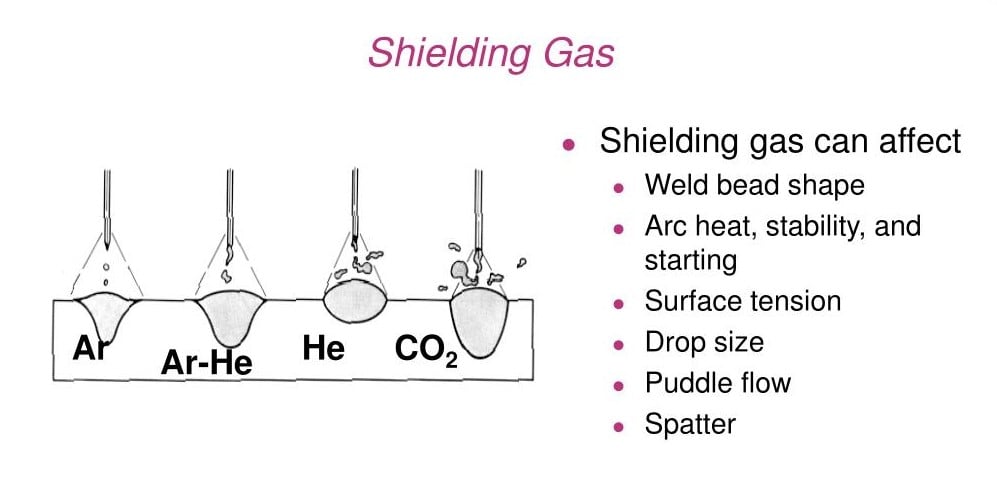
- Use proper shielding gas
- Clean the material
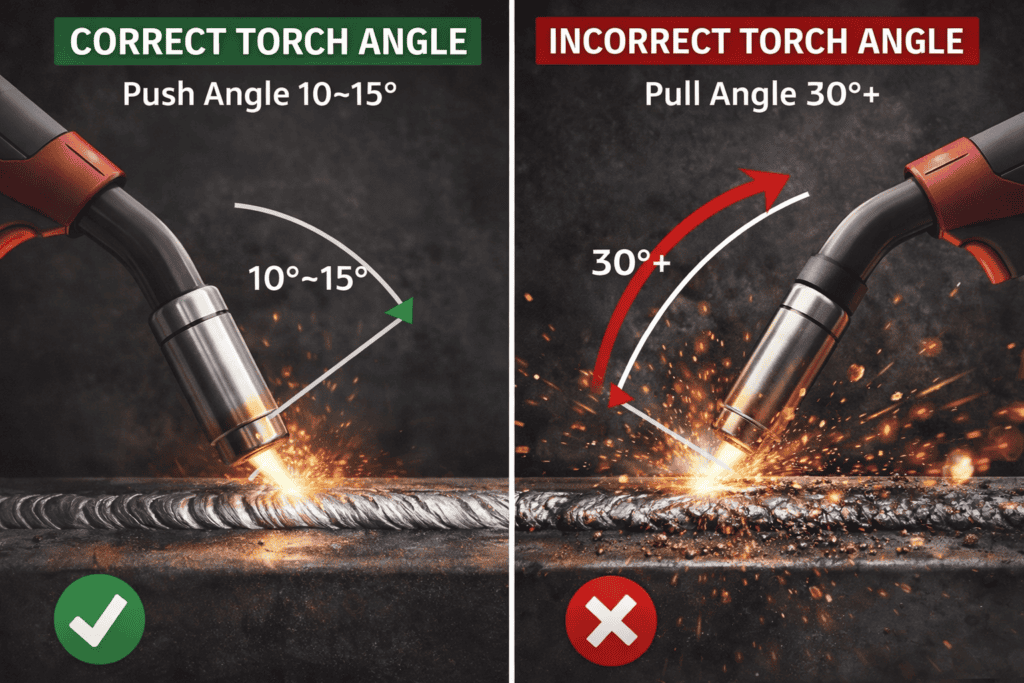
- Keep 10–15° torch angle
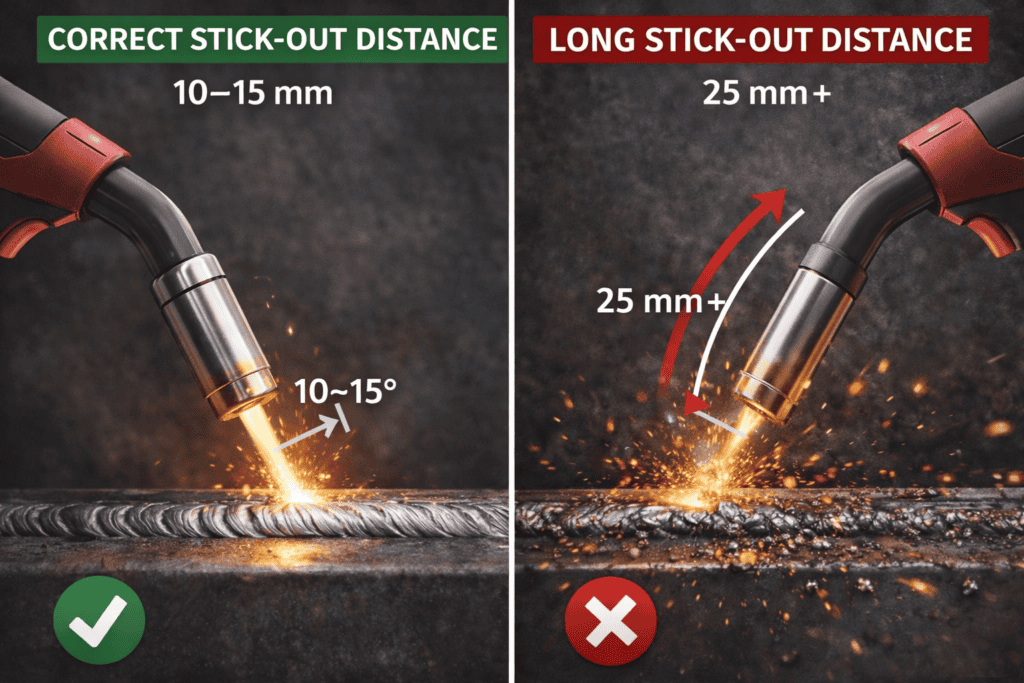
- Maintain proper stick-out
- Check ground connection
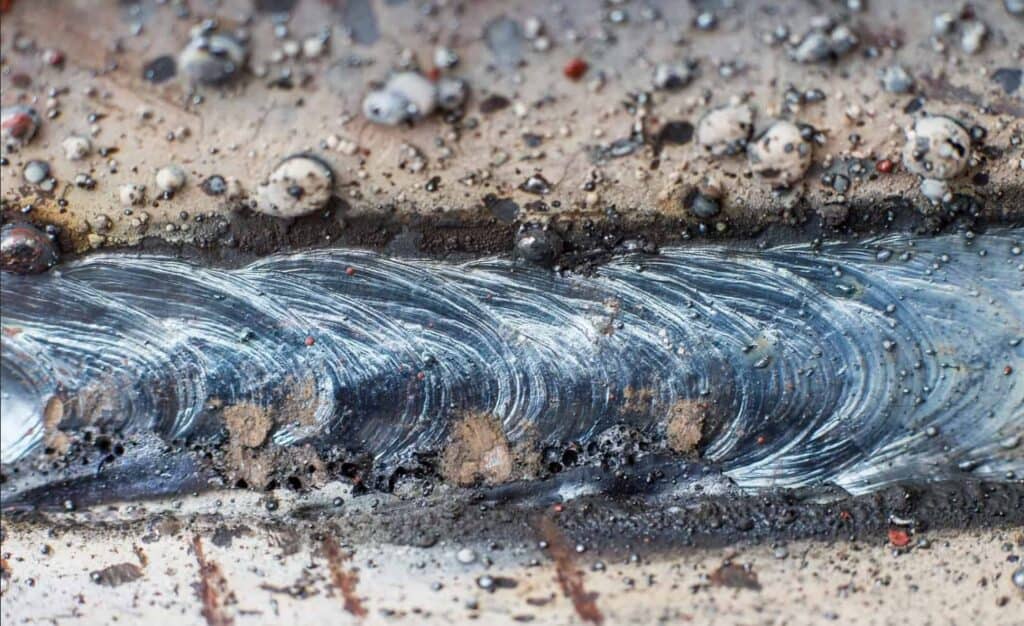
What Actually Causes Welding Spatter?
Spatter isn’t random. It happens when the arc becomes unstable and molten metal fails to transfer smoothly into the weld pool.
In real shop conditions, beginners often push voltage too high thinking it improves penetration — it actually creates a violent arc.
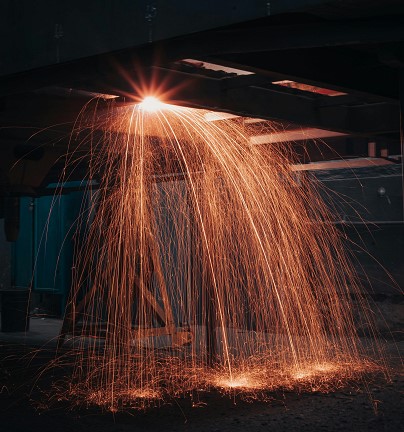
Welding Transfer Modes and Spatter
Short Circuit Transfer
Low heat, low spatter — but only when tuned correctly. Too low voltage causes wire stubbing and increases spatter.
Globular Transfer
This is the worst zone. Large droplets fall unpredictably and create heavy spatter.
Spray Transfer
Smooth, stable arc with minimal spatter. Requires higher voltage and argon-rich gas.
Unwritten rule: If your weld sounds rough and spits metal, you’re stuck in globular mode.
Step-by-Step: How to Reduce Welding Spatter
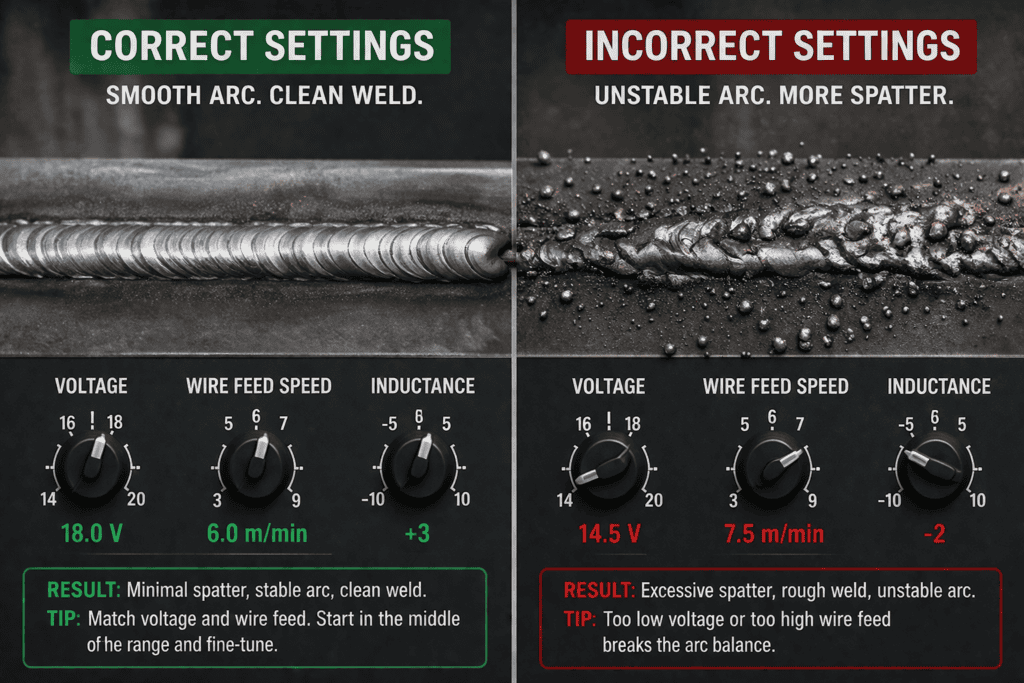
1. Adjust Voltage Correctly
Too high = explosive arc. Too low = unstable arc. Aim for a smooth, consistent sound.
2. Match Wire Feed Speed
Most beginners overlook this. Voltage and wire feed must be balanced.
3. Clean the Metal Surface
Oil, rust, and dirt disrupt the arc. Even a thin layer increases spatter.
4. Use the Right Shielding Gas
75/25 Argon-CO₂ mix gives the best balance between stability and cleanliness.
5. Fix Torch Angle
Keep a 10–15° push angle for smoother gas flow and arc stability.
6. Control Stick-Out
Ideal range: 10–15 mm. Too long or too short disrupts arc stability.
7. Check Ground Connection
Bad grounding causes instant arc instability and spatter.
Recommended Welding Settings
| Material | Voltage | Wire Speed | Gas |
|---|---|---|---|
| Thin | Low | Medium | 75/25 |
| Medium | Medium | Medium-High | 75/25 |
| Thick | High | High | 90/10 |
Why Welding Spatter Happens
Spatter occurs when molten droplets fail to transfer smoothly due to arc instability and energy imbalance.
Too much or too little energy causes metal to scatter instead of bonding cleanly.
Many welding issues actually start before the arc is even struck. Material condition, surface quality, and prior processing methods all play a major role in weld performance.
For example, poorly machined surfaces can increase spatter, while improper heat treatment can change how the material reacts during welding and lead to unstable arcs.
Welding Spatter Troubleshooting Guide
| Problem | Cause | Fix |
|---|---|---|
| Popping sound | Low voltage | Increase voltage |
| Metal blobs | Globular transfer | Adjust settings |
| Random bursts | Dirty metal | Clean surface |
| Mid-weld spatter | Bad ground | Fix clamp |
| Gas spatter | Wrong gas | Use 75/25 mix |
Real Shop Scenarios
Thin metal: Beginners increase power → causes overheating and spatter.
Mid-weld issues: Often caused by heat buildup or poor grounding.
Everything correct but still spatter: Usually cheap wire or worn parts.
Advanced Techniques
- Adjust inductance for smoother arc
- Use Pulse MIG for minimal spatter
- Control heat buildup over time
- Use high-quality wire
Hidden Mistakes
- Wrong polarity
- Too much gas flow
- Drafts affecting shielding gas
- Dirty liner or worn contact tip
Reality Check
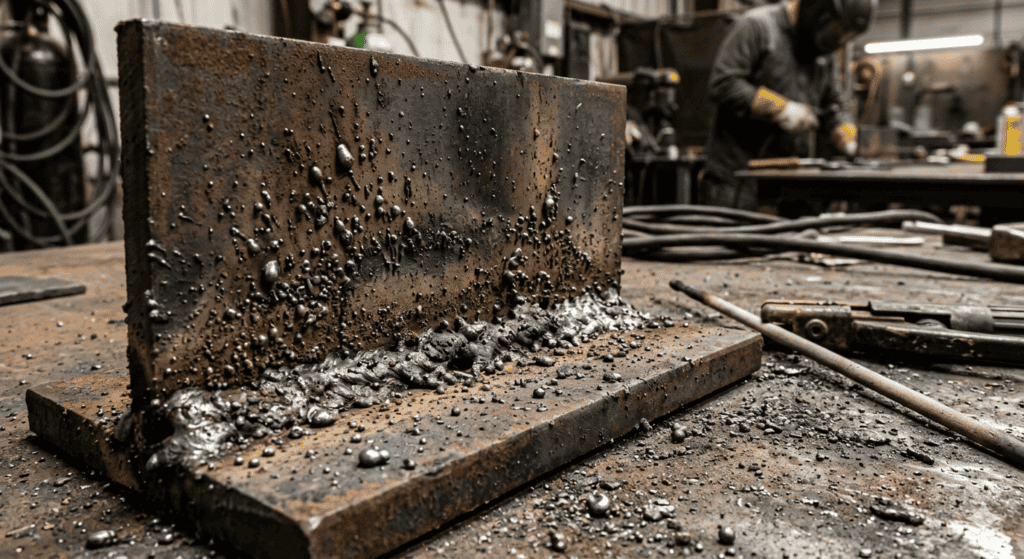
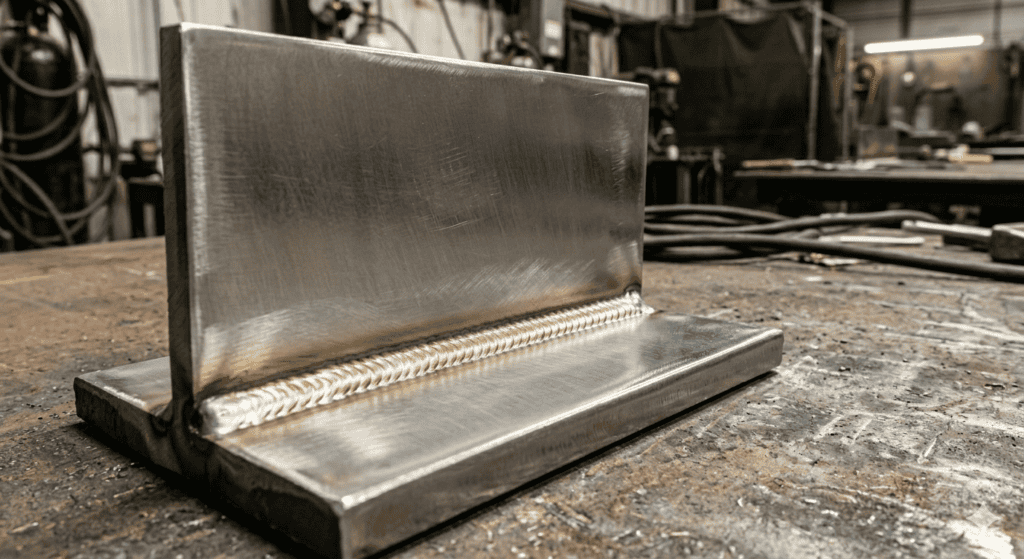
Normal: Small, minimal spatter
Problem: Large blobs and rough welds
Ignore: Tiny specks
FAQ
Why is my MIG welder producing spatter?
Usually incorrect voltage-wire feed balance or dirty material.
Does shielding gas affect spatter?
Yes. Argon mixes reduce spatter compared to CO₂.
Can anti-spatter spray fix it?
No. It only prevents sticking, not formation.
Is some spatter normal?
Yes. Completely spatter-free welding is rare.
Fastest way to reduce spatter?
Balance voltage and wire feed, and clean the metal.