
Quick Answer
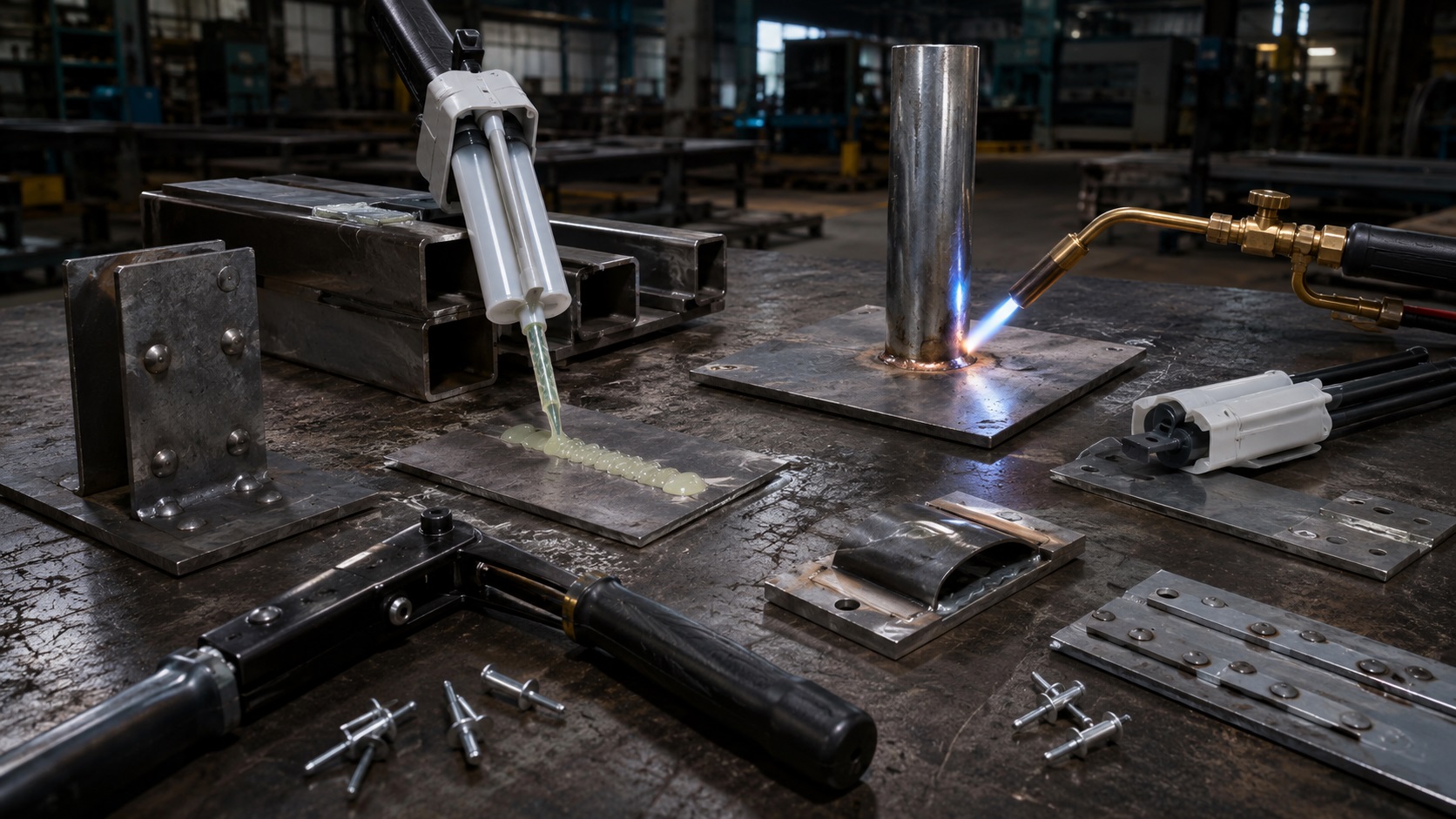
The best way to bond metal without welding depends on the strength, heat resistance, and vibration the joint will face. Structural epoxy works well for many steel and aluminum repairs, rivets and bolts provide stronger mechanical fastening, and brazing creates durable metal-to-metal joints without the extreme heat distortion of welding. For thin sheet metal or DIY fabrication, modern structural adhesives are often far stronger than most beginners expect.
A lot of beginners assume welding is the only “real” way to join metal. In actual fabrication shops, that is not always true.
There are plenty of situations where welding is either impractical, excessive, or actually the worse option. Thin sheet metal warps easily under heat. Powder-coated parts get destroyed by welding temperatures.
Aluminum panels distort fast, especially when too much heat is concentrated in one area. This is also why understanding whether welding aluminum weakens it matters before choosing between welding, brazing, riveting, or adhesive bonding.
Stainless can discolor badly. Sometimes you simply do not have access to a welder.
From real workshop experience, many successful metal assemblies today are actually bonded using adhesives, rivets, brazing, or hybrid fastening systems instead of traditional welding.
Modern automotive body panels are a good example. Many manufacturers now use structural adhesives combined with spot welds or rivets because they distribute stress better and reduce localized heat distortion.
The important part is understanding where each method works — and where it fails.
Why Many Fabricators Avoid Welding for Certain Jobs
Welding is incredibly strong, but it also introduces heat affected zones, distortion, oxidation, and internal stress into the material. If you want to understand how heat changes metal behavior, this also connects closely with why steel turns blue when heated.
You will usually notice this immediately on thin steel or aluminum panels. Parts begin pulling sideways, edges warp, and previously flat surfaces become difficult to align.
For some fabrication work, avoiding heat entirely produces a cleaner final result.
Common situations where non-welded bonding works better:
- Thin automotive sheet metal
- Decorative steel furniture
- Aluminum trim and panels
- Stainless kitchen fabrication
- HVAC ducting
- Copper tubing
- Temporary repair work
- Mixed-metal assemblies
- Powder-coated components
- DIY garage projects
This is especially true when appearance matters more than maximum structural strength.
What Is the Strongest Way to Bond Metal Without Welding?
For most DIY and fabrication applications, mechanical fastening combined with structural adhesive is usually the strongest non-welded solution.
That combination spreads loads across the joint while also mechanically locking the parts together.
However, the “best” method changes depending on the application:
| Method | Strength | Heat Resistance | Vibration Resistance | Best Use |
|---|---|---|---|---|
| Structural Epoxy | Medium-High | Moderate | Moderate | Panels, brackets, repairs |
| Rivets | High | Excellent | High | Sheet metal |
| Bolts | Very High | Excellent | High | Structural assemblies |
| Brazing | High | High | Moderate | Pipes, tubing, copper |
| VHB Tape | Moderate | Moderate | Moderate | Trim panels |
| Hybrid Fastening | Very High | High | Very High | Automotive/fabrication |
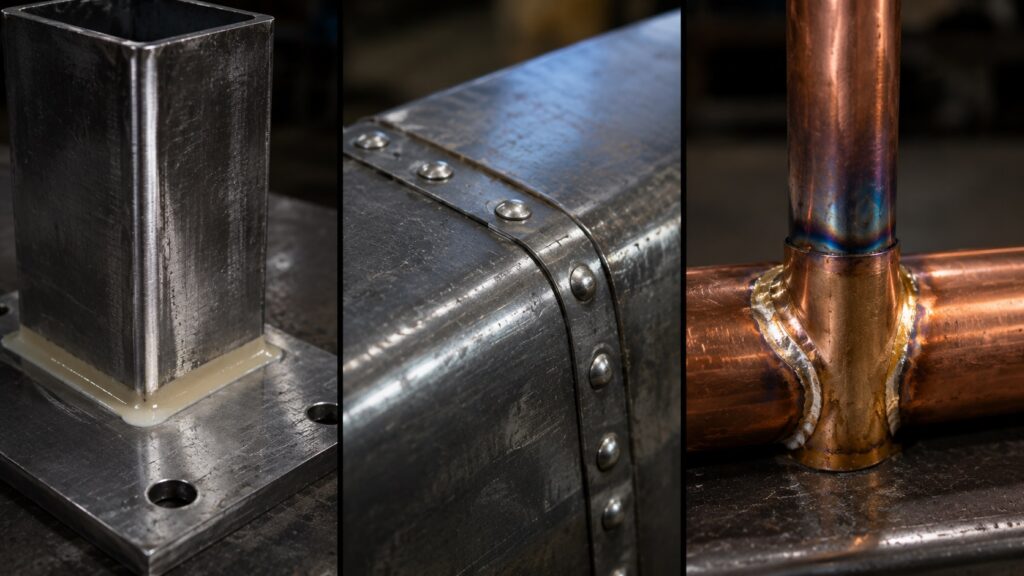
One common mistake DIY users make is assuming advertised PSI numbers tell the whole story.
They do not.
A joint may survive huge compression loads but fail instantly under peel stress or vibration fatigue.
That is why joint design matters just as much as adhesive strength.
Epoxy and Structural Adhesives
For beginners, epoxy is usually the easiest starting point.
But there is a massive difference between cheap general-purpose epoxy and actual structural metal adhesive.
Low-cost hardware store epoxy becomes brittle quickly under vibration or temperature cycling. Structural panel bonding adhesives are dramatically tougher and more flexible.
In real fabrication shops, structural adhesives are often used for:
- Automotive quarter panels
- Steel brackets
- Aluminum skin panels
- Stainless trim
- Equipment housings
- Non-structural repairs
The biggest advantage is avoiding heat distortion completely.
You can bond thin metal panels without warping edges or damaging surrounding coatings.
Why Some Metal Epoxy Joints Fail So Fast
Most failures are not caused by the adhesive itself.
They are caused by poor surface preparation.
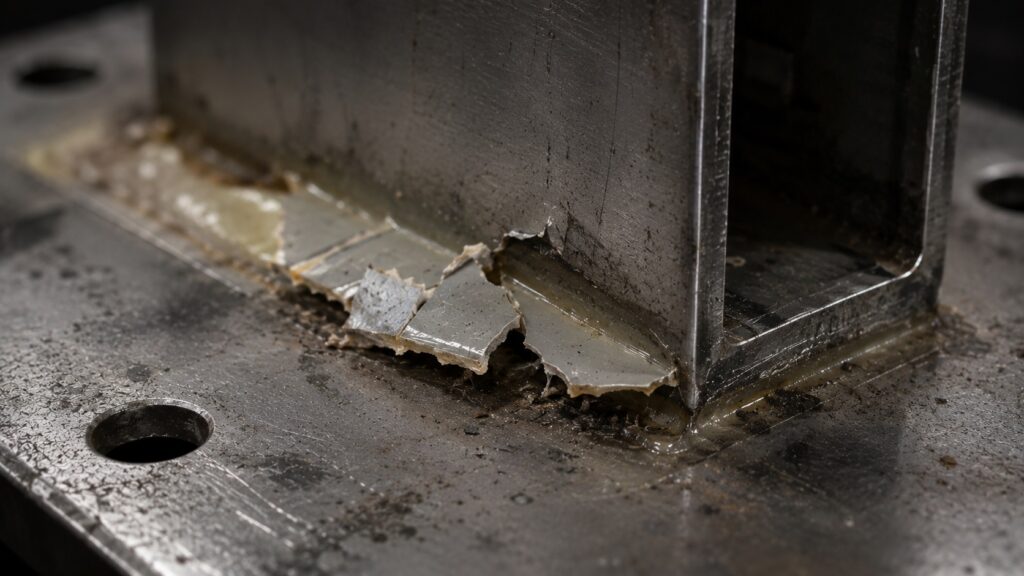
You will usually notice epoxy peeling cleanly off shiny metal rather than actually breaking internally. That means the bond never properly attached to the surface in the first place.
The most common causes:
- Oil contamination
- Smooth polished surfaces
- Oxidation layers
- Incorrect cure temperature
- Excessive joint movement
- Too little overlap area
- Improper clamp pressure
Aluminum is especially problematic because it instantly forms a microscopic oxide layer that weakens adhesion. If you work with aluminum often, it also helps to understand how to anneal aluminum because aluminum responds very differently to heat than mild steel.
That is why freshly sanded aluminum bonds dramatically better than untouched polished aluminum.
Rivets and Bolts
Mechanical fastening is still one of the most reliable methods for joining metal without welding, especially on drilled sheet metal, brackets, and simple fabrication projects. If you are cutting reinforcement material before fastening or fitting parts, how to cut rebar with simple tools is a useful related guide.
Unlike adhesives, rivets and bolts are less sensitive to oils, surface energy, or curing conditions.
Pop rivets are extremely common in:
- HVAC fabrication
- Trailer panels
- Aluminum assemblies
- Automotive interiors
- Sheet metal repairs
Bolts are stronger overall and easier to service later.
If something eventually loosens or corrodes, you can simply disassemble the joint and repair it.
From workshop experience, rivets outperform adhesives in high-vibration environments surprisingly often.
Cheap epoxy may crack after repeated vibration cycles, while properly installed rivets continue surviving years of abuse.
Rivet Nuts Are One of the Most Useful Upgrades
Many DIY users do not realize how useful rivet nuts are until they try them.
A rivet nut creates a threaded insert inside thin sheet metal, allowing bolts to be installed where normal threading would be impossible.
They are heavily used in:
- Automotive fabrication
- Off-road builds
- Equipment mounting
- Aluminum structures
- Interior panel systems
For many fabrication projects, they feel almost like cheating because they simplify assembly so much.
Brazing Creates Strong Metal-to-Metal Joints
Brazing sits somewhere between welding and adhesive bonding.
It is also useful to compare brazing with other heat-based cutting or joining methods because every process affects the metal differently. For example, flame cutting vs plasma cutting shows how heat input changes edge quality, cleanup, and distortion.
Instead of melting the base metal itself, brazing melts a filler material that flows into the joint.
This produces surprisingly strong joints with far less heat distortion than welding.
Brazing works especially well for:
- Copper
- Brass
- Thin steel tubing
- HVAC systems
- Bicycle frames
- Stainless assemblies
One thing beginners often underestimate is how important joint overlap is during brazing.
A butt joint without overlap is dramatically weaker than a properly sleeved or lap-style connection.
Capillary action is what gives brazed joints much of their strength.
If the fit-up is sloppy, the filler metal cannot properly wick into the joint.
Metal Bonding Tape Actually Works Better Than Most People Think
High-end acrylic foam tapes like industrial VHB tape are used far beyond simple DIY applications.
In real manufacturing environments, they are commonly used for:
- Automotive trim
- Exterior panels
- Glass mounting
- Signage
- Aluminum skin panels
The advantage is even stress distribution.
Unlike rivets, which create concentrated stress points, adhesive tape spreads the load across the entire bonding area.
However, heat and contamination still matter enormously.
Dirty surfaces kill tape adhesion quickly.
Why Surface Preparation Matters More Than the Adhesive
Surface prep is usually the difference between a bond that lasts years and one that fails in a week.
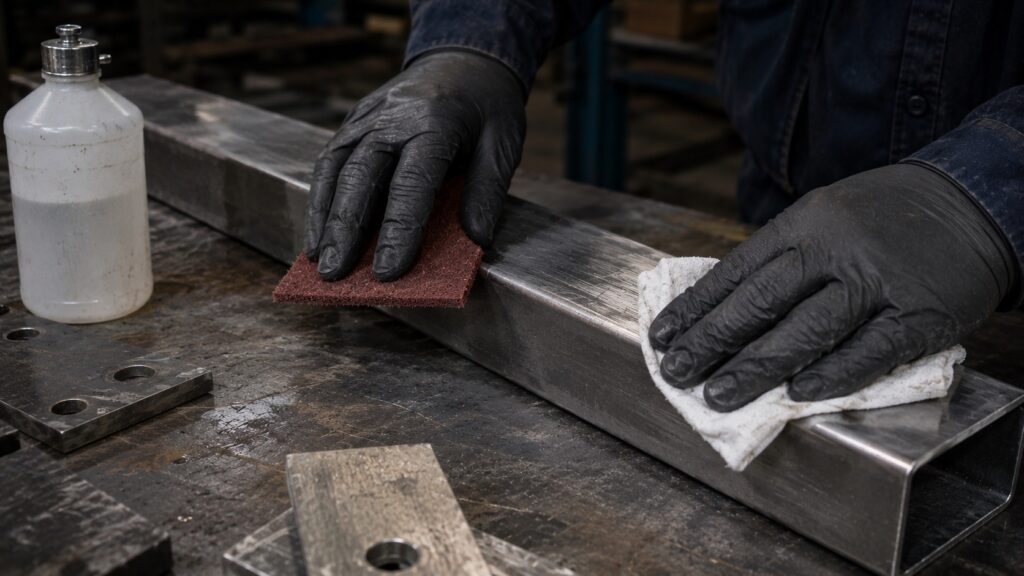
This is where many beginners accidentally ruin otherwise good adhesives.
If the metal is bare steel, surface cleanliness matters even more because rust, oil, and mill scale can interfere with adhesion. The same preparation mindset also applies when learning how to finish bare steel furniture.
Proper preparation normally includes:
- Degreasing
- Abrasion
- Dust removal
- Solvent cleaning
- Bonding immediately before oxidation reforms
Smooth polished steel is actually difficult to bond properly because the adhesive has very little mechanical grip.
Scuffing the surface creates microscopic valleys that dramatically improve adhesion.
In fabrication shops, you will often see technicians intentionally roughening metal surfaces before applying structural adhesive.
Powder-Coated Metal Causes Constant Problems
One common mistake is bonding directly onto powder coating.
Sometimes it works.
Sometimes the adhesive sticks stronger than the powder coating itself — meaning the coating eventually separates from the steel underneath.
For critical applications, exposing bare metal is usually safer.
Best Adhesives for Different Metals
| Metal Type | Recommended Bonding Method | Common Problems |
|---|---|---|
| Mild Steel | Structural epoxy, bolts | Rust under joint |
| Aluminum | Structural adhesive, rivets | Oxide layer |
| Stainless Steel | Abraded epoxy bonding | Low surface energy |
| Copper | Brazing | Heat discoloration |
| Galvanized Steel | Rivets, bolts | Coating contamination |
Mixed metals introduce another issue: galvanic corrosion. This is especially important with aluminum, stainless steel, copper, and plain carbon steel because not all metals corrode the same way. For a deeper explanation, see do nonferrous metals rust.
When dissimilar metals touch in the presence of moisture, corrosion can accelerate dramatically.
Adhesives can sometimes help isolate metals electrically and reduce this problem.
Step-by-Step: How to Bond Metal Without Welding Properly
1. Clean the Metal Thoroughly
Remove oils, grease, cutting fluid, and fingerprints.
Brake cleaner, acetone, or dedicated metal prep solutions work well.
2. Abrade the Surface
Use:
- 80–120 grit sandpaper
- Scotch-Brite pads
- Flap discs
The goal is not to polish the metal. The goal is to create a clean, slightly rough surface the adhesive can grip. This is similar to the surface-prep logic used in salt water etching stainless steel, where surface condition controls the final result.
Do not leave polished surfaces smooth.
3. Dry Fit Everything First
Before mixing adhesive or heating metal, verify alignment and clamp placement.
This prevents panic once cure time starts.
4. Apply the Bonding Method Correctly
For adhesive:
- Apply evenly
- Avoid air pockets
- Maintain consistent bond thickness
For rivets:
- Drill clean holes
- Remove burrs
- Use correct rivet grip range
For brazing:
- Heat evenly
- Avoid overheating flux
- Maintain proper overlap
5. Clamp Correctly
Too much pressure can actually weaken adhesive joints by squeezing out too much material.
This surprises many beginners.
A thin but consistent bond line is normally strongest.
6. Allow Full Cure Time
A lot of DIY users move parts too early.
Structural adhesives may feel hard after a few hours but continue gaining strength for much longer.
Common Bonding Failures in Real Workshops
Adhesive Peeling Off Cleanly
Usually caused by:
- Oil contamination
- Smooth surfaces
- Oxidation
- Wrong adhesive type
Cracking Under Vibration
Cheap brittle epoxy struggles badly with vibration fatigue.
Automotive applications especially expose this weakness fast.
Heat Failures
Some epoxies soften dramatically around engine bays, exhaust systems, or direct sunlight on dark metal panels.
Always verify temperature ratings.
Corrosion Starting Under the Bond
Moisture trapped inside poorly sealed joints can slowly create hidden corrosion.
This is common on outdoor steel assemblies.
Epoxy vs Welding: What You Gain and Lose
| Factor | Epoxy/Adhesive | Welding |
|---|---|---|
| Heat Distortion | Minimal | High |
| Equipment Cost | Low | Moderate-High |
| Structural Strength | Moderate | Very High |
| Appearance | Clean | Requires finishing |
| Vibration Resistance | Moderate | Excellent |
| Learning Curve | Easy | Moderate |
| Thin Sheet Metal | Excellent | Difficult |
From practical fabrication experience, adhesives are often cleaner and faster for light-duty work.
But for heavily loaded structural steel, welding still dominates.
Professional Tips That Improve Bond Strength Dramatically
Increase Overlap Area
A larger bonding surface often matters more than stronger adhesive.
Avoid Peel Loads
Adhesives survive shear forces much better than peeling forces.
This is one of the biggest engineering concepts beginners overlook.
Combine Fasteners with Adhesive
Hybrid fastening systems are incredibly effective.
Many professional assemblies use both.
Control Temperature During Cure
Cold garages slow cure times dramatically.
Some adhesives barely cure at all in low temperatures.
Seal Joint Edges
This reduces moisture intrusion and corrosion over time.
When Welding Is Still the Better Option
Sometimes welding is simply the correct answer.
You should strongly consider welding when dealing with:
- Structural frames
- Heavy equipment
- Suspension components
- Roll cages
- Thick steel plate
- High-impact loads
There is a reason industrial fabrication still relies heavily on welding for critical structures. If you already weld and want cleaner results, reducing defects like spatter is part of getting stronger, better-looking joints; see how to reduce welding spatter like a pro.
No adhesive replaces properly executed structural welds in those situations.
Final Thoughts
Learning how to bond metal without welding is mostly about understanding limitations.
Every joining method has tradeoffs.
Structural adhesives reduce heat distortion and simplify assembly. Rivets handle vibration extremely well. Brazing creates durable metal-to-metal joints with lower heat input. Bolts provide strength and serviceability.
From real workshop experience, the strongest results usually come from choosing the right method for the actual application instead of trying to force one solution onto everything.
A properly prepared adhesive joint can outperform expectations dramatically.
But poor surface prep will ruin even the most expensive bonding product in minutes.
Common Questions About Bonding Metal Without Welding
Can epoxy hold metal permanently?
Yes, high-quality structural epoxy can permanently hold metal in many non-structural applications. Surface preparation matters more than most people realize. Dirty or polished metal surfaces are one of the main reasons epoxy joints fail early.
What is stronger than JB Weld for metal?
Professional structural panel bonding adhesives are usually stronger and more flexible than standard JB Weld-style epoxy. Many are specifically designed for vibration resistance and automotive fabrication.v
Can you bond aluminum without welding?
Yes. Structural adhesives, rivets, and brazing are all common methods for joining aluminum without welding. Proper surface preparation is critical because aluminum forms an oxide layer almost immediately after exposure to air.
Why do metal adhesive joints fail?
Most failures come from contamination, smooth surfaces, incorrect adhesive selection, vibration fatigue, or poor curing conditions. Heat exposure and trapped moisture can also weaken joints over time.
Is brazing as strong as welding?
Not usually. Welding normally produces stronger structural joints because the base metals fuse together. However, brazing is often strong enough for tubing, copper systems, HVAC work, and many fabrication projects.
Can you use construction adhesive on metal?
Some construction adhesives bond to metal, but many are not designed for serious structural loads or vibration. Dedicated structural metal adhesives normally perform much better for fabrication work.