
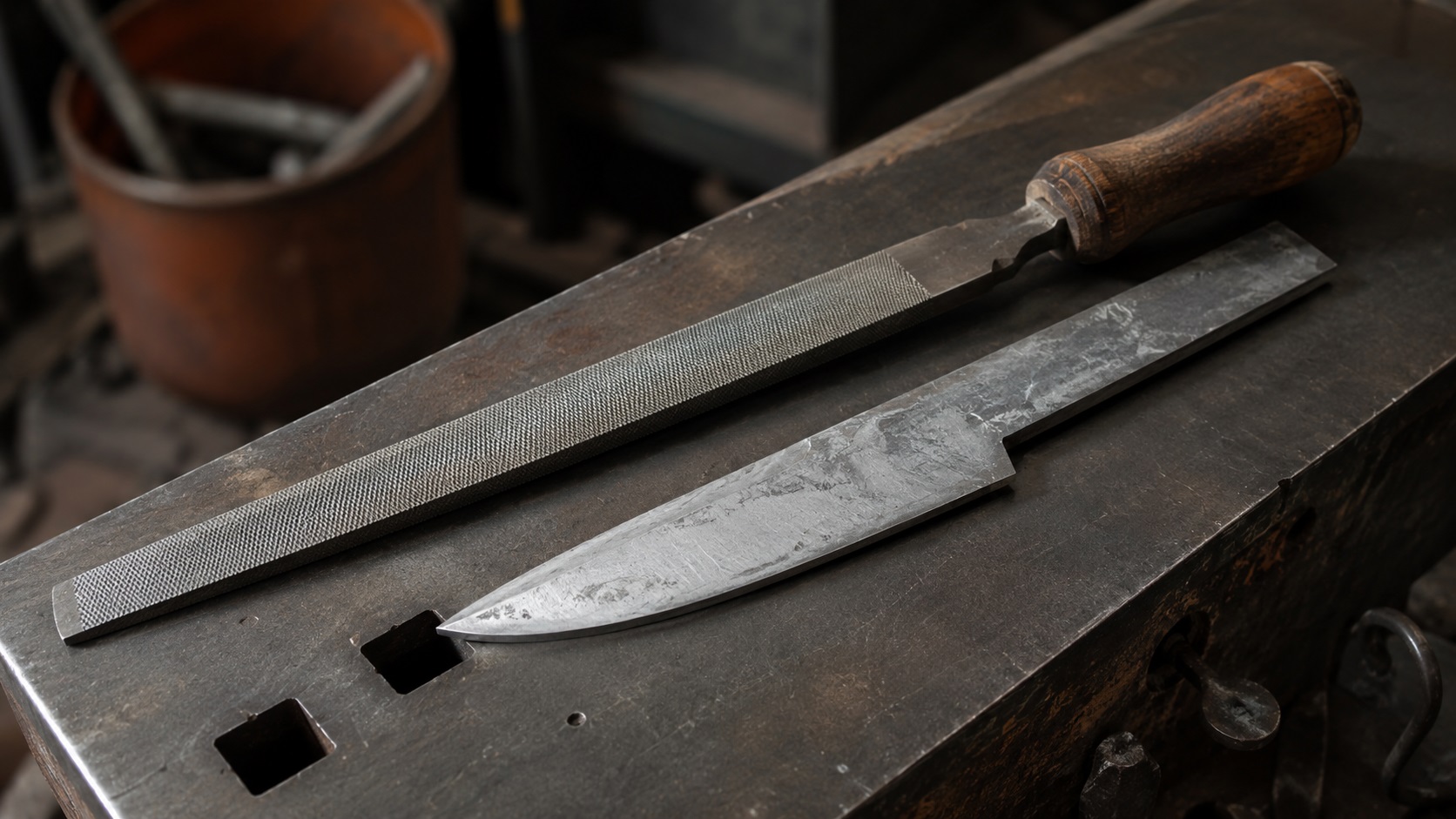
What steel are files made of, and why do some old files perform dramatically better than modern budget files?
Quick Answer
Most quality metal files are made from high-carbon tool steels such as W1, 1095, or similar shallow hardening steel capable of reaching extremely high hardness after heat treatment. Older files were often fully hardened all the way through, while many modern budget files are only case hardened with a softer core underneath the hardened cutting teeth.
That difference matters more than most DIY users realize. If you are forging knives, modifying tooling, or repurposing old rasps and bastard files, the steel quality determines whether the finished part actually holds an edge or simply looks good hanging on the wall.
Why File Steel Needs Extremely High Hardness
A metal file spends its entire life cutting, scraping, and wearing against other metals, so the steel has to remain significantly harder than the material being worked on. That is why quality files are traditionally made from quenched high carbon steel capable of reaching roughly 60–66 Rc after heat treatment.
HRC≈60–66
In real fabrication shops, you can usually tell the difference between a good file and a cheap one almost immediately. A quality Nicholson, Simonds, Bahco, or Pferd file tends to “bite” aggressively into mild steel with very little pressure. Lower-end files often skate across the surface or lose their sharpness surprisingly fast once the hardened teeth begin wearing down.
Part of that hardness comes from carbon percentage in file steel. Most traditional file steels contain enough carbon to form a strong martensitic structure during quenching. That hardened microstructure gives files their wear resistance, but it also explains why they can chip or snap if abused.
One common workshop mistake is using an old hardened file as a pry bar or hammer wedge. Hardened tool steel handles abrasion extremely well, but impact loading is another story entirely.
What Steel Is Commonly Used in Files?
Common High-Carbon Steels Used in Metal Files
Older premium files were commonly produced from steels such as:
| Steel Type | Typical Use | Characteristics |
|---|---|---|
| W1 Tool Steel | Hand files | Very hard, excellent edge retention |
| 1095 High Carbon Steel | Files & blades | Tough, simple heat treatment |
| T12/T13 Carbon Tool Steel | Industrial files | High wear resistance |
| 52100 Variants | Specialty files | Fine carbide structure |
These steels are popular because their tool steel chemistry allows them to harden very effectively while still being relatively forgeable compared to more alloy-heavy steels.
Many older files also used shallow hardening steel compositions. That is actually useful for cutting tools because the surface hardens aggressively while still allowing some toughness underneath after tempering.
From real workshop experience, older Nicholson and Simonds files are still commonly sought after by blacksmiths and knife makers because they generally respond predictably during heat treatment. Older Grobet files and quality farrier rasps are also popular in forging circles.
Are Modern Files Still High-Carbon Steel?
Not always.
Some modern files are still made from quality heat-treated file steel, but many lower-cost imports use softer base material with only a hardened outer shell. This is especially common with inexpensive hardware-store files and generic import sets.
That process is called case hardening.
Through-Hardened vs Case-Hardened Files
| Type | Core Hardness | Surface Hardness | Good for Knife Making? |
|---|---|---|---|
| Through-Hardened | Hard throughout | Hard | Usually yes |
| Case-Hardened | Soft core | Thin hard layer | Usually no |
A fully hardened file maintains similar hardness through most of its cross-section. A case-hardened file only has a thin hardened exterior surrounding a softer core material.
This becomes important during grinding or forging. Once you remove the hardened outer layer, the softer internal steel may not harden properly again.
In real fabrication environments, machinists sometimes notice cheaper files flex slightly before failure, while quality hardened files usually fracture sharply and cleanly. That behavior often tells you a lot about the steel before you ever put it in a forge.
Another clue is tooth wear. Cheap files frequently lose the sharpness of the hardened cutting teeth long before the body of the tool is actually worn out.
Why High-Carbon File Steel Gets So Hard
The extreme hardness comes from both carbon content and heat treatment.
When high-carbon file steel is heated above critical temperature and quenched rapidly, the internal structure transforms into martensite — a very hard crystalline phase that dramatically increases wear resistance.
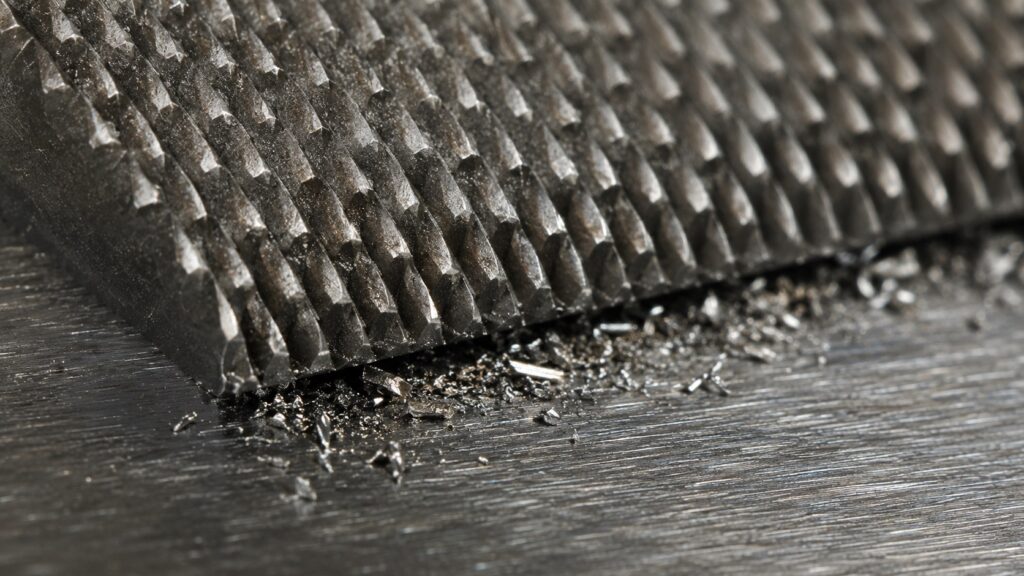
Higher carbon content also promotes carbide formation inside the steel. Those carbides help the file resist abrasion while maintaining aggressive cutting action over long periods of use.
In practical shop use, that is why a quality bastard file can continue cutting mild steel cleanly for years while a cheap file becomes smooth and polished after relatively light work.
However, there is a tradeoff.
The harder the martensitic structure becomes, the more brittle the steel generally gets. That brittleness is why hardened files can crack during improper quenching or shatter if dropped onto concrete floors.
One thing many beginners overlook is file tang annealing. The tang area on many traditional files is intentionally softened slightly so it will not snap while pressure is applied during hand filing. That softer tang sometimes confuses people into thinking the entire file is low-quality steel when the working section is actually fully hardened.
How to Identify Good High-Carbon File Steel
1. Perform a Spark Test on the File Steel
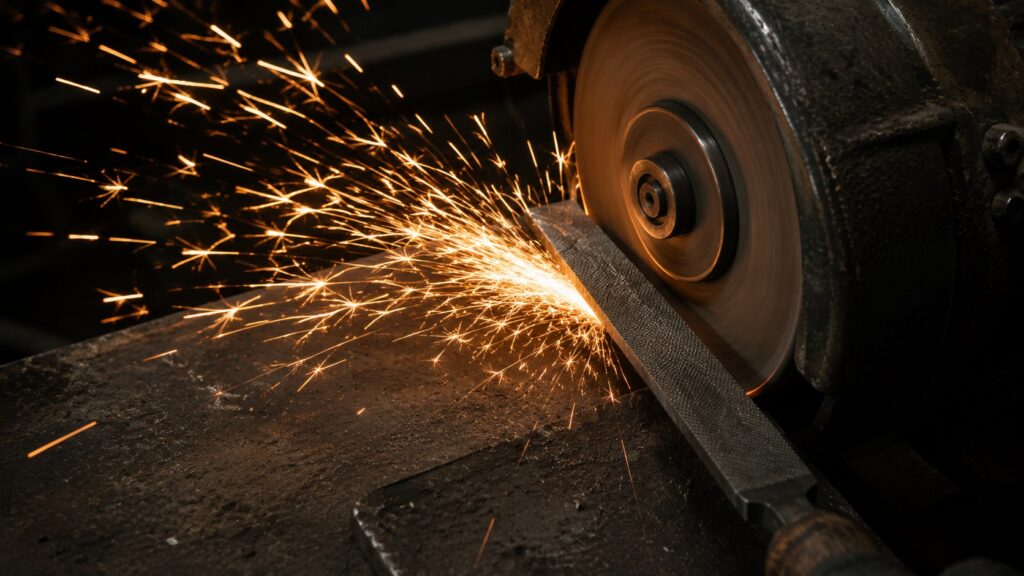
A spark test is still one of the fastest ways to get a reasonable idea of the steel quality.
High-carbon file steel usually produces:
- bright yellow sparks
- dense branching bursts
- energetic spark “explosions”
- long spark streams
Lower-carbon or softer steels typically create:
- shorter red-orange sparks
- fewer branches
- duller spark patterns
Experienced machinists and blacksmiths can often identify usable rasp steel or file steel within seconds at the grinder just from spark behavior alone.
It is not a perfectly scientific test, but it is surprisingly useful in the shop.
2. Check the File Fracture Pattern
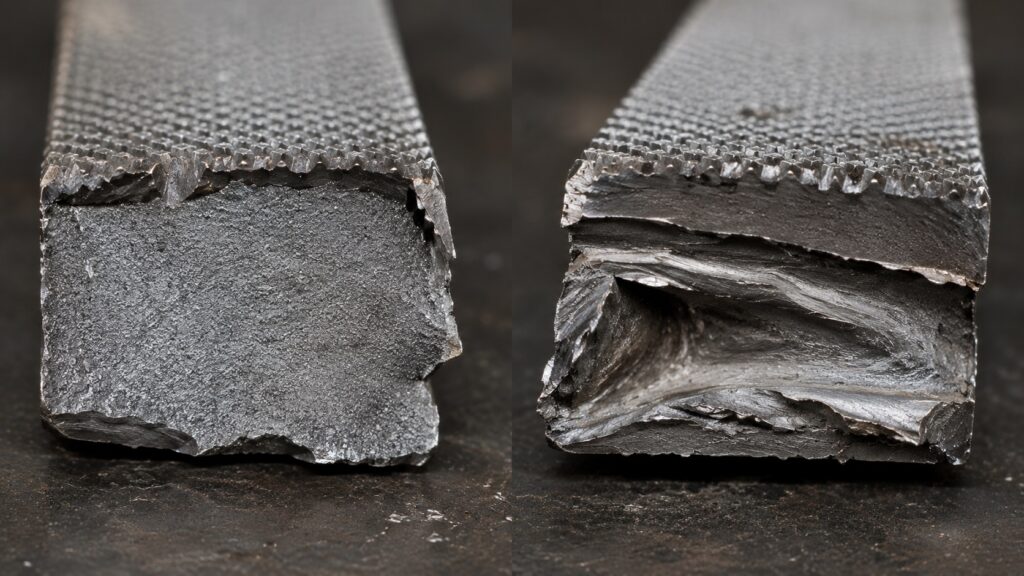
One old-school fabrication method is snapping off a small section near the tip of the file.
A quality through-hardened file usually:
- breaks sharply
- shows a fine grain structure
- reveals dull gray fracture surfaces
- displays minimal deformation
A softer case-hardened file may:
- bend slightly before breaking
- show shiny stretched metal
- reveal softer inner material
In real shops, you will often see experienced smiths wrap the file in a rag before snapping it in a vise because hardened fragments can launch farther than people expect.
Also avoid testing near the tang section. Because of file tang annealing, that area is intentionally softer and may give misleading results.
3. Test the Heat Treatment Response
Ultimately, this is the best test.
A small sample can be:
- Annealed
- Ground clean past the surface
- Heated to critical temperature
- Oil quenched
- Hardness tested
If the steel hardens consistently after re-heat treatment, it is likely usable for knives, punches, cutters, or shop tooling.
If you are unsure how to verify hardness after quenching, learning how to check the hardness of metal properly can prevent major heat-treatment mistakes later.
Many DIY users spend hours forging mystery steel without ever testing the quench response first. That usually ends in frustration once the edge refuses to hold hardness.
In real fabrication work, experienced makers almost always test small coupons before committing serious time to a larger project.
Why Some File Knives Fail
Decarburization During Forging
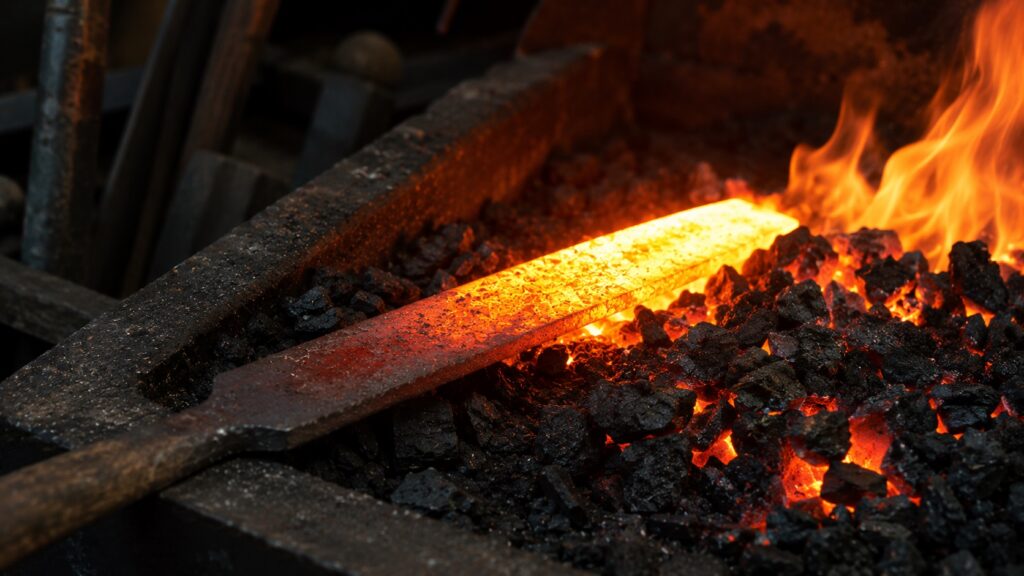
One of the most common problems with forged file steel is decarburization.
If the steel overheats during forging, carbon begins leaving the surface layers. The result is softer edge material that may never achieve full hardness again.
Symptoms usually include:
- poor edge retention
- inconsistent hardness
- dull spots after sharpening
- soft cutting edges
Many beginners unknowingly forge file steel far too hot because bright yellow steel “looks right” in the forge. In reality, excessive heat can damage both the surface chemistry and grain structure surprisingly quickly.
Proper temperature control matters far more than most beginners expect, especially when learning how to anneal steel properly or normalize high-carbon tool steel correctly.
In real blacksmith shops, experienced smiths often work file steel slightly cooler than beginners expect specifically to reduce carbon loss and scaling.
Grain Growth From Overheating
Repeated overheating can enlarge grain structure inside the steel.
Large grain steel tends to become:
- more brittle
- weaker under impact
- easier to crack during quenching
- less stable at thin cutting edges
Normalizing cycles help refine grain size before hardening. That grain refinement improves toughness and reduces quench stress considerably.
One common mistake in DIY knife making is repeatedly reheating thin blade sections until they almost sparkle. At that point, the steel is often already suffering from thermal damage.
Quench Cracking in File Steel
Files are frequently made from shallow hardening steel, which means quench behavior matters a lot.
Problems commonly happen because of:
- overheating
- water quenching
- uneven blade thickness
- sharp internal corners
- aggressive thermal shock
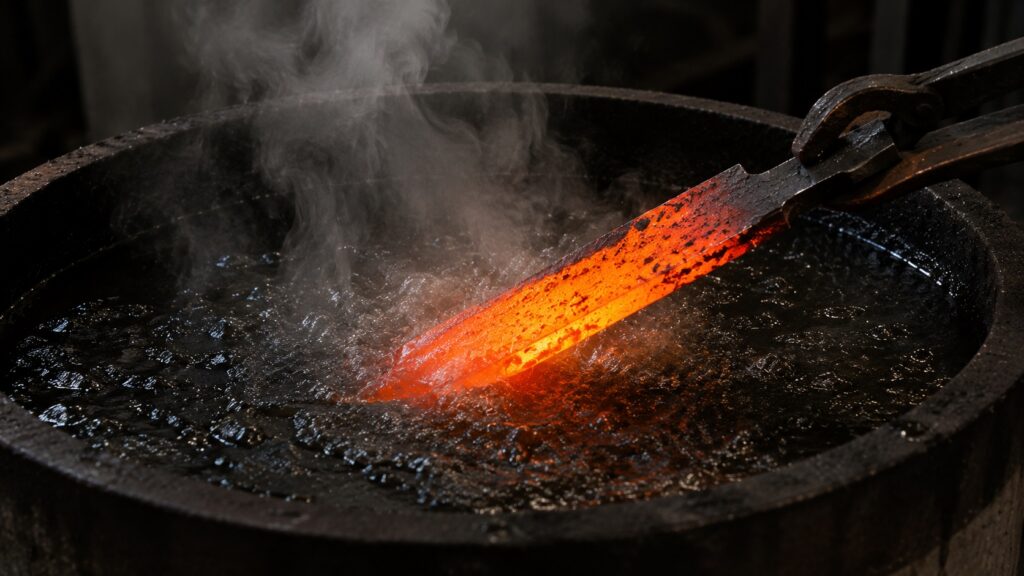
Oil quenching is generally safer for mystery file steel because it reduces stress during transformation into martensite.
Differential hardening can also help reduce cracking risk on larger forged blades. Some smiths intentionally keep the spine slightly softer while fully hardening the cutting edge to improve toughness.
Best Old Files for Knife Making and Forging
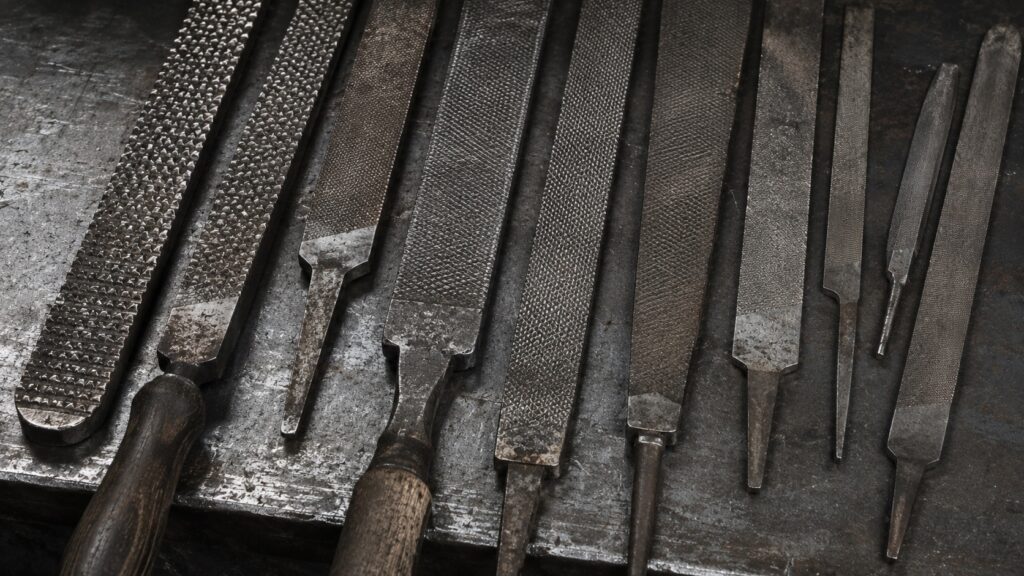
Generally safer choices include:
- older USA-made files
- vintage European files
- worn industrial files
- quality farrier rasps
- older Nicholson or Simonds files
- premium Bahco or Grobet files
Avoid:
- ultra-cheap import files
- decorative chrome-plated files
- unknown bargain-bin sets
- suspiciously lightweight files
Interestingly, heavily worn files are often excellent forging candidates because older manufacturing methods commonly used better steel chemistry than many modern budget tools.
In actual fabrication shops, many experienced smiths prefer old dull files over brand-new bargain files because the older steel tends to respond much more predictably during forging and heat treatment.
Can Hardened File Steel Be Machined?
Fully hardened file steel is extremely difficult to machine conventionally.
Common problems include:
- drill bit burning
- carbide chipping
- chatter
- excessive heat buildup
- rapid tool wear
Many of these machining problems are similar to what happens when drill bits burn up while cutting hardened steel or improperly heat-treated material.
That difficulty comes directly from the hardened martensitic structure and abrasive carbide content inside the steel.
Most shops will anneal hardened file steel before drilling, milling, or shaping operations. Once softened, the steel becomes far easier to work with using standard tooling.
Related internal link opportunities naturally fit here:
- “how to anneal steel”
- “how to check the hardness of metal”
- “why drill bits burn”
- “best steel for knife making”
Professional Tips for Working With File Steel
Use Known Steel Grades for Reliable Results
Known steel grades are usually safer and more predictable than mystery file steel.
Many experienced makers eventually move toward dedicated blade steels after struggling with inconsistent mystery steel heat treatment and unpredictable hardness results.
1084, 80CrV2, and 1095 generally provide more consistent heat treatment results than recycled files.
Avoid Overheating File Steel
One of the biggest beginner mistakes is overheating old file steel until heavy sparks start flying from the surface in the forge.
At that point, decarburization and grain growth may already be happening.
Grind Below the Hardened Surface Layer
Some case-hardened files only contain a thin hardened shell. Always test deeper material before investing major time into a project.
Normalize Before Hardening
Thermal cycling helps relieve internal stress, refine grain structure, and improve quench reliability.
That step alone can dramatically reduce cracking problems in quenched high carbon steel.
Common Questions About File Steel and Hardened Files
Can files be made from stainless steel?
Some specialty files are stainless, but most traditional hand files use high-carbon tool steel because it achieves significantly higher hardness and wear resistance.
Are old files better for knife making?
Usually yes. Older premium files were more commonly through-hardened using quality high-carbon steel rather than shallow case hardening.
Why do some files spark differently?
Spark patterns vary based on carbon percentage in file steel and overall alloy composition. Higher-carbon steels typically produce more branching spark bursts.
Can a case-hardened file make a good knife?
Usually not. Once the outer hardened layer is removed, the softer core steel often lacks enough carbon to maintain proper hardness.
Why are files so brittle?
High hardness improves wear resistance but reduces toughness. The hardened martensitic structure inside the steel becomes more susceptible to chipping and fracture under impact.
Is forging a file dangerous?
It can be if hidden cracks or hardened stress areas remain inside the steel. Uneven heating and improper quenching also increase cracking risk.
Final Thoughts on High-Carbon File Steel
Quality metal files have traditionally been made from extremely hard high-carbon tool steels designed for aggressive wear resistance and long-term cutting performance. Older files, rasps, and bastard files were often produced using excellent steel chemistry that still performs surprisingly well in modern knife making and fabrication work.
However, modern low-cost manufacturing changed the landscape quite a bit. Many newer files are only surface hardened, which creates major problems once you start forging or grinding deeper into the material.
From real workshop experience, the smartest approach is to treat every old file as mystery steel until proven otherwise. A quick spark test, fracture inspection, and small heat-treatment sample can save hours of wasted fabrication time later.
Good file steel can absolutely make excellent knives and shop tools. But the difference between quality through-hardened steel and a cheap case-hardened import is usually far bigger than most beginners expect.
Understanding steel hardness, heat treatment, and microstructure behavior becomes much easier once you spend time working with different high-carbon steels in real fabrication environments.