
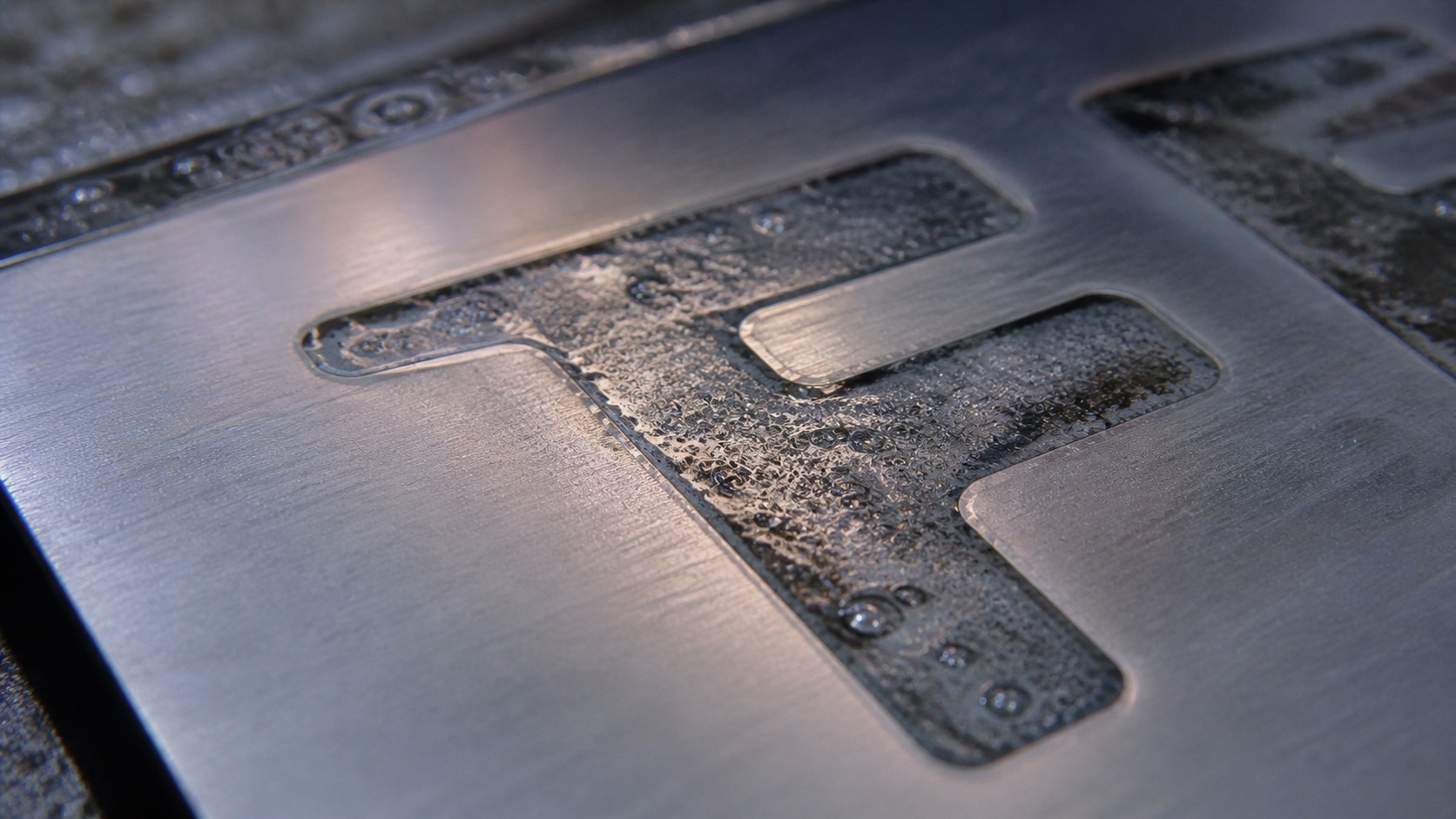
Salt Water Etching Stainless Steel: Quick Answer
Salt water etching stainless steel is a simple electrochemical process where low-voltage electricity (typically 5–12V) passes through a saltwater electrolyte to remove metal from the surface. The stainless steel acts as the anode and dissolves in exposed areas, creating a permanent mark or engraving. It’s safe when done with proper ventilation and produces clean, controlled results.
In short, salt water etching works by using low-voltage electricity, salt water, and a stencil to remove a thin layer of stainless steel from exposed areas. The metal connects to the positive terminal, the wet pad connects to the negative terminal, and the current creates a permanent etched mark.
Quick summary:
- Best voltage: 5–9V for most DIY work
- Best stencil: vinyl stencil or well-sealed electrical tape
- Best power source: USB charger or adjustable DC power supply
- Main risk: poor ventilation because electrolysis can produce gas
- Result: permanent etched marking, not just surface discoloration
I Tested Salt Water Etching on Stainless Steel Myself
I’ll be honest—at first I thought this method would barely work.
A 9V battery, salt water, and a cotton pad didn’t sound like something that could etch stainless steel in any serious way. But I tried it anyway on a scrap piece.
The first result was weak. Slight discoloration. Nothing impressive.
Then I adjusted a few things—cleaned the surface properly, fixed the polarity, used a better stencil, and switched to a stable 5V power source.
That’s when everything changed.
The etch became sharp, clean, and clearly permanent. After multiple tests, different voltages, and longer cycles, I realized this isn’t just a DIY trick—it’s a simplified version of real industrial electrolytic etching.
What Is Salt Water Etching on Stainless Steel?
Salt water etching (also known as electrolytic etching stainless steel) is a controlled electrochemical process where metal is removed from a surface using electricity and an electrolyte solution.
Instead of using strong acids, this method relies on:
- Electrical current
- Ion movement in solution
- Localized metal dissolution
The process happens only where current flows, which is why masking or stencils allow precise designs.
The Real Science Behind Salt Water Etching (How It Actually Works)
In simple terms, salt water etching works because electricity forces metal atoms to leave the surface and dissolve into the solution. Wherever current flows, metal is removed. Wherever it doesn’t, the surface stays intact.
Electrochemical fundamentals
When DC power is applied:
- The stainless steel is connected to the positive terminal (anode)
- The tool or pad is connected to the negative terminal (cathode)
At the anode, oxidation occurs:
Fe → Fe²⁺ + 2e⁻
At the cathode:
2H₂O + 2e⁻ → H₂ + 2OH⁻
Hydrogen gas is produced.
Role of stainless steel composition
Stainless steel contains chromium, which forms a passive oxide layer:
Cr₂O₃ (chromium oxide)
This layer protects the metal from corrosion.
Different stainless steel grades behave slightly differently during surface reactions, so understanding different types of stainless steel helps you predict the result better.
During etching:
- The electrical current breaks down this passive layer locally
- Once disrupted, the underlying metal dissolves
Current density and etching speed
Etching effectiveness depends on current density (current per surface area).
- Low current density → slow, precise marking
- High current density → faster but rougher etch
Typical behavior:
- 5V → fine marking
- 9V → balanced
- 12V → aggressive etching
Gas formation and chemistry risks
During electrolysis:
- Hydrogen gas forms at the cathode
- Chlorine gas can form from chloride ions
Cl⁻ → Cl₂ + e⁻
This is why ventilation is critical.
Before You Start (Critical Things Most Guides Ignore)
Most failures happen before you even begin.
Coated or plated metal warning
If your stainless steel has:
- Clear coat
- Paint
- Nickel plating
Etching will fail or become uneven. Electricity cannot properly reach the base metal.
Oil contamination issues
Even fingerprints matter.
Oil creates an insulating layer that blocks current flow.
Always degrease thoroughly before starting.
Surface preparation importance
Best practice:
- Clean with acetone or isopropyl alcohol
- Avoid touching afterward
- Work on a dry, clean surface
Skipping this step is the number one reason why salt water etching not working becomes an issue.
What You Need for Salt Water Etching Stainless Steel
Basic setup (beginner)
- 9V battery
- Stainless steel piece
- Table salt
- Water
- Cotton pad or sponge
- Alligator clips
- Vinyl stencil or tape
Advanced setup (recommended)
- Adjustable DC power supply (3–12V)
- Distilled water + salt electrolyte
- Graphite or metal electrode
- High-quality stencil (vinyl cutter or laser mask)
If you are new to workshop power tools and metalworking basics, this CNC machining guide gives a useful foundation for understanding metal removal processes.
Best Stencil Methods for Salt Water Etching
| Method | Precision | Ease | Cost | Best Use |
|---|---|---|---|---|
| Vinyl stencil | Very high | Medium | Medium | Logos, text |
| Electrical tape | Medium | Easy | Low | Simple shapes |
| Nail polish | Medium | Medium | Low | Small detailed areas |
| Spray paint masking | High | Medium | Medium | Large surfaces |
| Laser/plotter stencil | Excellent | Hard | High | Professional work |
Q-tip vs Cotton Ball vs Etching Pad
| Tool | Control | Speed | Best Use |
|---|---|---|---|
| Q-tip | High | Slow | Small details |
| Cotton ball | Medium | Fast | Medium/large areas |
| Etching pad | High | Medium | Consistent results |
- Small design → use Q-tip
- Large logo → cotton ball
- Precision + consistency → etching pad
How Long Does Salt Water Etching Take?
Time depends on voltage, surface area, and current density.
- Light marking → 10–30 seconds
- Medium etch → 1–5 minutes
- Deep etch → 5–20+ minutes
Example: a small logo etched at 5V typically takes around 2–3 minutes to reach a clean, visible depth. Larger designs or deeper engravings can take significantly longer depending on surface area and contact consistency.
Higher voltage speeds up the process but reduces control.
How to Etch Stainless Steel with Salt Water (Step-by-Step)
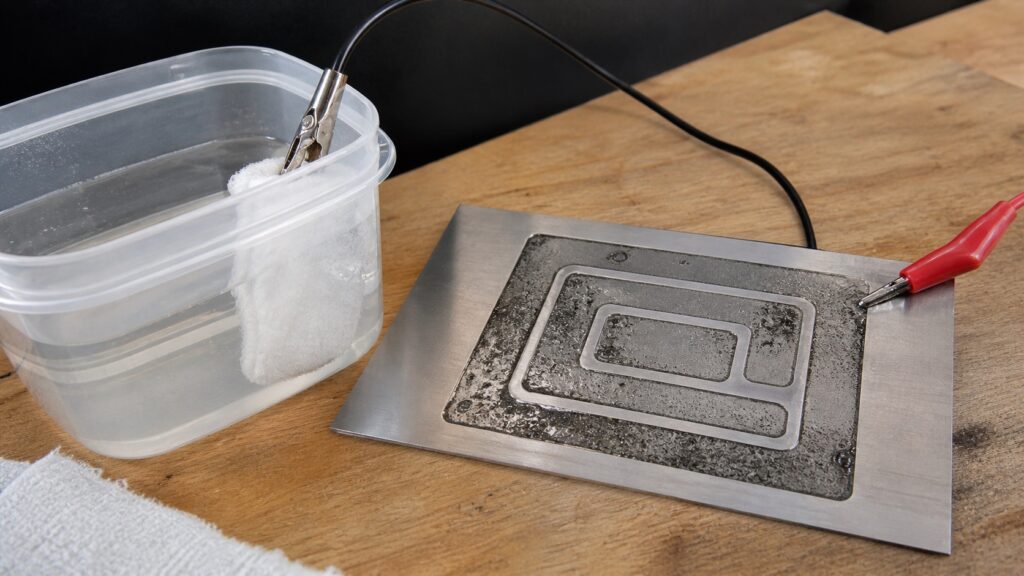
Clean the metal surface
Use acetone or alcohol. Remove all oils.
Apply the stencil
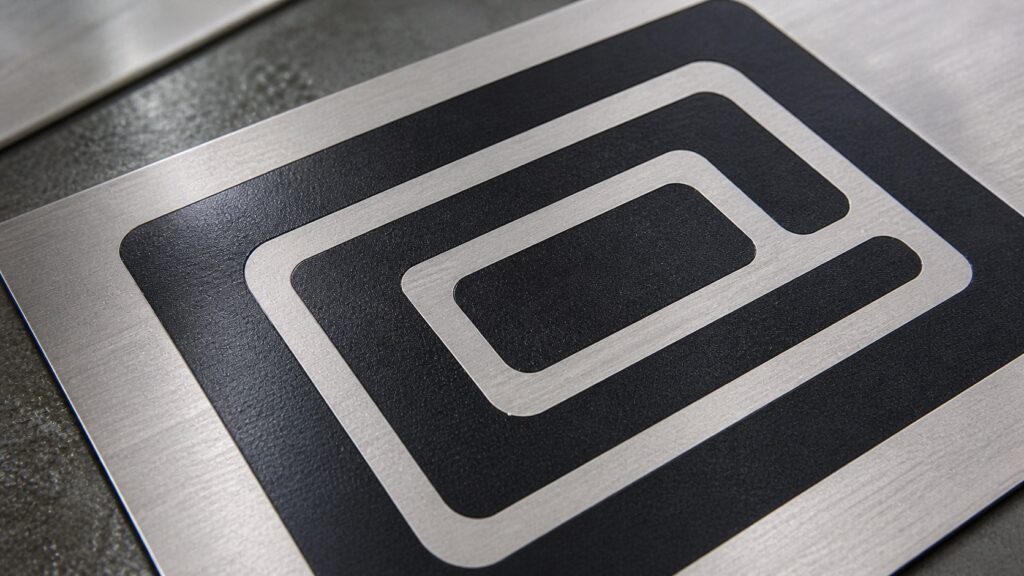
Seal edges tightly.
Prepare electrolyte solution
Mix:
- 1 cup water
- 1–2 teaspoons salt
Connect wiring
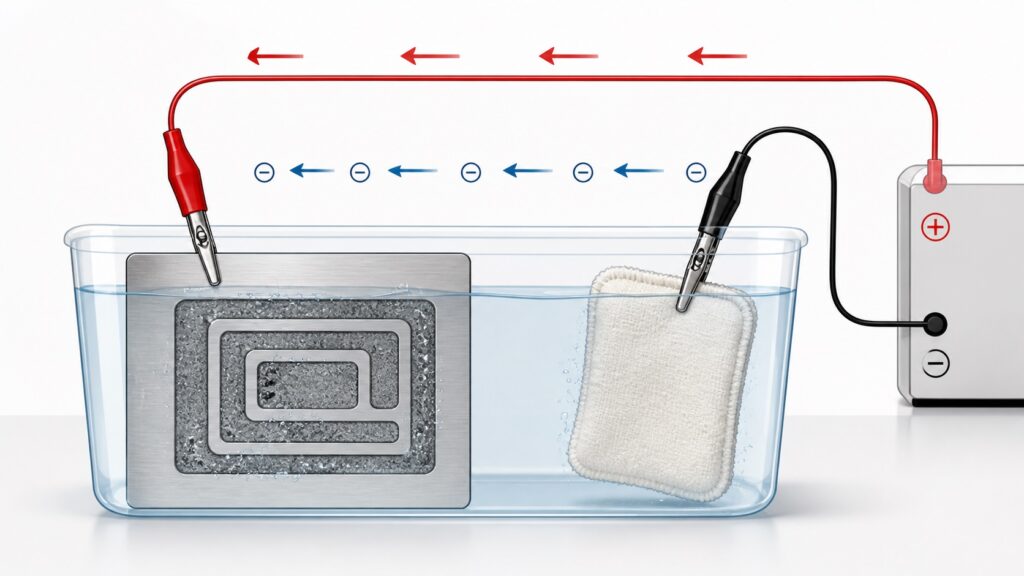
- Positive (+) → metal
- Negative (−) → pad
Start etching
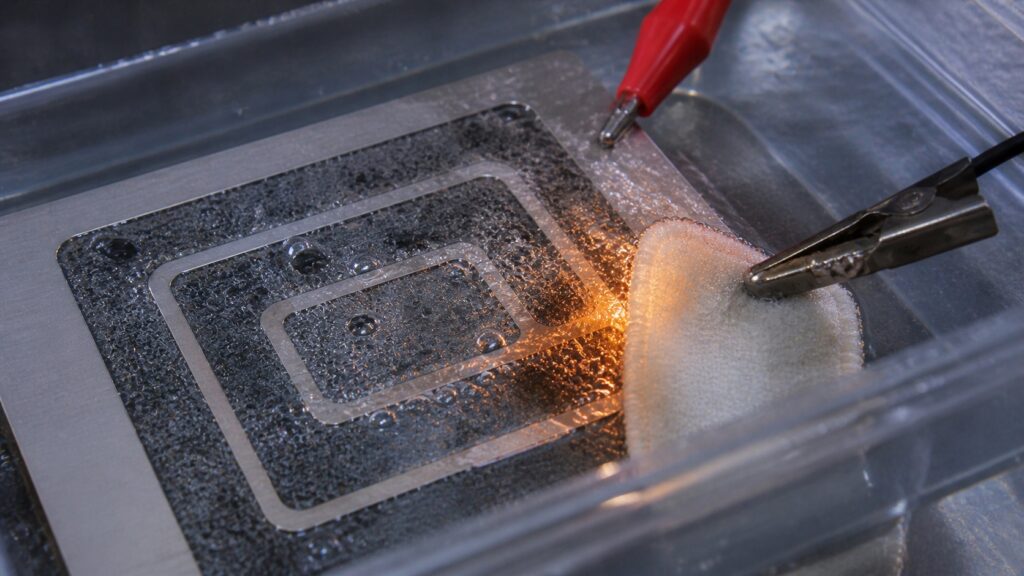
Press wet pad in cycles.
Clean and inspect
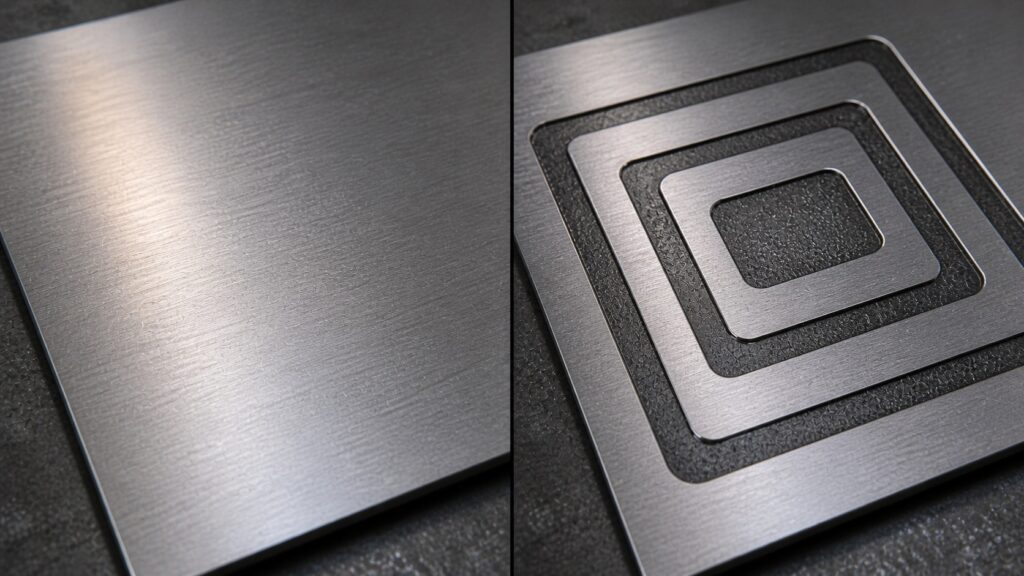
Rinse and reveal.
Pro Tips for Clean and Deep Salt Water Etching
- Use lower voltage for detail
- Increase time instead of voltage
- Keep pad moist
- Clean between passes
How to Improve Contrast After Etching
After etching, results can look dull. This is where most people stop—but this step makes a huge difference.
Methods:
- Steel wool polishing (light pass)
- Sandpaper (400–600 grit)
If you are comparing stainless steel surface treatments, you may also like this guide on can you anodize stainless steel.
- Clean residue thoroughly
- Darkening techniques for contrast
- This creates a professional-looking finish.
Common Salt Water Etching Mistakes (And How to Fix Them)
- Wrong polarity → no etch
- Dirty surface → patchy result
- Weak stencil → blurred edges
- Too much voltage → rough finish
- Dry pad → no current
Why Your Etching Is Not Working (Complete Fix Guide)
Etching too light
Cause: low current or short time
Fix: increase cycles
Etching too rough
Cause: too high voltage
Fix: reduce voltage
Black residue problem
Cause: oxidation buildup
Fix: clean between passes
Uneven depth
Cause: inconsistent pressure
Fix: steady contact
Stencil bleeding
Cause: poor adhesion
Fix: reseal edges
Salt Water Etching Safety (Gas Risks, Ventilation, and Voltage Limits)
Electrolysis produces gases.
What actually happens:
- Hydrogen gas forms at cathode
- Chlorine gas can form from salt
Even small amounts matter in enclosed spaces.
Safe practice:
- Work in ventilated area
- Keep voltage ≤12V
- Ideal precision voltage: 5V
- Wear gloves
Best Power Sources for Salt Water Etching (5V vs 9V vs 12V)
| Power Source | Performance | Stability | Best Use |
|---|---|---|---|
| 9V Battery | Low | Poor | Testing |
| USB Charger (5V) | Medium | Good | Precision work |
| Bench Power Supply | High | Excellent | Professional results |
Salt Water Etching vs Chemical Etching
| Feature | Salt Water | Chemical |
|---|---|---|
| Safety | Safer | Hazardous |
| Cost | Low | Higher |
| Setup | Simple | Complex |
| Depth | Moderate | Deep |
Advanced Salt Water Etching Techniques
- Use regulated power supply
- Maintain stable current
- Use distilled water
- Control heat buildup
[Internal link: stainless steel types]
[Internal link: metal finishing techniques]
[Internal link: CNC machining basics]
Key Takeaways
- Salt water etching uses low voltage electrolysis
- Proper cleaning is critical
- Voltage controls speed, time controls depth
- Ventilation is required
- Results are permanent
Salt Water Etching Stainless Steel FAQ
Can you etch stainless steel with salt water?
Yes, using electrolysis to remove metal.
How deep can salt water etching go?
Up to ~0.1 mm with repeated cycles.v
Is it permanent?
Yes, because metal is removed.
Is it safe?
Yes with ventilation and low voltage.
Best voltage for stainless steel?
3–5V for detail, 6–9V for general work.
Why uneven etching happens?
Uneven pressure or poor contact.
Can you etch coated metal?
No, coatings block electrical contact.
How to make deeper etch?
Increase time, not voltage.
Can you use phone charger?
Yes, 5V USB is ideal.
Why salt water etching not working?
Usually polarity, cleaning, or contact issues.
Is Salt Water Etching Stainless Steel Worth It? (Final Verdict)
If you enjoy practical metalworking projects, check out these machining projects for more workshop ideas.
Salt water etching stainless steel is one of the simplest and most effective DIY engraving methods.
With proper setup, you can achieve clean, professional results using minimal tools.
It scales from basic marking to advanced engraving depending on how well you control voltage, time, and technique.