
Quick Answer: Trochoidal and Peel Milling in CNC Explained
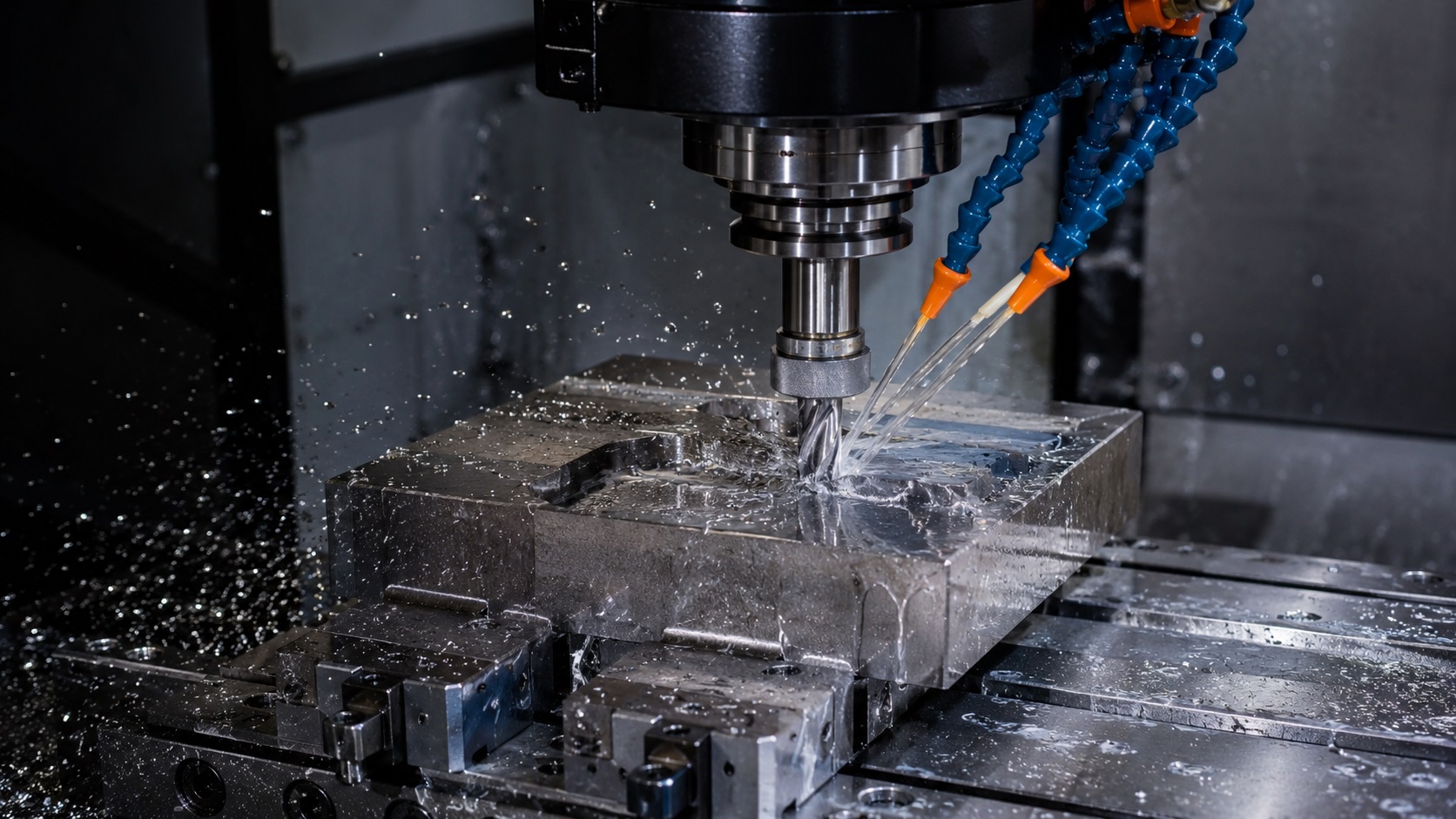
Trochoidal and peel milling are high-efficiency CNC machining strategies that use low radial engagement and deeper axial cuts to reduce chatter, improve chip evacuation, and increase tool life. These adaptive milling methods are commonly used for hardened steel, titanium, inconel, and deep pocket roughing operations.
For newer machinists still learning the fundamentals of CNC machining, adaptive milling strategies can initially seem overly complicated. However, once you understand basic cutter engagement, chip load, and spindle behavior, trochoidal milling becomes much easier to apply effectively.
Why Modern CNC Shops Use Trochoidal and Peel Milling
A lot of machinists first hear about trochoidal milling through CAM software marketing. Terms like adaptive clearing, dynamic milling, and high-efficiency machining get thrown around constantly, and it can sound like pure buzzword territory.
But in real production shops, these strategies absolutely matter.
Especially once you start machining:
- hardened steels
- stainless steel
- titanium
- inconel
- deep pockets
- long-reach tooling
Traditional slotting methods often create:
- excessive spindle load
- chatter vibration
- poor chip evacuation
- concentrated heat
- premature cutter failure
Trochoidal and peel milling solve many of those problems by controlling radial engagement and distributing cutting forces more evenly.
From real workshop experience, one of the biggest differences you notice immediately is spindle sound. A properly tuned adaptive toolpath sounds smoother and more controlled compared to conventional full-slot roughing. Instead of hammering the cutter, the machine maintains a more consistent load.
That consistency is what keeps carbide alive.
What Is Trochoidal Milling?
Trochoidal milling is a CNC toolpath strategy where the cutter moves in overlapping circular motions while gradually advancing through material.
These toolpaths are now widely used in modern CNC machining because they allow shops to rough difficult materials more efficiently while maintaining better tool life and process stability.
The goal is to maintain:
- constant cutter engagement
- stable chip load
- lower cutting pressure
- improved heat control
Unlike conventional slotting, the tool never fully buries itself into the material for extended periods.
The cutter follows a looping circular motion while gradually advancing through the material. This helps maintain more consistent cutter engagement and reduces sudden tool pressure spikes.
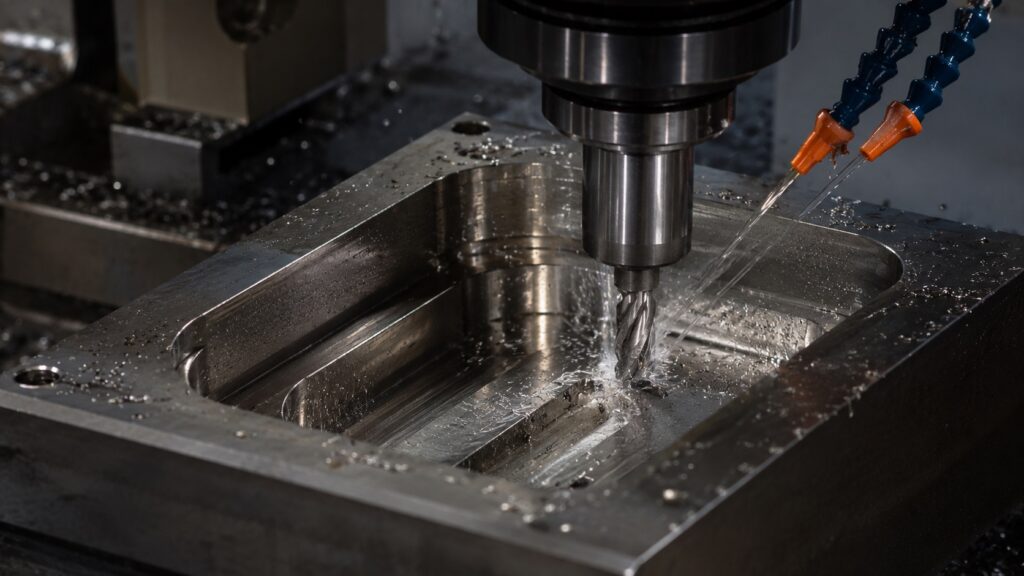
In practical machining terms, trochoidal milling allows a smaller end mill to cut deep slots and pockets without overwhelming the spindle or generating excessive side pressure.
You’ll commonly see it used in:
- deep slotting
- hardened steel roughing
- titanium machining
- long-reach tooling applications
- poor chip evacuation environments
One thing operators often overlook is that trochoidal milling does not automatically mean faster cycle times.
Sometimes cycle time increases slightly. The real gain often comes from:
- fewer broken tools
- longer carbide life
- reduced spindle load
- improved process stability
- unattended machining reliability
That matters far more in production environments than shaving a few seconds off a roughing cycle.
What Is Peel Milling?
Peel milling is a roughing strategy that combines:
- low radial depth of cut (RDOC)
- high axial depth of cut (ADOC)
- elevated feed rates
Instead of cutting wide and shallow, peel milling cuts narrow and deep.
Typical example:
- 10% radial engagement
- 1× to 2× tool diameter axial depth
This spreads wear across the full flute length instead of destroying only the bottom portion of the cutter.
In many fabrication shops, machinists notice dramatically more even wear patterns on peel milling tools compared to traditional roughing methods.
That alone can significantly reduce tooling costs and downtime from frequent tool changes.
Trochoidal Milling vs Adaptive Clearing vs Dynamic Milling
A lot of CNC programmers use these terms interchangeably, but they are not always exactly the same thing.
Trochoidal milling specifically refers to the looping circular cutter motion used to maintain constant engagement.
Adaptive clearing and dynamic milling are CAM software strategies designed to maintain consistent tool load automatically. Most modern adaptive toolpaths use trochoidal-style motion internally.
Different CAM systems may use different branding names, but the machining principles are usually similar:
- low radial engagement
- controlled chip thinning
- stable cutter load
- improved tool life
This is why machinists often hear different terminology depending on the CAM software being used.
Even though modern CAM systems automate most adaptive toolpaths, understanding the underlying G-code structure still helps machinists troubleshoot feed behavior, arc motion, and machine hesitation during high-speed machining.
Trochoidal vs Conventional Milling
| Feature | Trochoidal Milling | Conventional Milling |
|---|---|---|
| Radial engagement | Low | High |
| Tool pressure | Lower | Higher |
| Heat generation | More controlled | Higher localized heat |
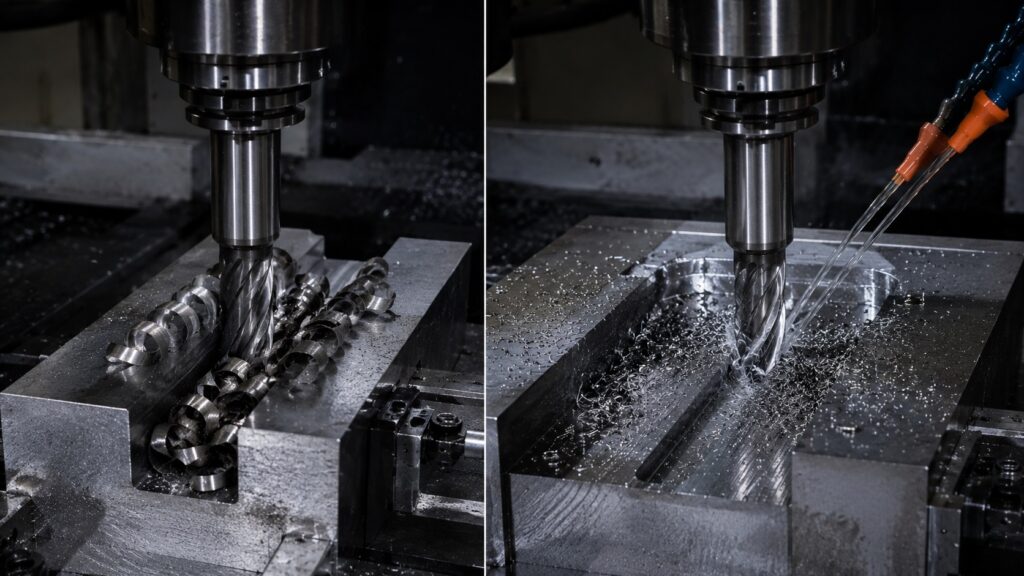
| Chip evacuation | Excellent | Often problematic |
| Tool wear | Distributed evenly | Concentrated near tool tip |
| Ideal for deep slots | Yes | Limited |
| Chatter resistance | Better | Worse in deep cuts |
| Programming complexity | Higher | Simpler |
| Machine requirements | Higher | Lower |
How Chip Thinning Changes Feeds and Speeds
The entire concept behind peel milling depends on radial chip thinning.
With low radial engagement, the chip becomes thinner than programmed feed-per-tooth values would normally suggest.
That means feed rates can increase substantially while maintaining proper chip thickness.
Many beginners accidentally underfeed adaptive toolpaths because they use conventional feed values. That creates:
- rubbing
- heat buildup
- edge breakdown
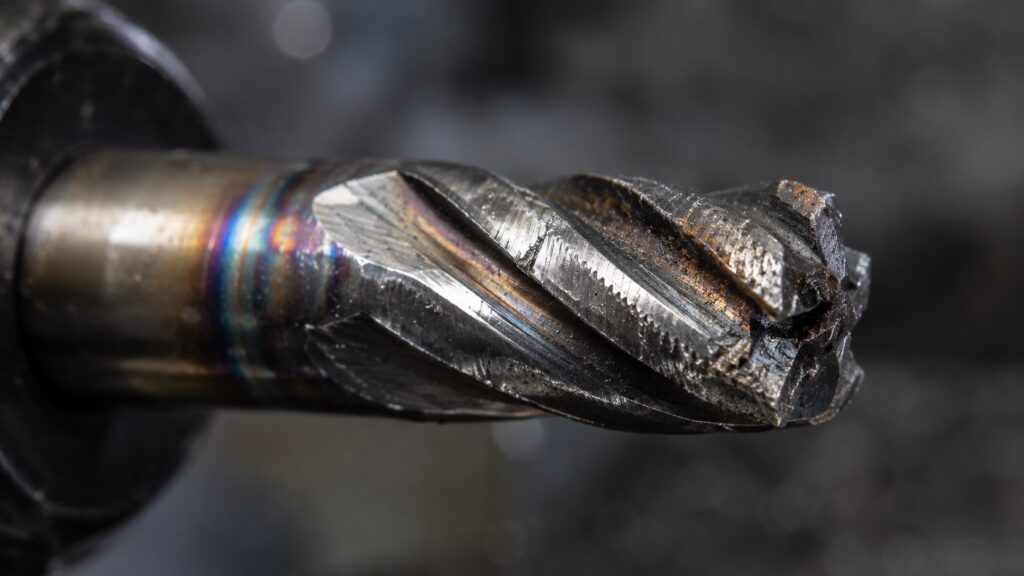
- premature coating failure
Ironically, feeding too slowly often kills carbide faster than feeding aggressively.
In hardened steels, rubbing heat can destroy a cutter surprisingly quickly even when spindle load appears low.
One common issue during roughing is mistaking low spindle load for a healthy cut. In many cases, the tool may actually be rubbing instead of cutting efficiently.
Best End Mills for Trochoidal and Peel Milling
Not all end mills handle adaptive machining well.
The best tools usually feature:
- variable helix geometry
- unequal flute spacing
- reinforced core diameter
- advanced coatings
- high flute counts
- polished chip evacuation surfaces
Recommended Tooling Characteristics
| Material | Recommended Coating | Typical Flutes |
|---|---|---|
| Mild steel | AlTiN | 5–6 |
| Stainless steel | TiAlN | 5–7 |
| Titanium | AlTiN Nano | 5 |
| Inconel | Heat-resistant nano coating | 5–6 |
| Hardened tool steel | AlCrN | 6–8 |
A common issue in smaller shops is using standard 4-flute general-purpose end mills for aggressive adaptive roughing.
They often lack:
- core rigidity
- flute strength
- heat resistance
- chip evacuation capability
That usually ends with chatter, edge chipping, or shortened tool life.
What Kind of CNC Machine Works Best for Trochoidal Milling?
Trochoidal milling exposes machine weaknesses very quickly.
Older machines often struggle with:
- rapid acceleration changes
- look-ahead processing
- servo response
- contour smoothing
A lot of high-speed machining crashes actually come from programming issues rather than tooling problems. Poor smoothing settings, incorrect lead-ins, and unstable cutter engagement can create serious problems during adaptive roughing operations.
You may notice:
- jerky motion
- inconsistent feed rates
- corner hesitation
- audible spindle load spikes
In real machining environments, these symptoms usually appear before tool failure.
Critical Machine Features
| Requirement | Why It Matters |
|---|---|
| High block look-ahead | Smooth motion planning |
| Fast servo response | Prevents feed hesitation |
| Rigid spindle | Reduces chatter |
| Balanced holders | Controls vibration |
| Reliable coolant or air blast | Maintains chip evacuation |
If the machine cannot maintain smooth motion, adaptive milling loses most of its advantage.
Recommended Radial Engagement and Axial Depth
| Operation | RDOC | ADOC |
|---|---|---|
| Mild steel roughing | 8–12% | 1×D |
| Hardened steel | 5–8% | 0.75×D |
| Titanium | 5–10% | 1×D |
| Deep slotting | 8–15% | 1–1.5×D |
| Long reach tooling | 4–8% | Reduced based on rigidity |
Tool deflection becomes critical with long gauge lengths.
From workshop experience, once stickout exceeds roughly 4× diameter, chatter sensitivity increases dramatically. Sometimes reducing axial depth slightly produces a far more stable process overall.
How to Tell if Your Trochoidal Toolpath Is Working Properly
Signs of a Healthy Adaptive Milling Process
In real machining environments, a properly tuned trochoidal toolpath usually produces a consistent spindle sound and evenly formed chips.
Good signs include:
- stable spindle load
- consistent chip color
- smooth machine motion
- minimal vibration
- even flute wear
- predictable tool life
Warning signs usually include:
- random spindle load spikes
- squealing or ringing sounds
- powdery chips
- excessive heat discoloration
- recutting chips inside pockets
- visible tool deflection
One thing operators often overlook is assuming low spindle load automatically means the cut is healthy. In many cases, the tool may actually be rubbing instead of cutting properly.
Step-by-Step Trochoidal Milling Setup
1. Choose the Right Tool Diameter
Avoid using cutters nearly equal to slot width.
A smaller cutter:
- evacuates chips better
- reduces radial load
- stabilizes the cut
2. Start With Conservative Engagement
Do not immediately push manufacturer maximums.
Begin with:
- lower radial engagement
- moderate feed rates
- reduced depth
Then gradually increase performance while monitoring spindle load.
3. Watch Chip Color
Chip color tells you a lot.
You’ll usually notice:
- dark blue chips = excessive heat
- powdery chips = rubbing
- welded chips = poor evacuation
Healthy chips should look consistent and well-formed.
4. Verify Holder Security
Cutter pullout becomes a real risk in aggressive peel milling.
Hydraulic holders, shrink-fit systems, and Safe-Lock style systems perform substantially better than basic ER collets during heavy adaptive machining.
5. Maintain Reliable Chip Evacuation
Adaptive milling generates chips extremely fast.
Any interruption in:
- air blast
- coolant flow
- nozzle positioning
can instantly overload the cut.
Proper coolant control and machine function commands become especially important during aggressive adaptive machining cycles where chip evacuation must remain consistent throughout the operation.
Common Trochoidal Milling Problems
| Problem | Likely Cause | Solution |
|---|---|---|
| Chatter vibration | Excessive stickout | Shorten tool length |
| Tool breakage | Feed hesitation | Increase smoothing/look-ahead |
| Excessive heat | Underfeeding | Increase feed rate |
| Built-up edge | Poor coating selection | Use proper coating |
| Tool pullout | Weak holder | Upgrade toolholding |
| Poor surface finish | Radial engagement too high | Reduce stepover |
| Recutting chips | Weak evacuation | Improve coolant or air blast |
When Trochoidal Milling Works Best
Trochoidal milling performs best when:
- pockets are deep
- slots are narrow
- materials are difficult
- flute length utilization is high
- chip evacuation matters
It especially shines in:
- titanium roughing
- inconel machining
- hardened tool steel
- deep cavity machining
- mold work
Many shops pair adaptive roughing operations with deep-hole machining strategies like peck drilling cycles when working on complex aerospace or mold components.
In real production environments, adaptive milling often becomes less about maximum speed and more about achieving reliable unattended runtime.
That reliability is incredibly valuable in long machining cycles.
When Peel Milling Is a Bad Choice
Peel milling is not always the answer.
It becomes inefficient when:
- cuts are shallow
- flute length cannot be utilized
- machine acceleration is weak
- spindle horsepower is limited
- CAM smoothing is poor
For shallow pockets, conventional roughing may actually outperform adaptive strategies.
Many newer machinists overuse trochoidal paths simply because the CAM software makes them look impressive.
But sometimes a conventional toolpath with proper feeds and speeds is still the smarter choice.
Professional Workshop Tips
Use Air Blast Aggressively
Thin chips evacuate easily, but they accumulate quickly.
Even excellent toolpaths fail when chips remain trapped in the cut.
Watch Spindle Load Stability
Stable spindle load matters more than absolute spindle load.
Erratic spikes usually indicate:
- recutting chips
- machine hesitation
- unstable engagement
Don’t Chase Maximum Feed Rates Immediately
A stable 85% aggressive setup usually outperforms a constantly crashing 100% setup.
Reduce Stickout Whenever Possible
Long-reach tooling destroys rigidity.
Shorter setups almost always improve:
- surface finish
- tool life
- chatter resistance
Frequently Asked Questions About Trochoidal and Peel Milling in CNC Machining
Can trochoidal milling increase tool life?
Yes. Because radial engagement stays low, heat and cutting pressure decrease significantly. Tool wear is also distributed more evenly across the flute length instead of concentrating near the tool tip.
Why does peel milling reduce chatter?
Lower radial engagement reduces side loading on the cutter. That minimizes vibration and makes deep cuts more stable, especially with long-reach tooling.
Is trochoidal milling the same as adaptive clearing?
Not exactly. Adaptive clearing is a CAM software strategy that often uses trochoidal-style motion to maintain constant cutter engagement. Trochoidal milling refers more specifically to the looping circular motion of the cutter path.
What happens if feed rates are too low during adaptive milling?
Low feed rates often create rubbing instead of cutting. That generates excess heat and can destroy carbide coatings surprisingly fast.
Can older CNC machines run trochoidal toolpaths?
Sometimes, but performance depends heavily on controller speed, servo response, and look-ahead capability. Older machines often struggle with dense high-speed toolpaths.
Do you need special end mills for peel milling?
Technically no, but specialized high-efficiency end mills perform much better due to stronger cores, advanced coatings, and optimized flute geometry.
Final Thoughts on Trochoidal vs Peel Milling for Efficient CNC Machining
Trochoidal and peel milling are not magic shortcuts.
They are smarter ways of controlling cutter engagement, heat, and tool pressure during CNC roughing operations.
When applied correctly, they can:
- dramatically improve carbide life
- stabilize difficult roughing operations
- reduce chatter
- improve chip evacuation
- increase material removal rates
But they also demand:
- proper tooling
- solid workholding
- capable CAM software
- rigid machines
- intelligent programming
In real-world machining, success with adaptive milling usually comes from process control rather than blindly pushing feeds and speeds.
The shops getting the best results are the ones paying attention to spindle sound, chip behavior, vibration, and machine stability — not just numbers from a tooling catalog.