
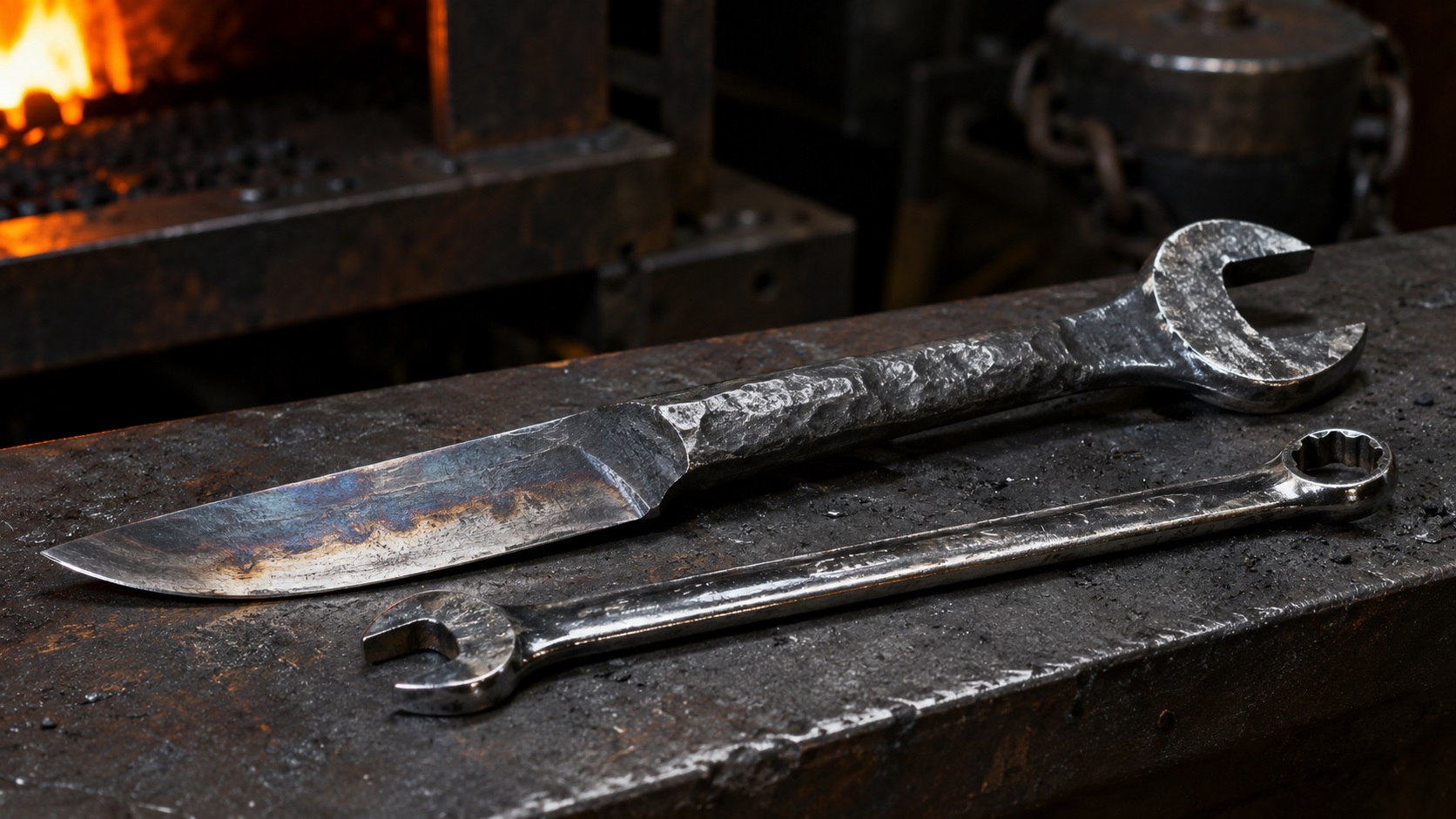
Is a Wrench Knife Actually Worth Making?
Wrenches can be turned into functional knives, but they usually do not make excellent high-performance blades. Most wrench steels are medium-carbon chromium alloy steels designed for toughness rather than edge retention. A wrench knife can work well for light utility use, but it will typically dull faster than a proper high-carbon knife steel.
There’s a reason wrench knives became popular in blacksmithing videos and DIY forging channels. They already have an interesting shape, the steel is usually tough enough to survive forging, and old shop tools simply look cool when repurposed into blades.
But from real workshop experience, many first-time knife makers expect far too much from wrench steel. A wrench can absolutely become a usable knife, but it rarely performs like a properly heat-treated 1084, 80CrV2, or 52100 blade.
The biggest issue is carbon content.
Most wrenches prioritize toughness and shock resistance over hardness. That makes sense for a hand tool that constantly sees torque loads, impact stress, and twisting forces. Unfortunately, those same properties are not ideal for long-lasting knife edges.
That doesn’t mean the project is pointless though. Wrench knives are still excellent practice builds for forging, grinding, and heat treatment.
What Steel Are Wrenches Usually Made From?
Most quality combination wrenches are made from chromium alloy steels similar to:
- 4140
- 4340
- chrome vanadium steel (Cr-V)
- chrome molybdenum steel (Cr-Mo)
These steels are engineered for toughness and fatigue resistance rather than maximum hardness.
Typical Properties of Wrench Steel
| Property | Wrench Steel | Dedicated Knife Steel |
|---|---|---|
| Toughness | Excellent | Moderate to high |
| Edge Retention | Moderate to poor | Good to excellent |
| Ease of Forging | Usually good | Depends on alloy |
| Wear Resistance | Moderate | High |
| Shock Resistance | Excellent | Moderate |
| Hardness Potential | Limited | Much higher |
In real fabrication shops, wrench steel behaves more like a tough pry-bar material than a fine cutting steel.
You can still achieve usable hardness after heat treatment, but most wrench knives end up softer than purpose-built knife steels.
For comparison, some recycled tool steels perform much better for blades; here’s a breakdown of what steel files are made of and why they harden differently.
Are Old Wrenches Better Than New Ones?
Sometimes, yes.
Older industrial wrenches from brands like Proto, SK, Williams, or Armstrong occasionally contain better alloy steel than modern budget imports. Many cheap modern wrench sets use lower-quality alloy compositions with inconsistent heat treatment.
One common mistake DIY makers make is assuming every wrench is forge-worthy.
Some bargain-bin wrenches barely harden at all.
Signs a Wrench May Work Well
- Strong spark pattern with branching bursts
- Hard file resistance after quenching
- Dense forged feel during grinding
- Minimal deformation under hammering
- Reputable industrial tool brand
Signs of Poor Steel
- Very dull grinder sparks
- Steel mushrooms easily while forging
- File bites deeply after quench
- Edge rolls immediately during testing
- Excessive softness after tempering
Why Wrench Knives Lose Their Edge Faster
The main problem is lower carbon content.
Knife steels rely heavily on carbon to form hard martensitic structures during quenching. Most wrench steels simply do not contain enough carbon to compete with dedicated blade alloys.
In practical use, you’ll usually notice:
- faster dulling during cardboard cutting
- rolling edges instead of chipping
- reduced slicing aggression
- frequent touch-up sharpening
That said, wrench knives are often surprisingly durable.
Because the steel is tough, they resist catastrophic breakage well. Many survive batoning or rough utility work better than extremely hard brittle blades.
Is Chrome Plating Dangerous During Forging?
Yes — this is one area many YouTube projects completely gloss over.
Most modern wrenches are chrome plated. Grinding or heating chrome plating can release hazardous dust and fumes.
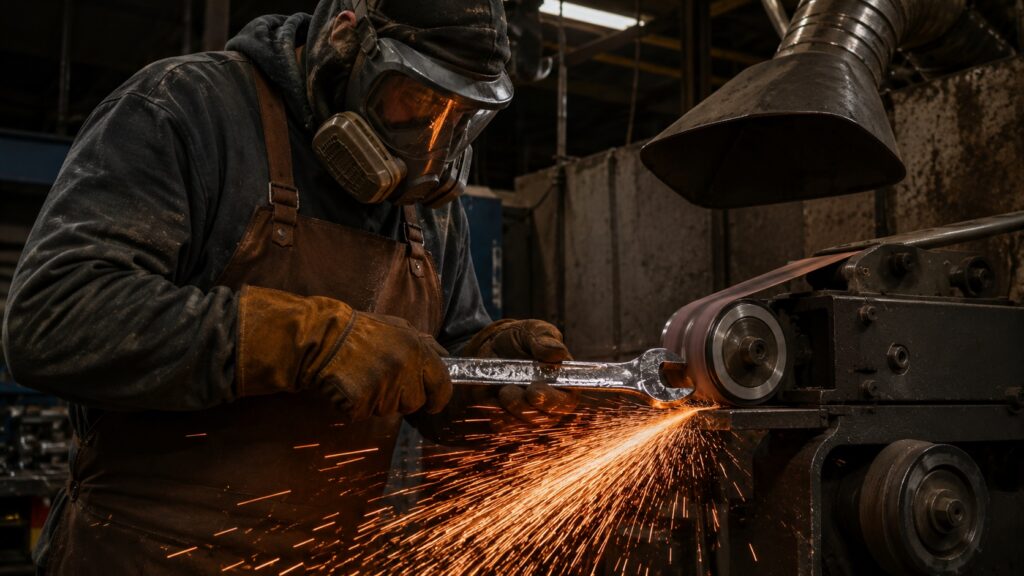
Important Safety Concerns
- Hexavalent chromium fumes are toxic
- Grinding dust should never be inhaled
- Forge scaling can contaminate work areas
- Nickel plating also produces dangerous particles
From real forging shop experience, removing plating before heavy grinding or forging is strongly recommended.
Best Removal Methods
| Method | Recommended | Notes |
|---|---|---|
| Sandblasting | Yes | Clean and controlled |
| Belt grinding | Yes | Use respirator |
| Chemical stripping | Sometimes | Requires caution |
| Forging with plating on | No | Produces toxic fumes |
Always use:
- proper ventilation
- respirator protection
- eye protection
- dedicated grinding area
How to Test if a Wrench Can Harden
Because wrench steel is often “unknown steel,” testing becomes extremely important.
Quick File Test Method
- Heat a small section to non-magnetic temperature
- Quench in warm oil
- Let it cool completely
- Run a file across the surface
If the file skates or barely bites, the steel hardened successfully.
If you want more accurate shop methods beyond a simple file test, see our guide on how to check the hardness of metal.
If the file cuts easily, the carbon content is likely too low for a quality blade.
How to Heat Treat a Wrench Knife
Heat treatment is where many wrench knives fail.
In some cases, especially with older industrial wrenches, annealing the steel before grinding or drilling can make shaping much easier. This guide explains how to anneal steel properly without ruining the metal.
One common beginner mistake is overheating the steel until it turns bright orange or yellow. That often causes:
- grain growth
- decarburization
- weakened edge structure
- brittle performance
For most wrench steels, a moderate critical temperature works better.
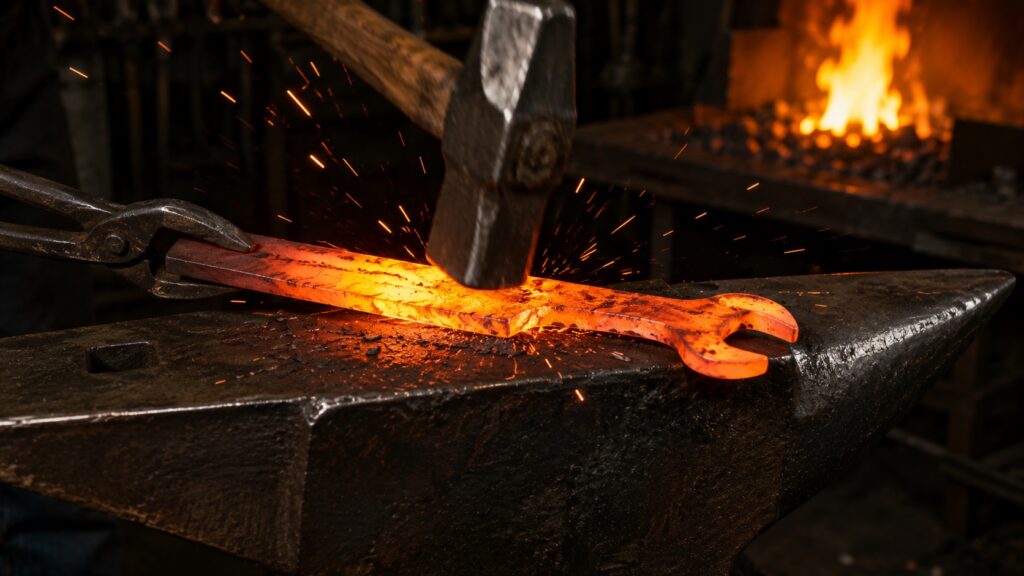
Basic Wrench Knife Heat Treatment
| Step | Recommendation |
|---|---|
| Normalize | 1–2 cycles |
| Critical Temp | Non-magnetic |
| Quench Medium | Warm oil |
| Tempering | 375–450°F |
| Temper Cycles | 2 recommended |
When forging unknown steels, the magnet test is usually the safest approach.
Heat evenly until the steel just loses magnetism, then quench immediately in warm oil.
Avoid overheating.
In real blacksmith shops, overheating unknown alloy steels is one of the fastest ways to ruin edge performance.
Best Wrench Styles for Knife Making
Not every wrench shape works equally well.
Good Candidates
- Combination wrenches
- Box-end wrenches
- Older forged wrenches
- Large wrench sizes
Poor Candidates
- Pipe wrenches
- Adjustable wrench handles
- Thin stamped tools
- Cheap cast wrenches
Karambit-style knives are especially popular because the box-end naturally forms a finger ring.
Wrench Knife vs Railroad Spike Knife
A lot of makers compare wrench knives to railroad spike knives because both are novelty forging projects.
If you’re comparing recycled forging materials, it also helps to understand what kind of metal railroad spikes are made from and why their edge retention is limited.
Performance Comparison
| Feature | Wrench Knife | Railroad Spike Knife |
|---|---|---|
| Hardness Potential | Moderate | Low |
| Toughness | High | Moderate |
| Edge Retention | Moderate | Poor |
| Forging Difficulty | Moderate | Easy |
| Appearance | Excellent | Rustic |
| Real Utility | Decent | Limited |
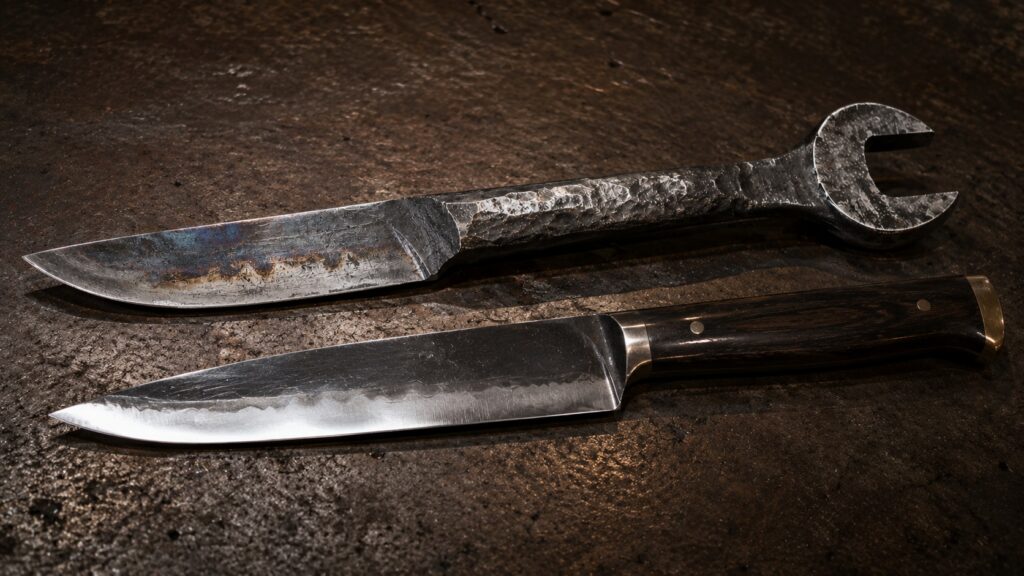
A properly heat-treated wrench knife will usually outperform a railroad spike knife in actual cutting performance.
Common Problems When Forging Wrench Knives
Edge Won’t Harden
Usually caused by:
- low carbon wrench steel
- insufficient quench speed
- overheated steel
- incorrect oil temperature
Cracks After Quenching
Often related to:
- overly aggressive quenching
- uneven heating
- forging stress
- existing microfractures in old tools
Blade Warping
You’ll commonly see this when:
- grinding too thin before quench
- heating unevenly
- quenching at an angle
Excessive Scale Formation
Chrome alloy steels often scale heavily during forging.
That scale can hide overheating damage underneath the surface.
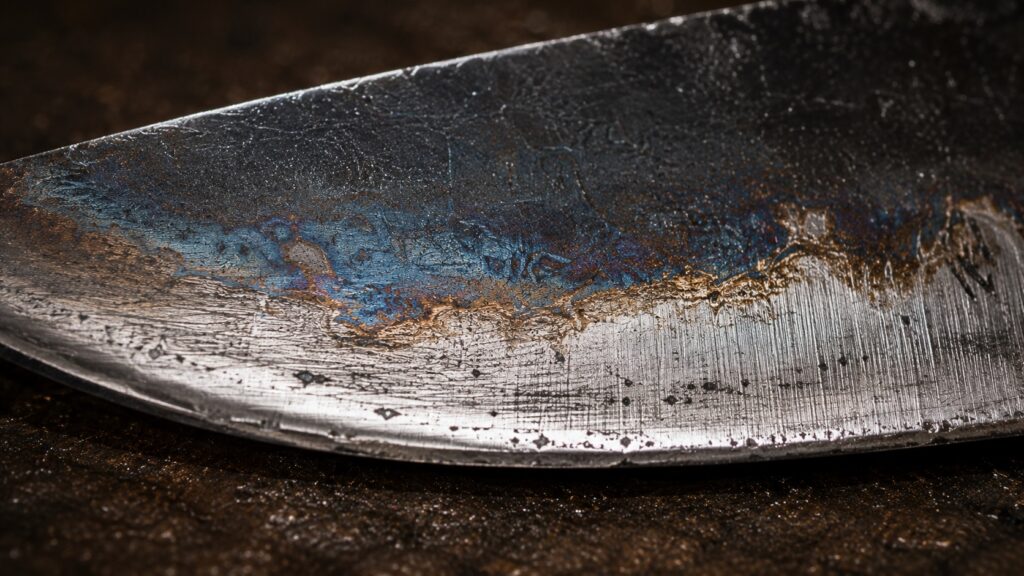
Color changes during forging can also reveal oxidation and temperature behavior; this explains why steel turns blue when heated.
Professional Tips From Real Forging Experience
Remove Chrome Before Forging
This dramatically improves safety and makes temperature reading easier.
Don’t Chase Maximum Hardness
Wrench steel performs better slightly softer and tougher.
Normalize More Than Once
Unknown steels benefit from extra normalization cycles to reduce internal stress.
Expect More Grinding Wear
Chrome alloy steels can feel gummy during belt grinding compared to simple carbon steels.
Keep Expectations Realistic
A wrench knife is usually more about craftsmanship and creativity than elite cutting performance.
Are Wrench Knives Actually Worth Making?
For learning and experimentation, absolutely.
For maximum cutting performance, not really.
Wrench knives are excellent projects for:
- beginner blacksmithing
- forging practice
- grinding experience
- heat treatment experimentation
- decorative builds
- novelty utility knives
But if your goal is serious edge retention, dedicated knife steels will outperform wrench steel almost every time.
Common Questions About Wrench Knives
Can you make a functional knife from a wrench?
Yes. Most quality wrenches can produce a functional utility knife if properly heat treated, although edge retention is usually lower than true knife steels.
Why are wrench knives popular?
They combine recycled tool aesthetics with relatively forgeable steel. Many makers also enjoy preserving the original wrench shape in the finished blade.
Do all wrenches harden properly?
No. Some cheaper wrenches contain low-carbon alloy steel that will not achieve sufficient hardness for a durable knife edge.
Is forging chrome-plated wrenches dangerous?
Yes. Chrome and nickel plating can release hazardous fumes and dust during grinding or heating. Proper removal and ventilation are important.
What is the best wrench type for knife making?
Older forged combination wrenches generally produce the best results because they contain tougher and more consistent alloy steel.
Are wrench knives better than railroad spike knives?
Usually yes. Wrench steel typically hardens better and provides noticeably improved cutting performance.
Should You Make a Knife From a Wrench?
Wrenches can make surprisingly decent knives, but they should not be confused with premium blade steels.
From real workshop experience, the best wrench knives succeed because of craftsmanship, heat treatment control, and creative design — not because the steel itself is exceptional.
If you already have old shop wrenches lying around, they make excellent practice material for forging and grinding. Just keep realistic expectations about edge retention and always prioritize safety when dealing with chrome plating.