
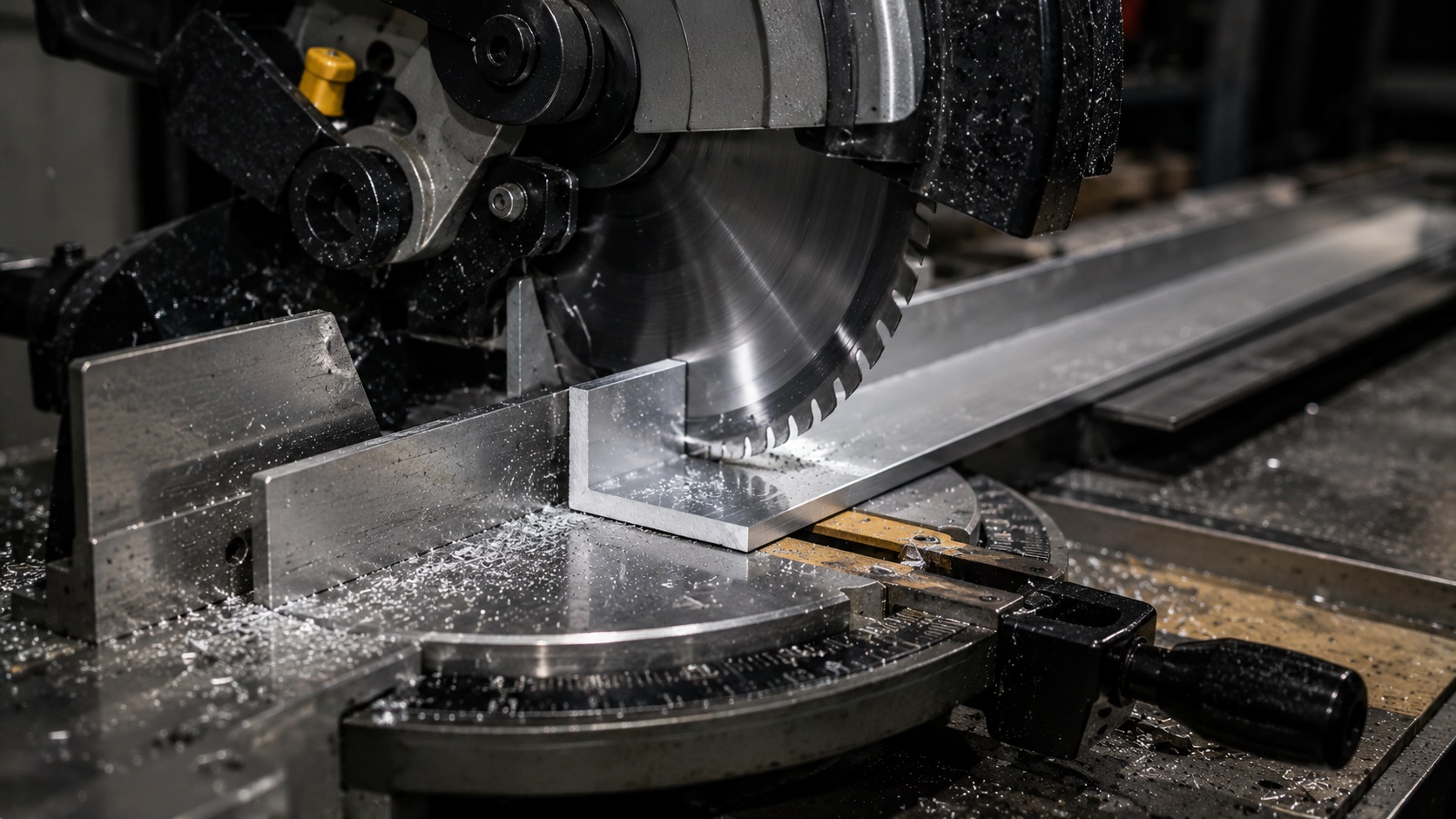
Quick Answer: How to Cut Aluminum Angle Safely and Cleanly
To cut aluminum angle for DIY projects, use a carbide-tipped blade with a miter saw, circular saw, bandsaw, or angle grinder while securing the material firmly and cutting at controlled speed. Proper blade selection, lubrication, and deburring are essential for clean cuts, minimal burrs, and safe operation.
Pre-Cut Checklist (Before You Start Cutting)
Before cutting aluminum angle, always verify the following safety checks:
- Wear safety glasses or a full face shield
- Clamp the aluminum angle securely to prevent vibration
- Inspect the blade or cutoff wheel for damage or wear
- Confirm the blade is rated for non-ferrous metal cutting
- Remove loose clothing and keep hands clear of the cutting path
In real workshop environments, skipping even one of these steps can quickly turn a simple DIY cut into a dangerous situation.
Many beginners assume aluminum cuts exactly like wood or mild steel.
It doesn’t.
Aluminum behaves differently during cutting because it is softer, loads blades faster, and can grab improperly set tools unexpectedly. One wrong blade or excessive cutting speed can quickly ruin the cut quality — or worse, create a dangerous kickback situation.
This guide explains exactly how to cut aluminum angle for DIY projects using real workshop methods, beginner-friendly tools, proper blades, professional cutting techniques, and practical safety advice based on real fabrication experience.
What Is Aluminum Angle Used For?
Aluminum angle is one of the most popular materials used in DIY fabrication projects because it is lightweight, corrosion-resistant, easy to machine, and relatively affordable.
It is commonly used in:
- shelving frames
- workbenches
- trailer modifications
- tool racks
- custom brackets
- hobby fabrication
- garage storage systems
- lightweight structures
One reason DIY builders prefer aluminum angle is that it offers excellent strength without the heavy weight of steel.
From real workshop experience, aluminum angle is often one of the first structural materials beginners work with because it can usually be cut using common shop tools.
Common DIY Aluminum Angle Projects
Popular DIY aluminum angle projects include:
- workshop carts
- mounting brackets
- CNC enclosures
- machine stands
- solar panel frames
- storage systems
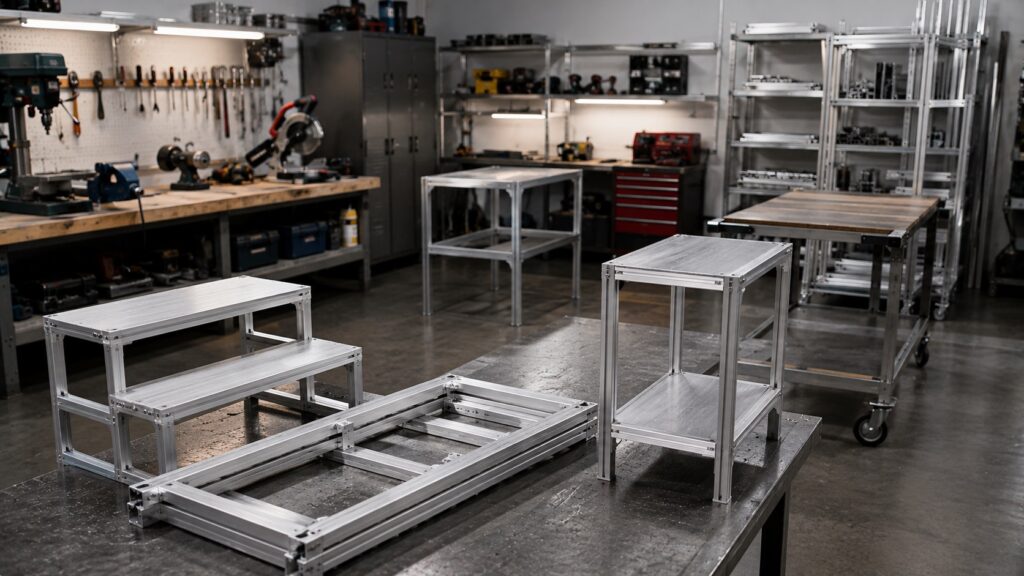
- custom table frames
- Many fabrication environments also use processes like flame and plasma cutting for larger metal sections and structural fabrication work.
Unlike heavier steel fabrication, aluminum projects are generally easier to handle and transport.
Why Aluminum Angle Is Popular for DIY Work
Aluminum angle offers several major advantages:
| Advantage | Why It Matters |
|---|---|
| Lightweight | Easier to handle and install |
| Corrosion Resistant | Better for outdoor use |
| Easy to Cut | Beginner-friendly material |
| Strong for Its Weight | Excellent structural efficiency |
| Affordable | Widely available in hardware stores |
| Easy to Drill | Simple fabrication process |
In real fabrication environments, aluminum is often chosen when builders want clean-looking projects without dealing with rust problems later.
This is also one reason aluminum is often compared with steel in DIY fabrication, especially when corrosion resistance and long-term outdoor use matter.
Best Tools for Cutting Aluminum Angle
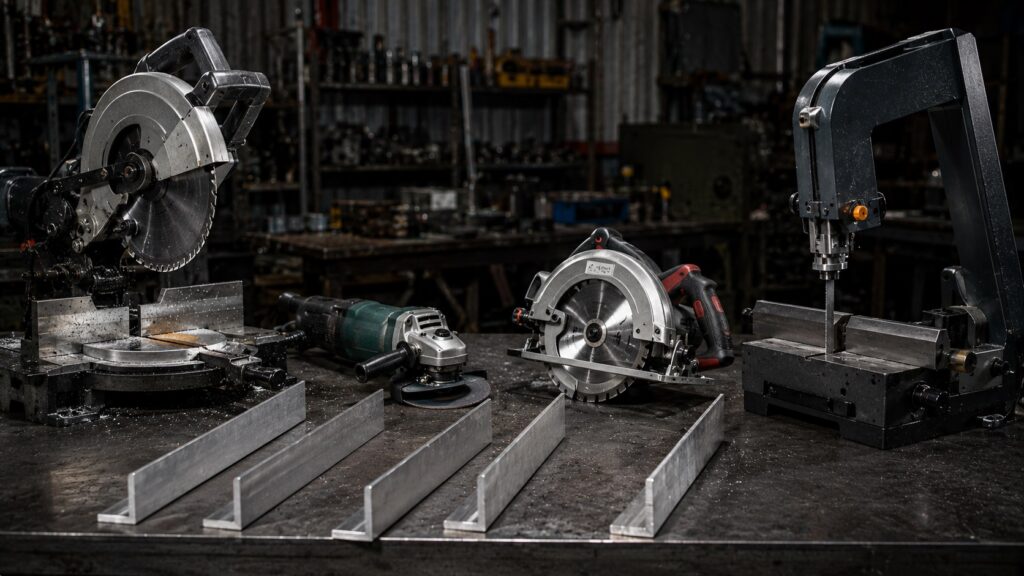
Several tools can cut aluminum angle successfully.
However, not all methods produce the same quality.
The best tool depends on:
- material thickness
- cut accuracy
- project budget
- finish quality requirements
- available workshop tools
One mistake many beginners make is assuming any metal-cutting blade will automatically work well with aluminum.
In reality, aluminum requires the right combination of blade geometry, tooth count, and cutting speed.
Which Tool Should You Choose?
- Choose a miter saw if you want highly accurate and repeatable cuts.
- Choose an angle grinder if portability and fast rough cutting matter most.
- Choose a bandsaw for the cleanest and smoothest professional finish.
- Choose a hacksaw for small DIY projects with minimal equipment.
- Choose a circular saw when cutting long aluminum sections efficiently.
Miter Saw
A miter saw is one of the fastest and cleanest ways to cut aluminum angle.
With the correct carbide-tipped blade, miter saws can produce:
- square cuts
- repeatable angles
- smooth edges
- fast production speed
In fabrication shops, miter saws are commonly used for aluminum framing and repetitive cuts because they provide excellent consistency.
However, blade choice matters enormously.
An aggressive woodworking blade can sometimes grab thin aluminum violently if feed pressure is excessive.
Angle Grinder
Angle grinders are popular because many DIY users already own one.
They work well for:
- rough cuts
- quick trimming
- field modifications
- small fabrication work
However, grinders usually create:
- more sparks
- rougher edges
- larger burrs
- less accurate cuts
From real fabrication experience, grinders are excellent utility tools — but not usually the best choice for perfectly clean precision cuts.
Circular Saw
Circular saws can cut aluminum surprisingly well when equipped with the correct blade.
Many professionals use circular saws for:
- large aluminum sheets
- long angle sections
- portable cutting setups
The key is using slow, controlled feed pressure.
Cutting too aggressively often causes blade loading and rough edge formation.
Bandsaw
Bandsaws provide some of the cleanest cuts available.
Advantages include:
- smooth finish
- reduced burrs
- excellent control
- lower noise
- improved safety
Professionally, horizontal bandsaws are extremely common in machine shops because they cut aluminum efficiently with excellent consistency.
Hacksaw
For small DIY projects, hacksaws still work surprisingly well.
They are:
- inexpensive
- simple
- beginner-friendly
- highly controllable
The downside is speed.
Manual cutting takes longer and requires more effort, especially on thicker aluminum sections.
What Is the Best Blade for Cutting Aluminum Angle?
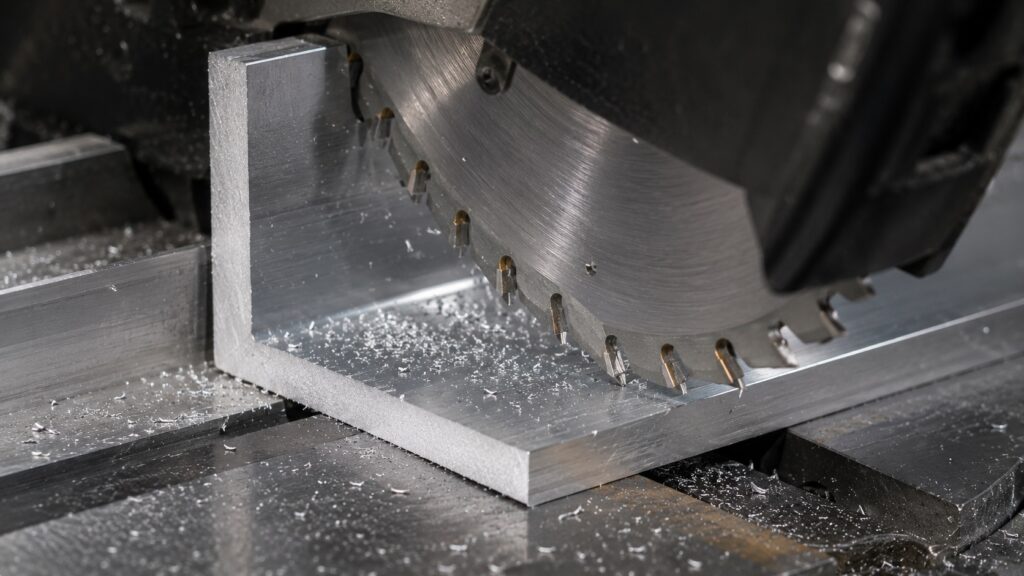
Blade selection is one of the most important factors in cut quality.
In many cases, poor cuts are caused more by the wrong blade than by the wrong machine.
Carbide-Tipped Blades
Carbide-tipped blades are widely considered the best choice for cutting aluminum angle.
They provide:
- cleaner cuts
- better durability
- reduced burr formation
- lower heat buildup
In professional fabrication shops, carbide blades are often preferred because they stay sharp longer under repeated aluminum cutting.
Tooth Count and Blade Design
Higher tooth count blades generally produce:
- smoother cuts
- finer finish
- reduced grabbing
Lower tooth count blades cut faster but often leave rougher edges.
For DIY aluminum angle work, medium-to-high tooth count blades usually provide the best balance.
Why Wood Blades Sometimes Work
Many beginners are surprised to learn that certain woodworking blades can cut aluminum successfully.
The reason is simple:
Non-ferrous metal blades and fine-tooth woodworking blades often share similar tooth geometry.
However, not all wood blades are safe for aluminum.
Thin aggressive framing blades can grab material dangerously.
From real workshop experience, smooth feed pressure matters just as much as blade selection.
Recommended TPI for Cutting Aluminum Angle
| Aluminum Thickness | Recommended Blade TPI |
|---|---|
| 1/16″ – 1/8″ | 80–100 TPI |
| 1/8″ – 3/16″ | 70–90 TPI |
| 1/4″ | 60–80 TPI |
| Over 1/4″ | 50–60 TPI |
Higher TPI blades generally produce smoother cuts with reduced burr formation, especially on thin-wall aluminum angle used in DIY fabrication projects.
Pro-Tip: Prevent Blade Loading
One detail many beginners overlook is blade loading — when aluminum buildup starts sticking to the blade teeth during cutting.
To reduce blade loading and improve cut quality, many fabricators lightly apply WD-40 or a wax stick directly to the blade before cutting. This helps reduce friction, improves chip evacuation, and often leaves a noticeably cleaner edge finish.
In real fabrication work, lubrication is especially useful during long cuts or when working with softer aluminum alloys that tend to gum up blades quickly.
Technical Comparison Table: Best Methods for Cutting Aluminum Angle
| Tool | Cut Quality | Speed | Accuracy | Burr Level | Beginner Friendly |
|---|---|---|---|---|---|
| Miter Saw | Excellent | Fast | High | Low | Very Good |
| Circular Saw | Good | Fast | Moderate | Moderate | Good |
| Bandsaw | Excellent | Moderate | High | Very Low | Excellent |
| Angle Grinder | Rough to Moderate | Fast | Low | High | Moderate |
| Hacksaw | Moderate | Slow | Moderate | Low | Excellent |
From practical fabrication experience, miter saws and bandsaws consistently produce the cleanest aluminum angle cuts for most DIY projects.
How to Cut Aluminum Angle Step-by-Step
Clean aluminum cuts depend more on preparation and technique than raw cutting power.
Professionally, experienced fabricators usually focus heavily on setup before making the cut.
Measure and Mark the Material
Always measure carefully before cutting.
Use:
- combination squares
- layout markers
- machinist rulers
- scribing tools
One common beginner mistake is relying on rough visual alignment.
In fabrication work, small measurement errors compound quickly.
Secure the Aluminum Properly
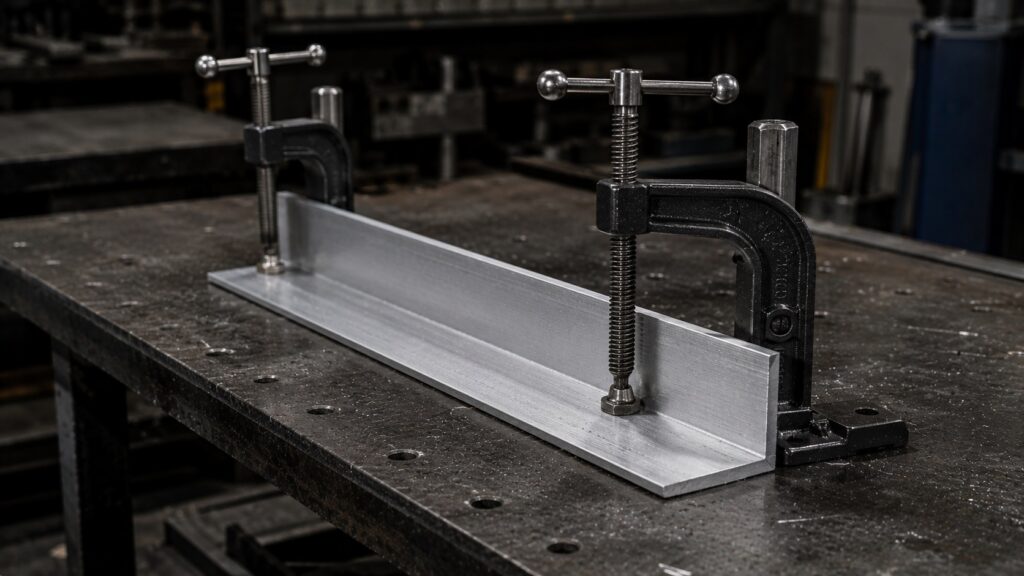
Proper clamping is critical.
Loose aluminum angle can:
- vibrate
- chatter
- twist
- bind the blade
- create dangerous kickback
In real workshops, unstable setups cause many preventable cutting problems.
Use:
- clamps
- vises
- sacrificial backing boards
- stable work surfaces
Use the Correct Cutting Speed
Aluminum cuts best with controlled feed pressure.
Cutting too aggressively often causes:
- blade loading
- rough finish
- overheating
- material grabbing
- burr formation
One lesson many beginners learn the hard way is that forcing aluminum through the blade almost always makes the cut worse.
Different materials also react differently depending on their metal hardness, which directly affects cutting pressure, blade wear, and edge quality.
Prevent Burrs and Rough Edges
To reduce burrs:
- use sharp blades
- maintain steady feed speed
- avoid excessive pressure
- support thin sections properly
Thin aluminum angle tends to flex during cutting, which increases edge tearing.
Deburr and Finish the Cut
After cutting, deburring improves:
- safety
- appearance
- assembly fit
- professional finish quality
Common deburring tools include:
- files
- flap discs
- deburring tools
- sanding blocks
From fabrication experience, even excellent cuts usually require minor edge cleanup.
How to Cut Aluminum Angle Without Burrs
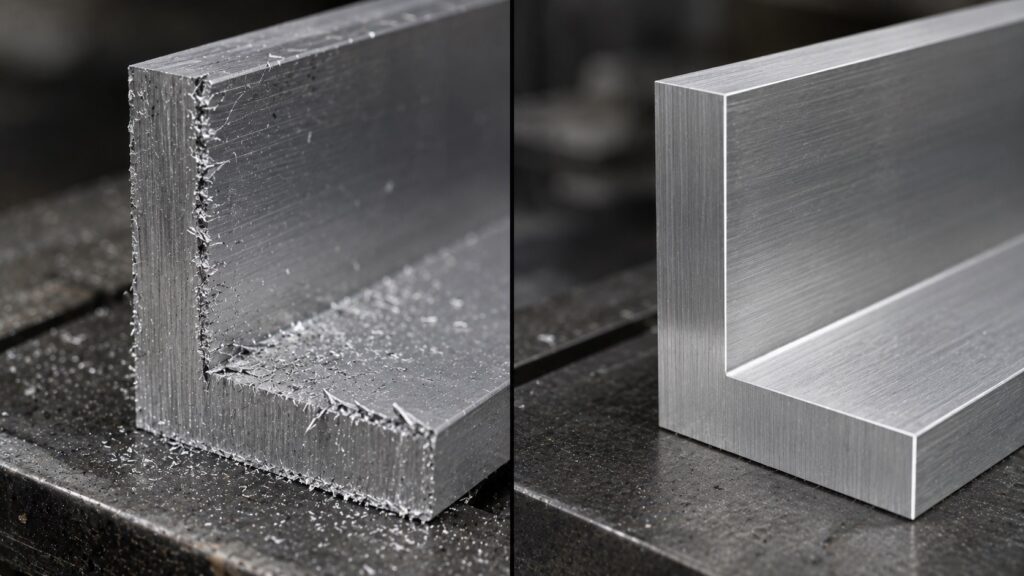
Burrs are one of the most common frustrations beginners encounter.
Fortunately, they can be minimized significantly with proper technique.
Why Burrs Form
Burrs usually form because:
- blades are dull
- feed pressure is excessive
- material vibrates
- blade geometry is poor
- cutting speed is inconsistent
Soft metals like aluminum are especially prone to edge deformation.
How Professionals Prevent Burrs
Experienced fabricators reduce burrs by:
- using fine-tooth blades
- clamping material firmly
- cutting slowly and consistently
- using lubrication when necessary
- supporting both sides of the cut
One thing many beginners overlook is that vibration is often the real cause of rough aluminum cuts.
Reducing vibration dramatically improves edge quality.
Can You Cut Aluminum Angle with a Miter Saw?
Yes — and in many situations, it is one of the best methods available.
A properly configured miter saw can produce highly accurate cuts quickly.
Best Miter Saw Blade Setup
For aluminum angle cutting:
- carbide-tipped blades work best
- medium-to-high tooth count is ideal
- slower feed pressure improves finish quality
Professionally, many fabrication shops dedicate specific blades only to aluminum work.
Safety Tips for Miter Saw Cutting
Safety matters enormously.
Always:
- wear eye protection
- secure material firmly
- stand slightly off-center
- avoid forcing the cut
- allow the blade to reach full speed first
One dangerous mistake is lowering the blade too aggressively.
Aluminum can catch suddenly if the blade bites too hard.
Can You Cut Aluminum Angle with an Angle Grinder?
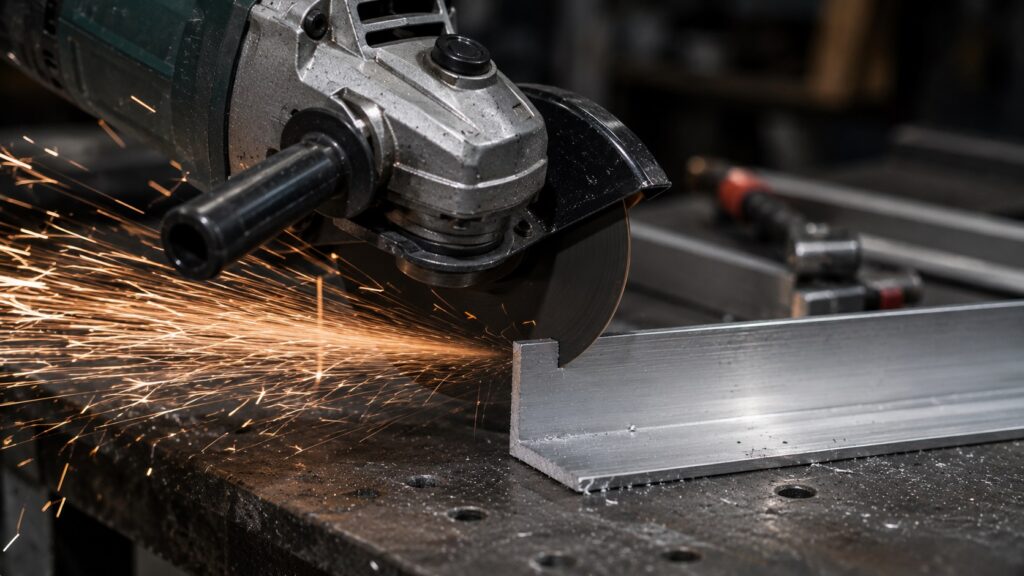
Yes, but grinders are better suited for rougher cuts and quick modifications.
They are usually not the ideal tool for highly accurate finish work.
Best Grinder Disc for Aluminum
Thin cutoff wheels generally work best.
Avoid:
- heavily worn discs
- damaged wheels
- improper RPM ratings
Professionally, grinders are often used for trimming and fabrication adjustments rather than precision production cuts.
Common Grinder Mistakes
Common beginner mistakes include:
- excessive pressure
- poor clamping
- wrong wheel type
- overheating the material
- cutting too quickly
From fabrication experience, patience improves aluminum cutting quality dramatically.
Common Mistakes When Cutting Aluminum Angle
Most aluminum cutting problems are caused by setup mistakes rather than tool limitations.
Using the Wrong Blade
Incorrect blades often cause:
- grabbing
- rough cuts
- excessive burrs
- overheating
Blade quality matters more than many beginners realize.
Blade choice becomes even more important when switching between soft aluminum, hardened steel, stainless steel, or other metals with different cutting behavior.
Cutting Too Fast
Aggressive cutting pressure almost always reduces cut quality.
Aluminum cuts best with controlled feed rates.
Poor Material Clamping
Loose material increases:
- vibration
- chatter
- blade deflection
- edge tearing
Proper clamping improves both safety and accuracy.
Ignoring Eye Protection
Aluminum chips travel surprisingly fast.
Eye protection should always be mandatory during cutting operations.
Professional Tips for Cleaner Aluminum Cuts
Small adjustments often make huge differences in cut quality.
Using Lubrication
Lubrication helps:
- reduce heat
- improve finish quality
- reduce blade loading
- extend blade life
Professionally, wax sticks and cutting lubricants are commonly used during aluminum cutting.
Reducing Blade Loading
Aluminum buildup on blades reduces cut quality quickly.
To minimize loading:
- keep blades clean
- avoid overheating
- use moderate feed pressure
- avoid excessive RPM
Improving Cut Accuracy
Accuracy improves when:
- material is fully supported
- measurements are verified
- stable fences are used
- blades remain sharp
From fabrication experience, rushed setups create far more errors than actual cutting does.
Frequently Asked Questions About Cutting Aluminum Angle
Can you cut aluminum angle with woodworking tools?
Yes. Many woodworking saws can cut aluminum angle safely when equipped with proper carbide-tipped blades and used carefully.
Does aluminum damage saw blades?
Not normally. However, aluminum can load blades if feed pressure and cutting speed are incorrect.
What RPM is best for cutting aluminum?
Moderate RPM with controlled feed pressure generally produces the best results. Excessive speed often increases heat and burr formation.
How do you stop aluminum from grabbing the blade?
Proper clamping, steady feed speed, sharp blades, and correct tooth geometry help prevent grabbing.
Can beginners cut aluminum safely at home?
Yes. With proper eye protection, stable setups, and the correct tools, beginners can safely cut aluminum angle for DIY projects.
Final Thoughts on Cutting Aluminum Angle for DIY Projects
Cutting aluminum angle is one of those fabrication skills that looks deceptively simple until you actually start doing it.
At first, many beginners focus only on the tool.
But in real fabrication work, the biggest differences usually come from:
- setup quality
- blade selection
- material stability
- feed pressure
- patience
From real workshop experience, the people who achieve the cleanest aluminum cuts are rarely the fastest.
They are the most controlled.
If you use proper blades, secure the material correctly, and focus on smooth consistent cutting technique, aluminum angle becomes one of the easiest and most rewarding materials to work with for DIY fabrication projects.