
What Is 4140 Steel Used For? (Quick Answer)
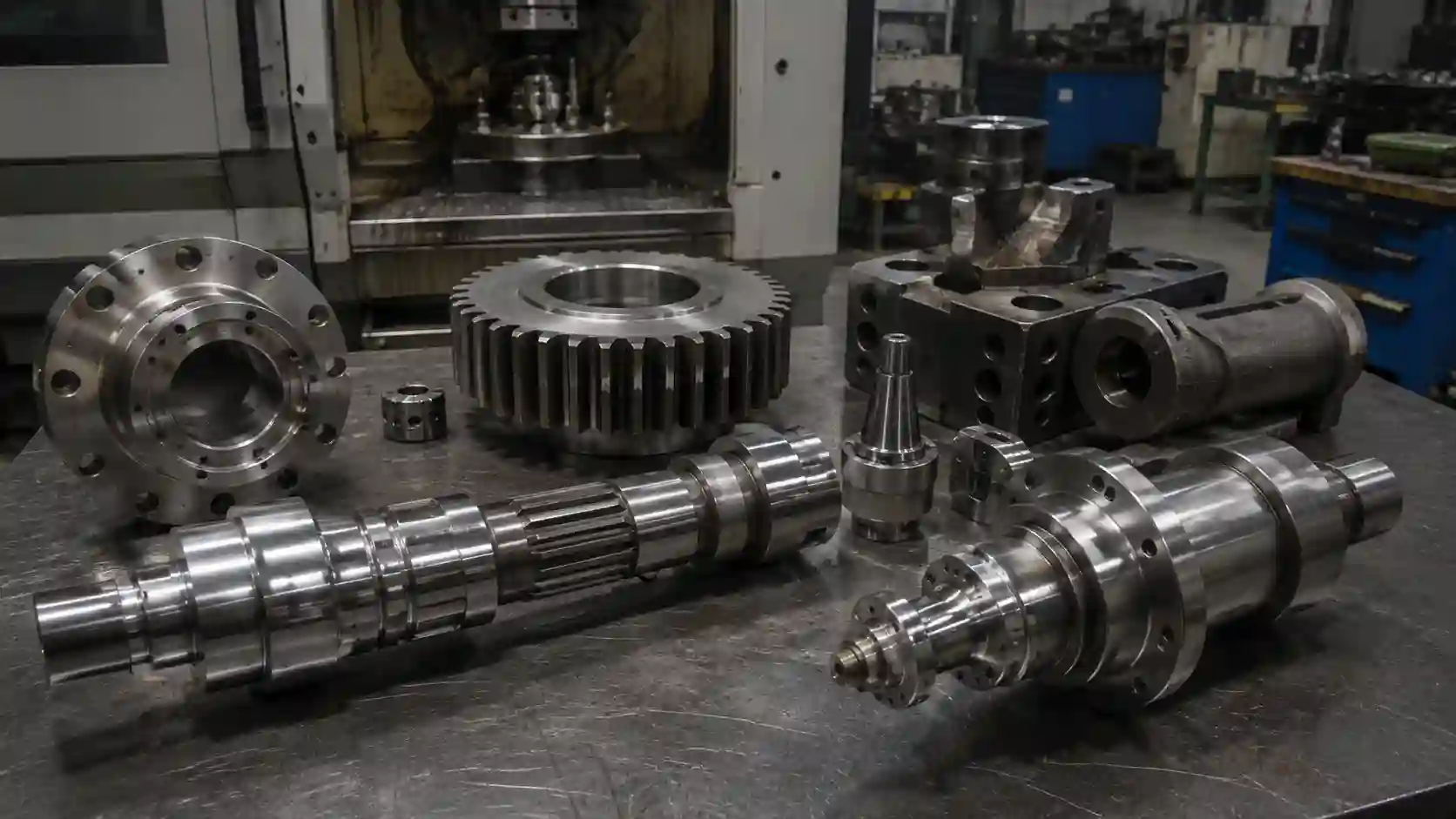
What is 4140 steel used for? 4140 steel is commonly used for shafts, gears, axles, spindles, tooling, and other high-strength machine components that require toughness, wear resistance, and long service life.
Why 4140 Steel Is So Common in Machine Shops
4140 steel is one of those materials that shows up everywhere once you start paying attention.
You will find it in shafts, pins, gears, axles, couplings, tooling parts, hydraulic components, and repair jobs where mild steel would bend, mushroom, twist, or wear too quickly. It is not the strongest steel available, and it is not the easiest steel to weld, but it sits in a very useful middle ground.
That is the main reason 4140 is so popular.
It gives a strong balance of toughness, fatigue resistance, wear resistance, machinability, and heat treatability without becoming as expensive or demanding as some higher alloy steels. In real shop work, that balance matters more than one impressive number on a data sheet.
A part does not only need to be strong. It may also need to machine cleanly, survive repeated loading, hold a bearing fit, resist wear, accept heat treatment, and stay reasonably stable after machining. 4140 handles that combination better than many general-purpose steels.
Why Engineers Choose 4140 Over Other Steels
Many steels can provide high strength, but engineers often choose 4140 because it offers one of the best overall balances of performance, cost, availability, and heat-treat flexibility.
In real-world machine design, the strongest material is not always the best material. A shaft, gear, spindle, or tooling component may need to resist wear, handle repeated loading, machine efficiently, and remain dimensionally stable after heat treatment.
4140 performs well in all of those areas without becoming excessively expensive or difficult to source.
Engineers commonly choose 4140 because it provides:
- High strength potential
- Good fatigue resistance
- Excellent toughness
- Useful wear resistance
- Strong heat-treatment response
- Good availability worldwide
- Better performance than mild steel
- Lower cost than many premium alloy steels
For many machine shop applications, 4140 sits in a practical middle ground between inexpensive carbon steels and more specialized high-performance alloys.
What Is 4140 Steel?
4140 steel is a medium-carbon chromium-molybdenum alloy steel. It is often called a chrome-moly steel because chromium and molybdenum are the two important alloying elements that separate it from plain carbon steel.
The “41” in 4140 refers to the chromium-molybdenum alloy family. The “40” roughly indicates about 0.40% carbon.
Typical 4140 steel contains:
| Element | Typical Range | What It Does |
|---|---|---|
| Carbon | 0.38–0.43% | Adds strength, hardness, and heat-treat response |
| Chromium | 0.80–1.10% | Improves hardenability, wear resistance, and toughness |
| Molybdenum | 0.15–0.25% | Improves strength, hardenability, and resistance to softening |
| Manganese | 0.75–1.00% | Helps strength and hardening response |
| Silicon | 0.15–0.30% | Supports strength and deoxidation |
| Iron | Balance | Main base material |
Mechanical Properties of 4140 Steel
4140 steel is widely used because it offers a strong balance of strength, toughness, and heat-treat response. Exact values vary depending on heat treatment condition, but typical annealed properties are shown below.
| Property | Typical Value |
|---|---|
| Tensile Strength | 95,000 psi (655 MPa) |
| Yield Strength | 60,000 psi (415 MPa) |
| Brinell Hardness | 197 HB |
| Density | 7.85 g/cm³ |
| Elastic Modulus | 205 GPa |
| Machinability Rating | ~65% of B1112 |
These values help explain why 4140 is commonly selected for shafts, gears, axles, and heavily loaded machine components. When heat treated, strength and hardness can increase substantially while maintaining useful toughness.
That carbon level is important. It gives 4140 enough carbon to harden well during heat treatment, but not so much that it becomes extremely brittle or impossible to machine in normal conditions.
The practical result is simple: 4140 can be machined, heat treated, and used in loaded mechanical parts where mild steel would often be too soft or weak.
| Application | Why 4140 Is Used |
|---|---|
| Shafts | High torsional strength and fatigue resistance |
| Gears | Good toughness and wear resistance |
| Axles | Handles shock and cyclic loading |
| Spindles | Strength and dimensional stability |
| Tool Holders | Toughness and heat-treat flexibility |
| Drill Collars | High strength under heavy loading |
| Fasteners | Better strength than low-carbon steel |
| Machine Parts | Strong balance of machinability and durability |
Why Shops Choose 4140 Instead of Mild Steel
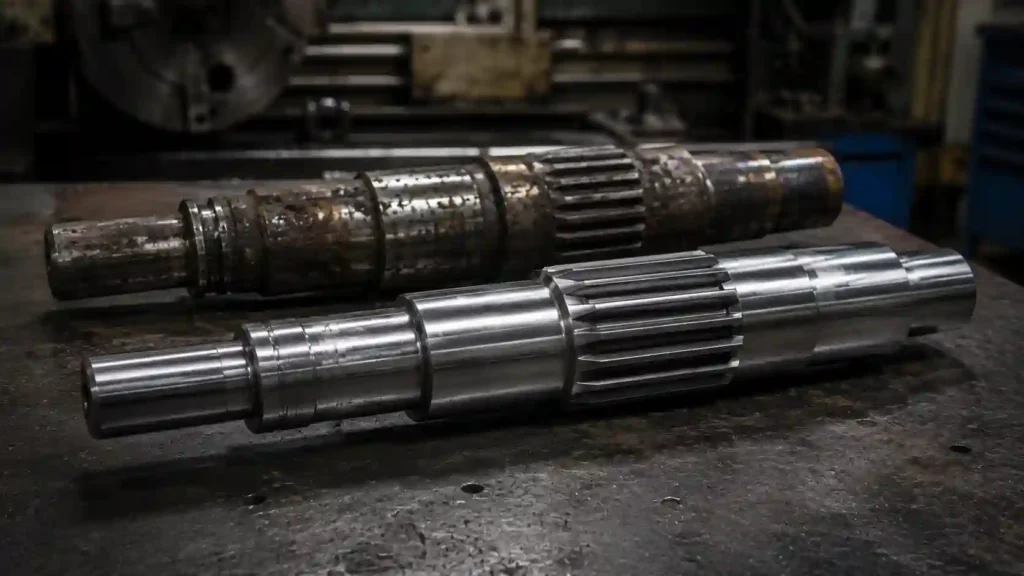
Mild steel is easy to cut, weld, bend, and buy. For brackets, guards, frames, and simple fabricated parts, mild steel often makes more sense.
But mild steel has limits.
If a shaft is wearing at a bearing surface, a pin is mushrooming under impact, a threaded stud is stretching, or a machine component keeps deforming under load, mild steel may not be enough.
4140 gives better:
- Tensile strength
- Yield strength
- Fatigue resistance
- Impact toughness
- Wear resistance
- Heat treatment response
- Strength through thicker sections
In some applications, surface protection also matters. Learn how finishes such as black oxide coating can improve appearance and add limited corrosion resistance.
A common shop mistake is choosing mild steel because it is cheap, then spending more time repairing worn or bent parts later. 4140 usually costs more upfront, but for loaded components, it can reduce repeat failures.
That does not mean every part should be 4140. For a simple spacer, cover plate, or light-duty bracket, it may be unnecessary. For a drive shaft, heavy pin, axle, or machine spindle, it often becomes a better choice.
Real-World Example: When 4140 Outperforms Mild Steel
A common repair shop example is a worn pivot pin on a loader bucket.
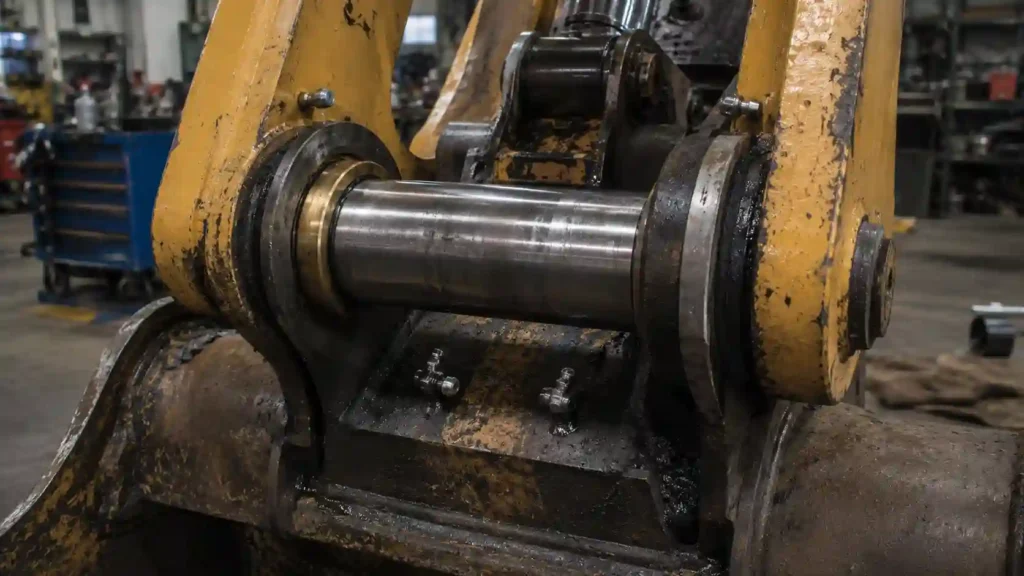
A replacement pin made from mild steel may begin wearing again within months, especially if lubrication is poor. Replacing the same pin with properly heat-treated 4140 often extends service life significantly because the material better resists deformation and wear.
However, the improvement only works when the mating bushings, fit, and lubrication system are also corrected.
4140 Steel for Shafts
Shafts are one of the most common uses for 4140 steel.
A shaft may look simple, but it usually deals with several problems at once: torque, bending load, bearing pressure, keyway stress, surface wear, and sometimes shock loading. Plain carbon steel can work for light shafts, but once the load increases, 4140 becomes much more attractive.
4140 is often used for:
- Drive shafts
- Transmission shafts
- Pump shafts
- Motor shafts
- Gearbox shafts
- Hydraulic cylinder rods
- Machine tool shafts
One practical advantage is that 4140 can hold up better around keyways, shoulders, splines, and bearing journals. Those areas often become stress concentrators. In real failures, shafts usually do not fail in the middle of a perfectly smooth section. They fail where geometry, load, and surface condition all come together.
That is where material choice matters.
For precision shafts, shops often machine 4140 in a softened or pre-hardened condition, then finish critical diameters after stress relief or heat treatment if required. If tight bearing fits are involved, leaving a little stock for final grinding or finishing is usually safer than trusting the part to stay perfect after heavy machining.
4140 Steel for Gears
4140 steel is also used for gears, especially where strength and toughness are more important than maximum surface hardness.
Gears see repeated contact stress. They also deal with bending stress at the tooth root. If the material is too soft, the teeth can wear or deform. If it is too brittle, teeth may chip or crack.
4140 can be useful for:
- Industrial gears
- Sprockets
- Pinions
- Drive components
- Heavy machinery gear parts
- Repair gears
For many general machinery applications, quenched and tempered 4140 gives a good balance of tooth strength and toughness. However, it is not always the best choice for every gear.
If a gear needs a very hard wear surface with a tougher core, a case-hardening steel like 8620 may be better. That is one of the important distinctions. 4140 is often through-hardened or pre-hardened. 8620 is commonly carburized for a hard case and ductile core.
So the choice depends on the failure mode.
If the gear is failing from bending, shock, or general strength issues, 4140 may be suitable. If it is failing from surface wear, pitting, or contact fatigue, a case-hardened gear steel may be the better direction.
4140 Steel for Axles and Heavy Equipment Parts
4140 is a strong candidate for axles and heavy equipment components because it handles impact and cyclic loading better than plain carbon steel.
Axles, pins, and suspension-related parts do not just carry static weight. They see changing loads, vibration, road shock, torsion, and sometimes misalignment. In construction equipment or agricultural machinery, loads are rarely clean and predictable.
4140 is used in:
- Vehicle axles
- Heavy-duty pins
- Loader and excavator components
- Suspension parts
- Steering components
- Construction machinery parts
- Agricultural equipment parts
A useful shop observation: worn pins and elongated holes often tell the real story before a complete failure happens. If a mild steel pin is wearing quickly, replacing it with 4140 may help, but only if the mating part, lubrication, hardness, and fit are also considered.
Harder steel alone does not fix a bad joint.
If the bushing material is wrong, the grease path is blocked, or the pin fit is loose, even 4140 can wear faster than expected.
4140 Steel for Bolts, Studs, and Fasteners
4140 is used for high-strength bolts, studs, threaded rods, and custom fasteners where ordinary low-carbon fasteners are not strong enough.
This is especially common in:
- Heavy equipment
- Tooling assemblies
- Structural machinery
- Die and mold clamping
- Automotive and motorsport parts
- Custom repair work
Threaded parts need more than tensile strength. They also need toughness and fatigue resistance. Threads create stress risers, especially at the first engaged thread and under the head of a bolt.
4140 can perform well when properly heat treated, but there is a warning: do not casually substitute 4140 for a certified fastener grade in critical applications. Fasteners are often controlled by specific standards, heat treatment requirements, and traceability.
For shop-made studs, fixture bolts, and non-critical machinery parts, 4140 can be useful. For lifting, pressure, structural safety, or vehicle-critical fasteners, the correct certified fastener specification matters more than simply choosing a strong steel.
4140 Steel for Tooling, Dies, and Fixtures
4140 is frequently used for tooling components, dies, molds, fixture plates, clamps, and machine shop tooling parts.
Many machine shops use 4140 for tooling that supports manual milling machines such as the Bridgeport mill.
It is not a dedicated tool steel like D2, A2, or H13, but it is often tough enough and easier to machine than many tool steels. That makes it useful for support tooling and medium-duty wear parts.
Common examples include:
- Tool holders
- Fixture blocks
- Clamping components
- Die shoes
- Mold support plates
- Jigs
- Punch holders
- Machine setup components
Pre-hardened 4140 is especially useful here. It can often be machined into a finished component without sending the part out for heat treatment afterward. That saves time and reduces the risk of distortion.
This is one of those production-level details that matters more than beginners expect. A part that is perfectly machined before heat treatment may come back slightly warped, scaled, or dimensionally shifted. Buying pre-hardened 4140 can avoid that problem for many tooling parts.
The trade-off is tool wear. Pre-hardened 4140 is harder on drills, end mills, taps, and inserts than annealed material. It machines fine with the right tooling, but it does not forgive dull cutters or weak setups.
4140 Steel in Oil and Gas Applications
4140 is widely used in oilfield and drilling applications because of its strength, toughness, and ability to handle heavy mechanical loading.
Common oil and gas uses include:
- Drill collars
- Tool joints
- Downhole tools
- Valve components
- Couplings
- High-strength tubular parts
- Wellhead-related components
These parts often face high stress, vibration, and impact. Some also deal with pressure and abrasive conditions.
However, 4140 is not stainless steel. It has better corrosion resistance than plain carbon steel, but it is not suitable for harsh corrosive environments without proper protection, coatings, plating, or material review.
That distinction is important. The chromium in 4140 helps hardenability and wear behavior, but it does not make the steel stainless. If corrosion is the main problem, stainless steel or a more specialized alloy may be required.
Is 4140 Steel Good for Machining?
4140 steel is generally considered machinable, but the condition matters a lot.
If you are new to machining operations, our CNC basics guide explains many of the cutting, tooling, and setup principles that also apply when machining 4140 steel.
Annealed 4140 machines much easier than pre-hardened or fully heat-treated 4140. Pre-hardened 4140 can still machine well, but it needs more rigid setups, sharper tooling, better speed control, and more attention to heat.
In the shop, 4140 usually gives better results when:
- The setup is rigid
- Tool overhang is minimized
- Carbide tooling is used for harder conditions
- Cutting edges are sharp but strong
- Coolant or cutting oil is appropriate
- Interrupted cuts are handled conservatively
- Drilling and tapping are not rushed
One counterintuitive point: trying to “baby” 4140 with too light of a cut can sometimes make the finish worse. If the tool rubs instead of cuts, heat builds, the edge wears, and the surface can become inconsistent. A proper chip is usually better than a shiny rubbing pass.
For drilling, cobalt drills or carbide drills are often preferred depending on hardness, hole size, and production volume. For tapping, good cutting fluid and correct hole size matter. Tapping pre-hardened 4140 with a cheap tap is a good way to create a broken-tap problem.
Can 4140 Steel Be Welded?
4140 can be welded, but it is not as forgiving as mild steel.
The carbon content and hardenability increase the risk of cracking, especially in thicker parts or heat-treated material. The heat affected zone can harden during cooling, and hydrogen cracking can become a serious issue.
For welding 4140, shops often need:
- Preheating
- Controlled interpass temperature
- Low-hydrogen filler and procedure
- Slow cooling
- Post-weld heat treatment or stress relief when required
- Extra care with thick sections
- Extra care with pre-hardened or quenched-and-tempered parts
For small non-critical repairs, welders sometimes get away with less. But for loaded components, skipping preheat and procedure control can create cracks that do not appear immediately.
That delayed failure is what makes 4140 welding risky. The weld may look acceptable at first, then crack later as stresses settle or the part goes back into service.
If welding is the main requirement, 4130 may sometimes be a better choice than 4140, depending on the application. If maximum weldability is needed, mild steel may be better still.
Heat Treatment: Why 4140 Is So Flexible
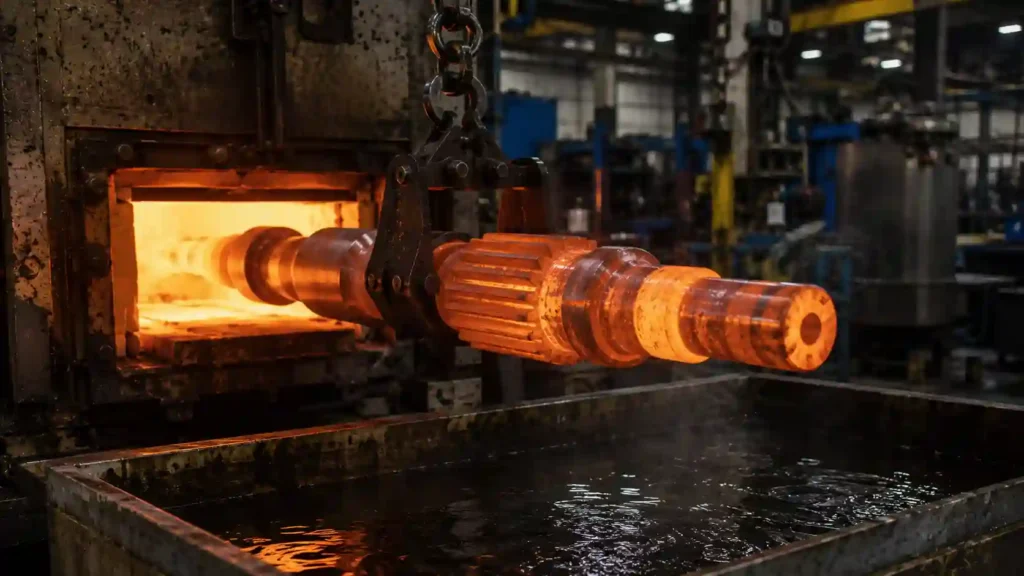
Heat treatment is one of the biggest reasons 4140 is used so widely.
If you want to understand one of the most common heat-treatment failures, see our guide on why steel cracks after quenching.
4140 can be supplied or processed in several conditions:
| Condition | Practical Meaning | Typical Use |
|---|---|---|
| Annealed | Softer, easier to machine | Parts that will be machined heavily before hardening |
| Normalized | Refined structure, moderate strength | General mechanical parts |
| Pre-hardened | Already heat treated to usable hardness | Tooling, fixtures, shafts, machine parts |
| Quenched and tempered | Hardened then toughened | High-strength loaded components |
| Nitrided | Hard surface layer added | Wear-resistant surfaces |
Common 4140 Steel Conditions
The condition of 4140 steel often matters as much as the alloy itself. Two pieces of 4140 can behave very differently depending on how they were processed before reaching the machine shop.
Annealed 4140 is softer and easier to machine. It is commonly chosen when significant material removal is required before final heat treatment.
Normalized 4140 offers a more refined grain structure and moderate strength for general mechanical applications.
Pre-Hardened 4140 is usually supplied around 28–32 HRC and is popular for tooling, fixture components, machine parts, and shafts that need strength without additional heat treatment.
Quenched and Tempered 4140 provides higher strength and toughness for heavily loaded components such as gears, axles, and industrial machinery parts.
Nitrided 4140 adds a hard wear-resistant surface while maintaining a tougher core, making it useful for shafts, pins, and other wear-critical components.
Quenching increases hardness, but it also increases brittleness. Tempering reduces brittleness and brings the part back to a more useful balance of strength and toughness.
This matters because the hardest part is not always the best part.
A shaft that is too hard may crack at a keyway. A gear that is too soft may wear. A pin that is too brittle may snap under shock. Heat treatment is about matching the part to the load, not chasing the highest hardness number.
4140 Steel Equivalent Grades
4140 steel is sold under different standards around the world. While exact specifications can vary slightly, the following grades are generally considered equivalent or closely comparable.
| Standard | Equivalent Grade |
|---|---|
| AISI / SAE | 4140 |
| EN | 42CrMo4 |
| DIN | 1.7225 |
| JIS | SCM440 |
| British Standard | EN19 |
When sourcing material internationally, checking the exact specification is still important, especially if heat treatment requirements or certification standards are involved.
4140 Steel vs 4130 Steel
4130 and 4140 are both chromium-molybdenum steels, but 4140 has more carbon.
That gives 4140 better hardenability and strength potential, while 4130 is usually easier to weld and fabricate.
| Feature | 4130 Steel | 4140 Steel |
|---|---|---|
| Carbon content | Lower | Higher |
| Strength potential | Moderate | Higher |
| Weldability | Better | More difficult |
| Hardenability | Lower | Better |
| Common use | Tubing, frames, welded structures | Shafts, gears, axles, tooling |
Use 4130 when weldability and tubular fabrication matter more. Use 4140 when strength, wear resistance, and heat treatment response matter more.
4140 Steel vs 4340 Steel
4340 is stronger and tougher than 4140 in many demanding applications because it contains nickel along with chromium and molybdenum.
But 4340 is usually more expensive and may be unnecessary for many general machine parts.
| Feature | 4140 Steel | 4340 Steel |
|---|---|---|
| Cost | Lower | Higher |
| Strength | High | Very high |
| Toughness | Good | Better |
| Availability | Very common | Common but more specialized |
| Best use | General high-strength parts | Critical heavy-duty parts |
Use 4340 when the part is highly stressed, safety-critical, or exposed to severe shock and fatigue. Use 4140 when you need strong performance without moving into a more expensive alloy.
4140 Steel vs 1045 Steel
1045 is a medium-carbon steel, but it does not have the same chromium-molybdenum alloy package as 4140.
1045 can be a good choice for simple shafts, pins, and general machine parts, but 4140 has better hardenability, toughness, and fatigue performance.
| Feature | 1045 Steel | 4140 Steel |
|---|---|---|
| Type | Medium-carbon steel | Chrome-moly alloy steel |
| Cost | Lower | Higher |
| Heat treat response | Moderate | Better |
| Fatigue resistance | Lower | Better |
| Heavy-duty use | Limited | Better |
If the part is lightly loaded, 1045 may be enough. If the part sees shock, torque, repeated loading, or wear, 4140 is usually the safer material.
When Should You Use 4140 Steel?
Use 4140 steel when the part needs a strong combination of:
- Strength
- Toughness
- Wear resistance
- Fatigue resistance
- Heat treatability
- Better performance than mild steel
- Better availability or cost than premium alloy steels
4140 is a strong choice for mechanical parts that move, rotate, carry load, or experience repeated stress.
Good candidates include:
- Shafts with keyways
- Pins under impact
- Machine spindles
- Axles
- Gears
- Couplings
- High-strength studs
- Fixture components
- Tooling blocks
- Oilfield parts
If a part is failing by bending, twisting, wearing, or fatigue cracking, 4140 may be worth considering.
When Should You Not Use 4140 Steel?
4140 is not always the best material.
Avoid or reconsider 4140 when:
- The part must be very easy to weld
- Corrosion resistance is the main requirement
- The part is a simple low-load bracket
- Stainless steel is required
- A certified fastener grade is required
- Case hardening is a better fit
- The part needs extreme toughness beyond 4140’s range
- The shop cannot control heat treatment or welding procedure
For corrosion, stainless steel may be better.
For welded tubing, 4130 may be better.
For case-hardened gears, 8620 may be better.
For severe aerospace or heavy shock applications, 4340 may be better.
For simple low-cost parts, mild steel or 1045 may be enough.
A material can be “better” on paper and still be the wrong choice for the job.
Common Mistakes When Using 4140 Steel
Choosing 4140 Without Knowing the Condition
Annealed 4140, normalized 4140, pre-hardened 4140, and quenched-and-tempered 4140 do not behave the same way.
Before machining or welding, confirm the supplied condition. This affects speeds, feeds, tool life, welding procedure, hardness, and final performance.
Welding It Like Mild Steel
4140 is not mild steel. Welding without preheat or hydrogen control can lead to cracking, especially in thicker or harder material.
Machining It After Hardening Without Planning
Heat-treated 4140 can still be machined, but it is harder on tools. If the part needs heavy material removal, it is usually better to rough machine in a softer condition and finish after heat treatment if required.
Ignoring Stress Risers
Keyways, sharp corners, undercuts, threads, and abrupt shoulders can create failure points. 4140 is strong, but poor geometry can still cause cracks.
Over-Hardening the Part
Maximum hardness is not always the goal. Many loaded parts need toughness more than extreme hardness.
If hardness verification is important for your application, see our guide on how to check the hardness of metal.
Practical Shop Tips for Working With 4140
Use annealed 4140 when heavy machining is required.
Use pre-hardened 4140 when you want strength without sending the part out for heat treatment.
Use generous radii where the part changes diameter.
Avoid sharp internal corners on shafts, pins, and tooling parts.
Use good cutting fluid when drilling or tapping.
Do not let tools rub in harder 4140.
Confirm hardness before choosing cutting tools.
Be careful welding pre-hardened material.
Consider stress relief for parts with heavy material removal.
Leave finishing stock if heat treatment may move the part.
Inspect loaded parts around keyways, threads, shoulders, and holes.
These details sound small, but they often separate a part that survives from one that fails early.
4140 Steel Selection Guide
| If You Need | Recommended Steel |
|---|---|
| Easy Welding | 4130 |
| Low Cost | Mild Steel |
| Better Strength | 4140 |
| Extreme Toughness | 4340 |
| Corrosion Resistance | Stainless Steel |
| Hard Wear Surface | 8620 |
Material selection is often about matching the steel to the failure mode. Choosing the strongest alloy is not always the best solution if the real problem is corrosion, weldability, wear, or cost.
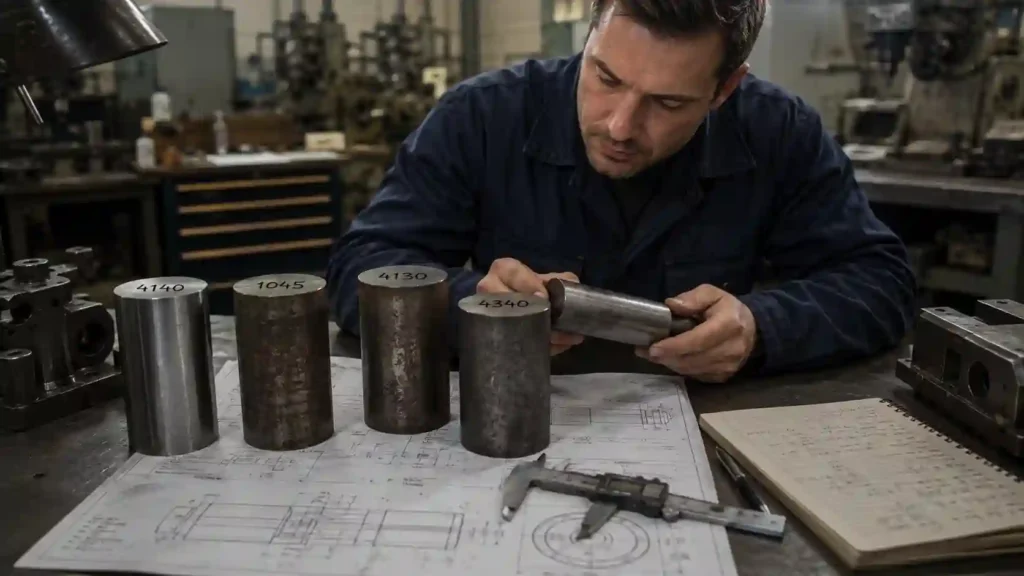
Is 4140 Steel the Right Choice for Your Project?
If a component is failing because of wear, bending, fatigue, repeated impact loading, or excessive deflection, 4140 steel is often one of the first materials engineers and machinists consider. It offers a combination of strength, toughness, wear resistance, and heat-treat flexibility that makes it suitable for a wide range of mechanical applications.
However, selecting the right material should always start with understanding the actual failure mode. A stronger steel is not automatically a better steel.
If corrosion is the primary concern, a stainless steel grade may be a better choice. If weldability is critical, 4130 or mild steel may be easier to fabricate and repair. If extreme surface hardness is required, a case-hardening alloy such as 8620 may provide better long-term wear performance.
For shafts, gears, pins, spindles, tooling components, and many heavily loaded machine parts, 4140 remains one of the most versatile engineering steels available because it balances performance, machinability, availability, and cost better than many alternatives.
Common Questions About 4140 Steel
What is 4140 steel mainly used for?
4140 steel is mainly used for shafts, gears, axles, spindles, bolts, pins, couplings, tool holders, oilfield parts, and heavy machinery components that need strength, toughness, wear resistance, and fatigue resistance.
Is 4140 stronger than mild steel?
Yes. 4140 is much stronger than mild steel, especially when heat treated. It also has better fatigue resistance, wear resistance, and hardenability.
Is 4140 steel stainless?
No. 4140 is not stainless steel. It contains chromium, but not enough to provide stainless-level corrosion resistance. It can still rust if left unprotected.
Is 4140 good for shafts?
Yes. 4140 is one of the most common steels for shafts because it handles torque, bending, bearing pressure, and fatigue better than many plain carbon steels.
Is 4140 steel easy to machine?
Annealed 4140 machines fairly well. Pre-hardened or heat-treated 4140 is more difficult and requires better tooling, more rigid setups, and careful cutting conditions.
Can 4140 steel be welded?
4140 can be welded, but it requires more care than mild steel. Preheat, low-hydrogen practice, controlled cooling, and sometimes post-weld heat treatment are needed to reduce cracking risk.
Is 4140 good for gears?
4140 can be good for gears that need strength and toughness. For gears that need a very hard wear surface with a tough core, a case-hardening steel such as 8620 may be better.
What is better, 4140 or 4340?
4340 is usually stronger and tougher, but it costs more. 4140 is often better for general high-strength machine parts where 4340 would be unnecessary.
When 4140 Steel Makes the Most Sense
4140 steel is used because it solves a very common shop problem: the part needs to be stronger and tougher than mild steel, but it does not justify a more expensive or specialized alloy.
It works well for shafts, gears, axles, pins, spindles, fasteners, tooling parts, fixtures, and heavy machinery components. Its biggest advantage is balance. It can be machined, heat treated, and used in demanding mechanical applications without becoming overly exotic.
The main thing is to respect its condition. Annealed 4140, pre-hardened 4140, and quenched-and-tempered 4140 are not the same material in practice. Choose the right condition, control machining and welding properly, and 4140 becomes one of the most useful steels in the shop.