
Direct Answer
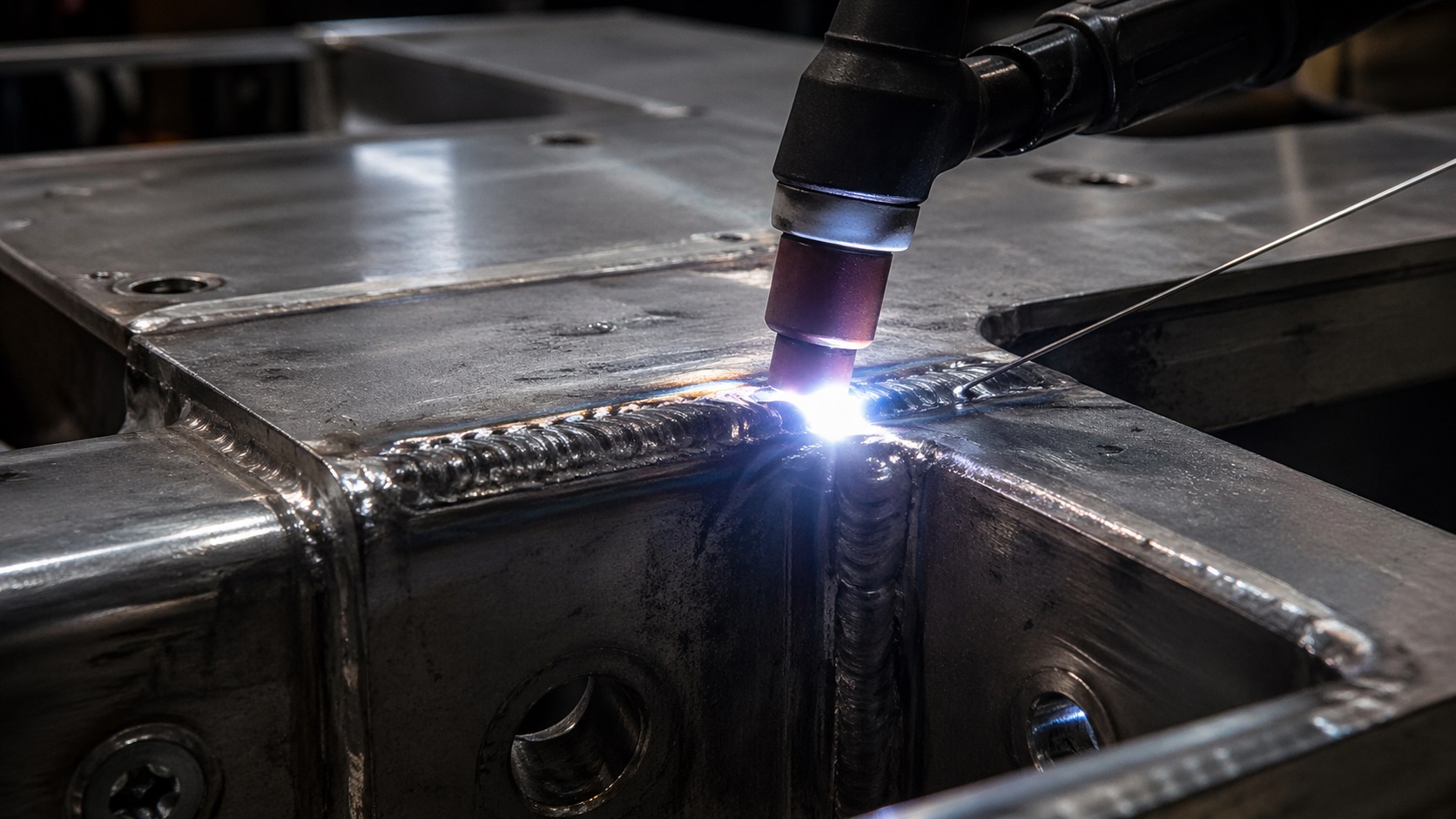
Does welding aluminum weaken it? Yes, welding aluminum does weaken it. The primary reason is the heat affected zone (HAZ), where high temperatures destroy the metal’s original temper. Depending on the alloy, aluminum can lose 30% to 70% of its strength after welding. The exact loss depends on alloy type, welding method, and heat control.
Real Experience
At first, I thought aluminum welds were just as strong as the base metal. I mean, a solid weld bead looks strong, right?
But once I tested 6061-T6 aluminum in a controlled setup, the results were eye-opening. The weld itself didn’t fail. The material next to the weld cracked first.
That’s when it clicked:
It’s not the weld that’s weak — it’s what the heat does to the surrounding metal.
After years in welding and metallurgy, I can tell you this:
Understanding why aluminum loses strength is the difference between a safe design and a failure waiting to happen.
Does Welding Aluminum Always Weaken It?
Yes — in most cases, welding aluminum does create a weaker zone around the joint. However, the level of strength loss depends heavily on the alloy, especially whether it is heat-treatable or not.
Here’s the nuance most articles miss:
- Heat-treatable alloys (like 6061-T6) lose significant strength
- Non-heat-treatable alloys (like 5052 or 3003) are less affected
- Proper technique can reduce damage, but not eliminate it
Key Insight
Welding doesn’t just join aluminum — it resets its mechanical properties.
How Much Strength Is Lost When Welding Aluminum?
The amount of strength loss depends heavily on the alloy type.
Aluminum Strength Loss Table
| Alloy | Base Strength (MPa) | Post-Weld Strength (MPa) | Strength Loss |
|---|---|---|---|
| 6061-T6 | ~310 MPa | ~120–160 MPa | 40%–60% |
| 5052-H32 | ~230 MPa | ~180–200 MPa | 10%–20% |
| 3003-H14 | ~150 MPa | ~110–130 MPa | 15%–30% |
Design Note:
Never design a welded aluminum part using only the original base metal strength. For example, 6061-T6 may start as a strong material, but the welded zone should be treated as a lower-strength condition unless proper engineering calculations prove otherwise.
What This Means
- 6061-T6 loses the most strength because its strength comes from heat treatment
- 5052 retains strength better because it’s strain-hardened, not heat-treated
- 3003 sits in the middle
Pro Tip
If strength is critical, avoid welding T6 temper aluminum unless you account for the loss in your design.
Aluminum Before vs After Welding
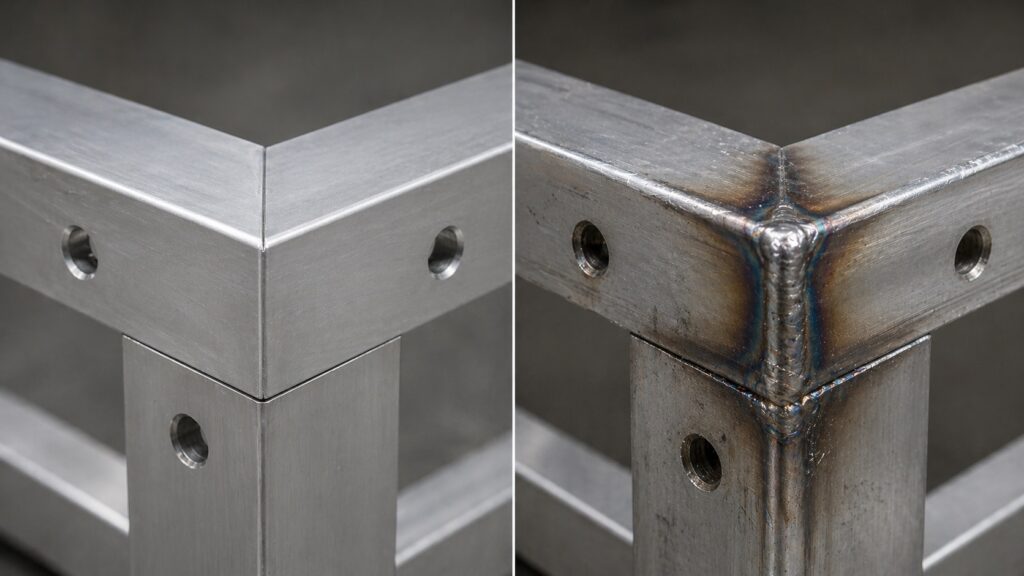
Let’s break this down visually in terms of structure:
Before Welding (Base Metal)
- Uniform grain structure
- Optimized temper (T6, H32, etc.)
- Maximum strength
During Welding
- Extreme heat input (above 500°C)
- Local melting and solidification
- Thermal distortion
After Welding
Three distinct zones form:
- Weld Metal
- New solidified structure
- Often weaker or different composition
- Heat Affected Zone (HAZ)
- Most critical area
- Loses temper completely
- Softened and weakened
- Base Metal (Unaffected)
- Retains original properties
Critical Insight
Most failures occur in the HAZ — not the weld itself.
Why Does Welding Aluminum Weaken It?
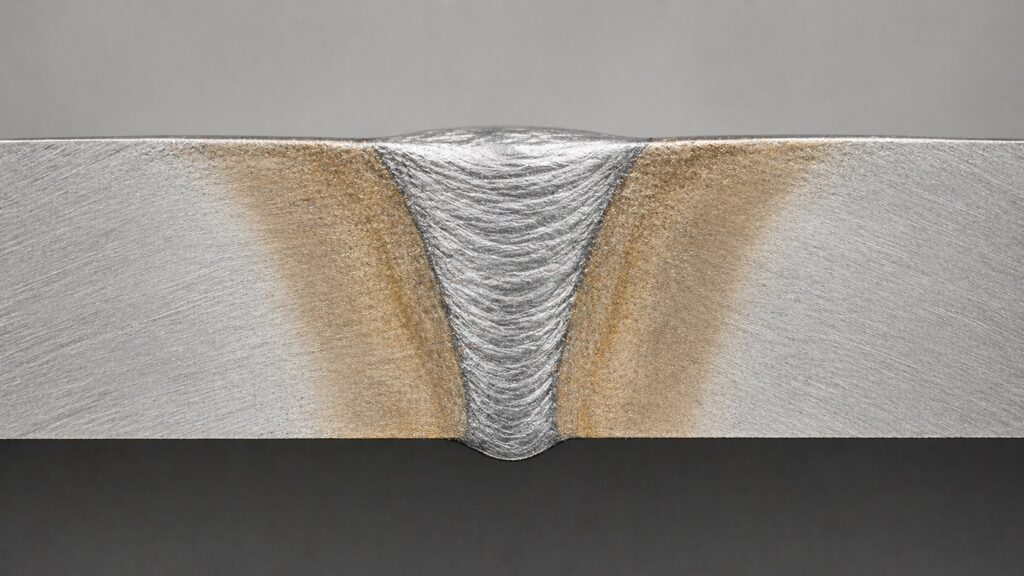
1. Heat Affected Zone (HAZ)
The HAZ is where the real damage happens.
- Temper is destroyed
- Hardness drops
- Strength significantly reduced
The tricky part is that the HAZ does not always look damaged. The aluminum may still appear clean and solid, but its hardness and yield strength can be much lower than the untouched base metal.
2. Loss of Temper
Aluminum alloys like 6061-T6 get strength from heat treatment.
Welding:
- Overheats the material
- Removes precipitation hardening
- Turns T6 into something closer to T0 (soft condition)
3. Grain Structure Changes
- Grains grow larger due to heat
- Larger grains = lower strength
- Reduced resistance to cracking
4. Loss of Strain Hardening
For alloys like 5052:
- Cold-worked structure is lost
- Strength drops, but less dramatically
A simple shop test makes this very clear. If you weld a small 6061-T6 aluminum coupon and then try to bend it, the failure often starts beside the weld instead of directly through the weld bead. That is because the bead may be reinforced by filler metal, while the nearby HAZ has lost much of its original temper.
Real Examples Where Welding Weakens Aluminum
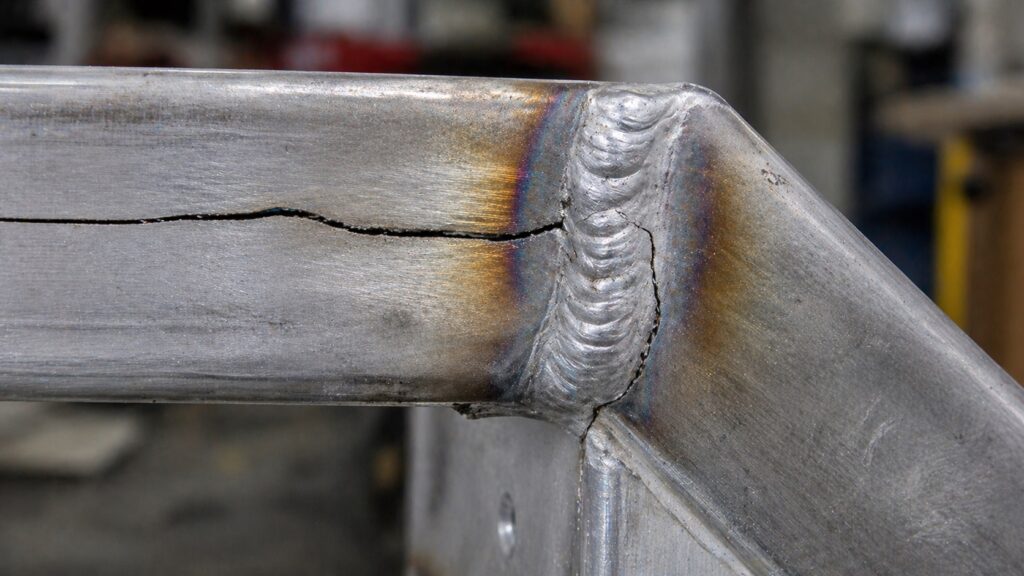
1. Railings and Structural Frames
In architectural railings:
- Welded joints often fail at HAZ
- Especially under cyclic loads (wind, vibration)
I’ve seen cases where perfectly good railings cracked within months because the weld zones weren’t reinforced.
2. Automotive Components
Aluminum is widely used in:
- Suspension parts
- Frames
- Engine mounts
If welded improperly:
- Microcracks form in HAZ
- Fatigue failure occurs over time
This is why welded aluminum parts in vehicles are rarely designed by guesswork. Brackets, suspension tabs, frames, and mounts must account for vibration, fatigue, and reduced HAZ strength. A weld that survives the first load may still fail later after repeated stress cycles.
3. Aerospace Applications
This is where things get serious.
In aerospace:
- Welding is often avoided in critical areas
- Instead, engineers use:
- Riveting
- Bonding
- Friction stir welding (FSW)
Because traditional welding:
- Weakens the structure too much
- Introduces unpredictable behavior
For readers who also work with machined aluminum parts, this CNC machining guide explains how aluminum behaves during cutting and manufacturing.
How to Prevent Strength Loss When Welding Aluminum
You cannot eliminate strength loss — but you can minimize it significantly.
1. Proper Filler Selection
- Use compatible filler rods (e.g., 4043, 5356)
- Match mechanical and thermal properties
Pro Tip
4043 = better crack resistance
5356 = higher strength
Quick Filler Metal Guide
| Filler Metal | Best For | Main Advantage | Watch Out For |
|---|---|---|---|
| 4043 | 6061, cast aluminum, general repair | Better crack resistance and smoother flow | Lower strength than 5356 |
| 5356 | 5xxx and some 6xxx alloys | Higher strength and better toughness | Not ideal for high-temperature service |
| 5183 | Marine-grade aluminum | Stronger option for 5xxx alloys | More application-specific |
2. Heat Control
- Use lower heat input
- Avoid excessive dwell time
- Control travel speed
Practical heat control checklist:
- Use the shortest weld time that still gives full fusion
- Avoid sitting in one spot with the arc
- Let the part cool between passes when needed
- Use proper travel speed instead of simply increasing amperage
- Keep interpass temperature under control on thicker parts
3. Joint Design
- Avoid placing welds in high-stress areas
- Use:
- Fillet joints instead of butt joints when possible
- Reinforcements
4. Avoid Critical Weld Zones
Design smarter:
- Don’t weld where maximum load occurs
- Move welds to low-stress regions
5. Post-Weld Heat Treatment (Limited Effectiveness)
For some alloys:
- Re-heat treatment can restore strength partially
- But:
- Not always practical
- Requires controlled environments
If you want to understand the heat-treatment side better, read this related guide on how to anneal aluminum.
Important Reality
You rarely get back to original T6 strength after welding.
Does TIG or MIG Weaken Aluminum More?
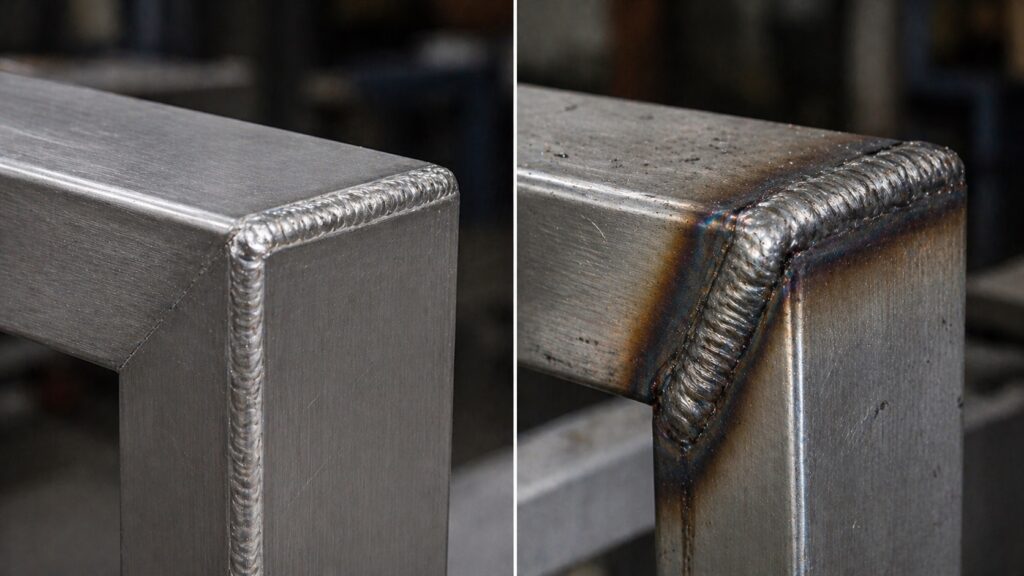
Short answer:
Both weaken aluminum — but TIG usually causes less damage.
TIG Welding
- More precise
- Better heat control
- Smaller HAZ
- Slower process
MIG Welding
- Faster
- Higher heat input
- Larger HAZ
- More distortion risk
Conclusion
TIG is generally better when strength matters.
MIG is better for speed and production.
Aluminum Welding Problems (Common but Critical)
1. Porosity
- Gas trapped in weld
- Weakens structure
If weld spatter is also a problem in your shop, this guide on how to reduce welding spatter explains the causes and fixes in more detail.
2. Cracking
- Hot cracking during cooling
- Often due to improper filler
3. Distortion
- Aluminum expands a lot with heat
- Warping is common
4. Oxide Layer Issues
- Aluminum oxide melts at higher temperature than aluminum
- Requires proper cleaning
Aluminum Weld Strength vs Base Metal
Let’s make it very clear:
- Weld metal ≠ base metal strength
- HAZ = weakest point
- Design must account for reduced strength
Real-World Rule
Engineers often assume:
Welded aluminum strength = 50% of base metal
This is a safe design assumption in many cases.
FAQ (People Also Ask Optimization)
Can aluminum be as strong after welding?
No. Aluminum rarely returns to its original strength after welding, especially heat-treated alloys like 6061-T6.
Is welded aluminum safe?
Yes, if properly designed and welded. The key is accounting for strength loss in the HAZ.
Which aluminum alloys are best for welding?
5052
3003
5083
These retain strength better after welding.
Can you restore strength after welding?
Partially, with post-weld heat treatment — but full restoration is rarely achievable.
Final Verdict
So, does welding aluminum weaken it?
Yes — and often significantly.
The safest way to think about welded aluminum is this: welding does not make aluminum useless, but it does change the rules. The original alloy strength, the welded strength, and the HAZ strength are not the same thing.
But here’s the real takeaway:
- The weld isn’t the main problem
- The heat affected zone is
If you understand:
- Material behavior
- Heat control
- Proper design
You can still build strong, reliable aluminum structures
Most competitors stop at “it weakens aluminum.”
The truth is deeper:
Welding changes aluminum — and smart engineers design around that change.