
Quick Answer: Best Way to Cut Rebar with Simple Tools
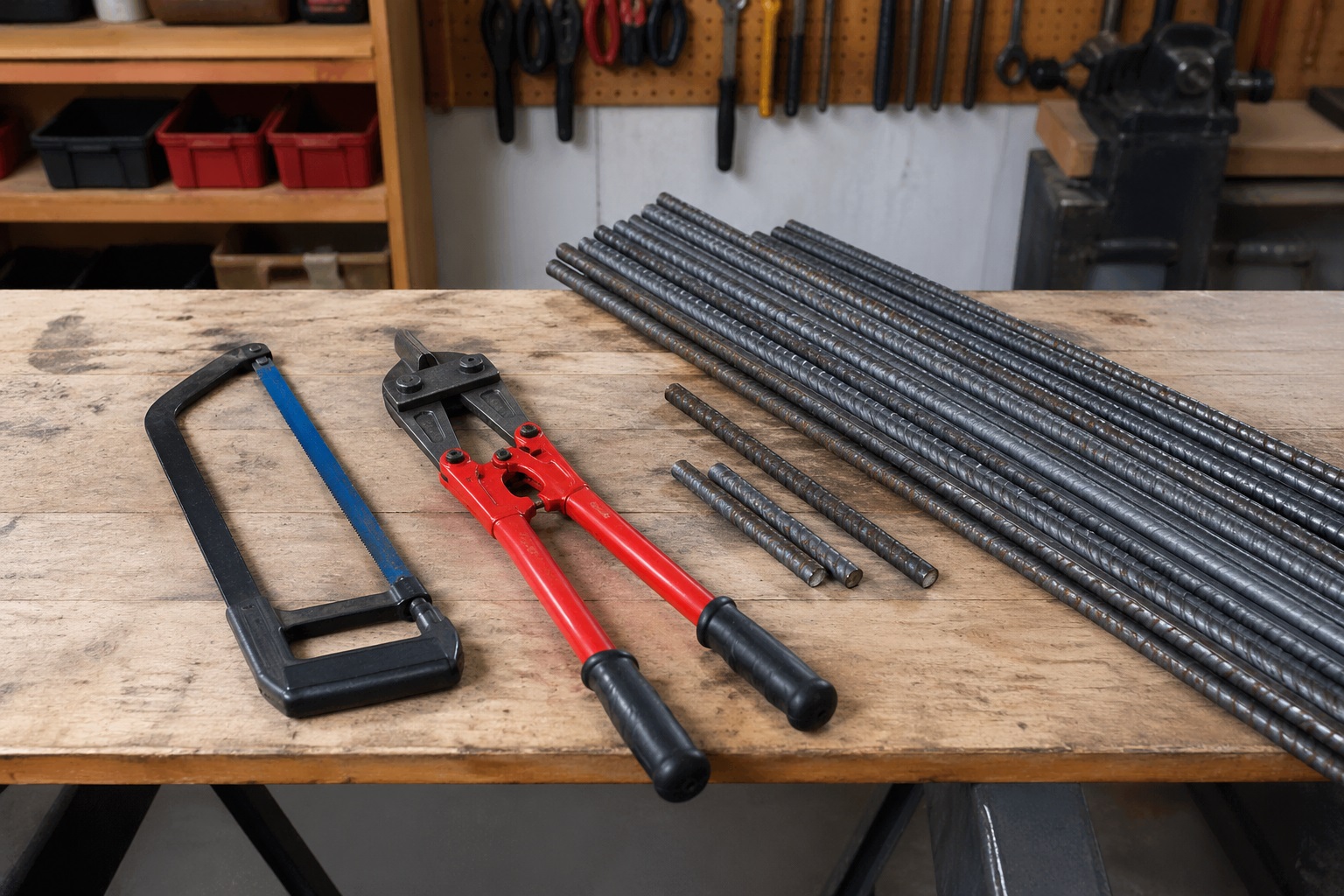
If you’re wondering how to cut rebar with simple tools, the easiest way is to use bolt cutters for fast cuts or a hacksaw for cleaner, controlled cuts. Secure the rebar, mark your cut, and apply steady pressure. You don’t need power tools—just the right method and a bit of technique.
For thicker rebar, an angle grinder becomes dramatically easier and faster. Manual cutting still works, but larger bars quickly become tiring with hand tools alone.
If you are not sure what type of steel you are dealing with, it also helps to understand what kind of metal rebar is made from before choosing a cutting method.
Easiest Ways to Cut Rebar (No Power Tools)
- Use bolt cutters → fastest, easiest method
- Use a hacksaw → cleanest, most precise cut
- Use a hammer + chisel → emergency option
Most people fail to cut rebar not because it’s hard—but because they’re using the wrong tool.
Cheap blades, undersized cutters, and poor leverage make the job feel much worse than it actually is.
What Is the Easiest Way to Cut Rebar?
Here’s the truth: most people overcomplicate this.
If I were you, I’d start with bolt cutters. They’re fast, simple, and rely on leverage instead of strength.
But if you want a clean, straight finish, a hacksaw is the better choice.
- Speed → bolt cutters
- Precision → hacksaw
That’s really what it comes down to.
The biggest surprise for beginners is how much leverage matters. Small cutters often feel useless on thicker bars, while longer handles suddenly make the same cut feel manageable.
What Size Rebar Can You Cut with Simple Tools?
Tool choice depends on thickness—this is where most people get it wrong.
| Rebar Size | Inches | Best Tool | Reality |
|---|---|---|---|
| 6–10 mm | 1/4–3/8″ | Hacksaw | Easy |
| 10–16 mm | 3/8–5/8″ | Bolt cutters | Needs leverage |
| 16mm+ | 5/8″+ | Grinder | Manual tools struggle |
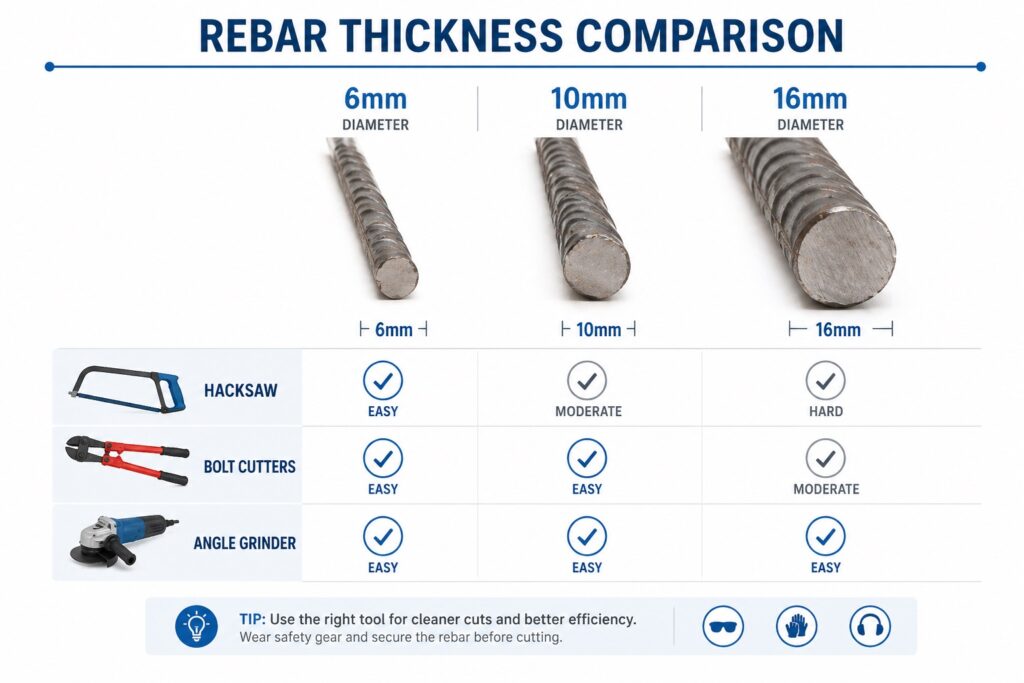
👉 If you’re above ~16mm, manual cutting becomes frustrating fast.
Best Simple Tools for Cutting Rebar
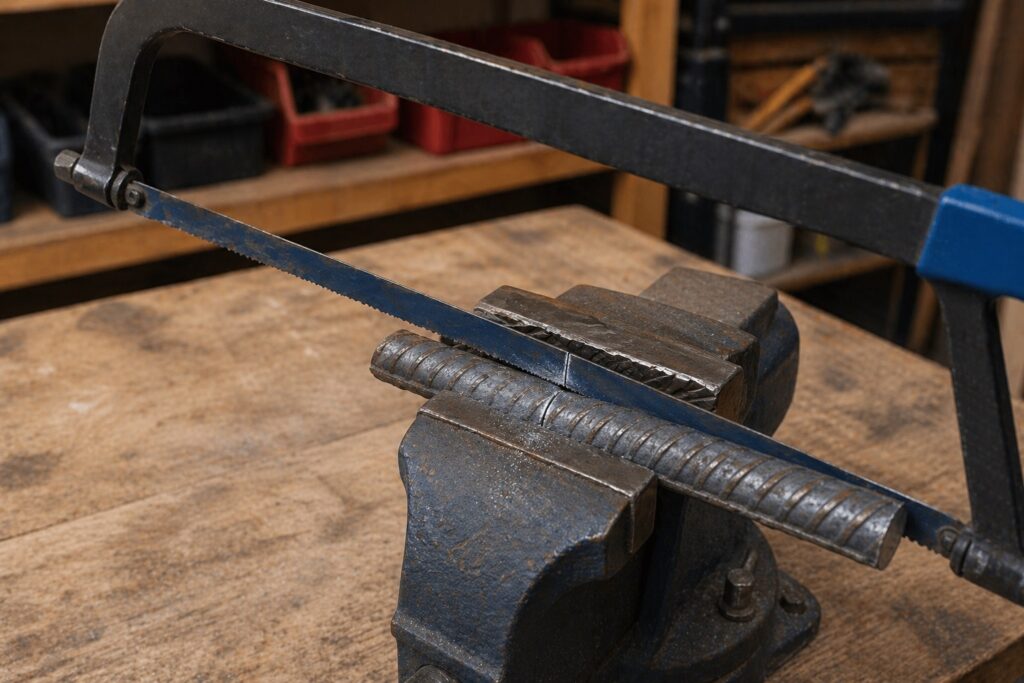
Cutting Rebar with a Hacksawv
Pros
- Clean, straight cuts
- Cheap and widely available
- Good control
- Quiet operation
- Works well indoors
Cons
- Slow
- Requires effort
- Blades wear faster than most beginners expect
- Repeated cuts become tiring quickly
Real Advice
If I were doing this at home with basic tools, I’d start here. It works—you just need patience.
A hacksaw cuts through abrasion rather than brute force. That means sharp blades matter a lot. Cheap blades dull surprisingly fast on rebar, especially on harder construction steel.
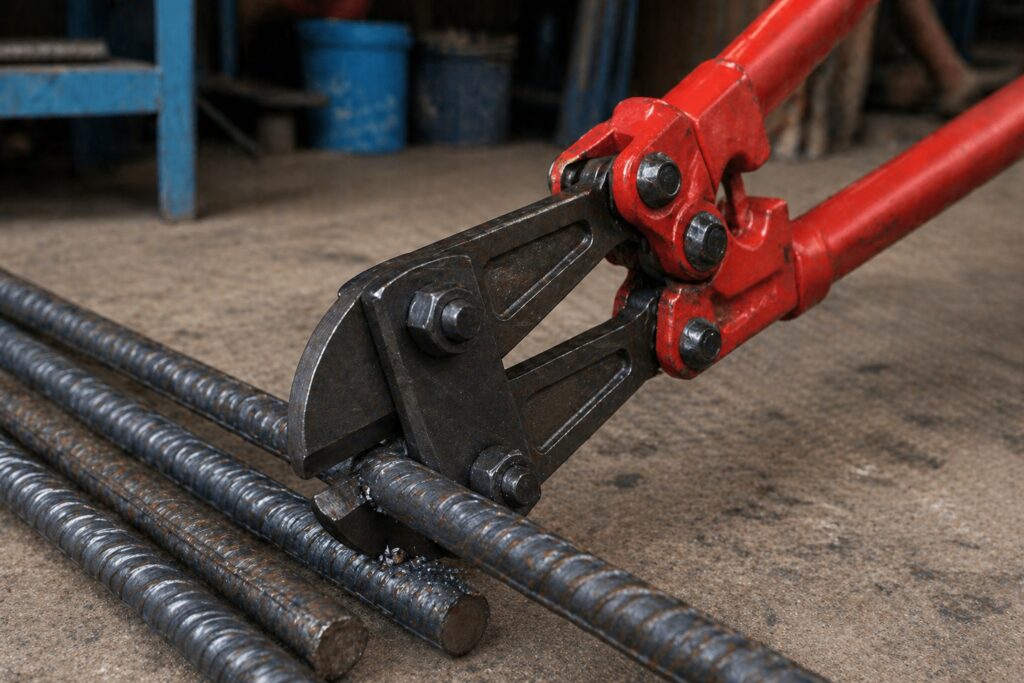
Cutting Rebar with Bolt Cutters
Pros
- Very fast
- Less effort (uses leverage)
- Great for quick jobs
- Portable
- No sparks
Cons
- Can crush edges
- Needs large size
- Limited by leverage
- Smaller cutters struggle badly on thick bars
Real Advice
Most people get this wrong—they use small cutters.
Go bigger. Longer handles = easier cuts.
Bolt cutters work by shearing the steel instead of grinding through it. Once the rebar diameter starts increasing, the tool’s leverage becomes everything.
Small bolt cutters often run out of leverage before the steel actually gives way.
Cutting Rebar with an Angle Grinder
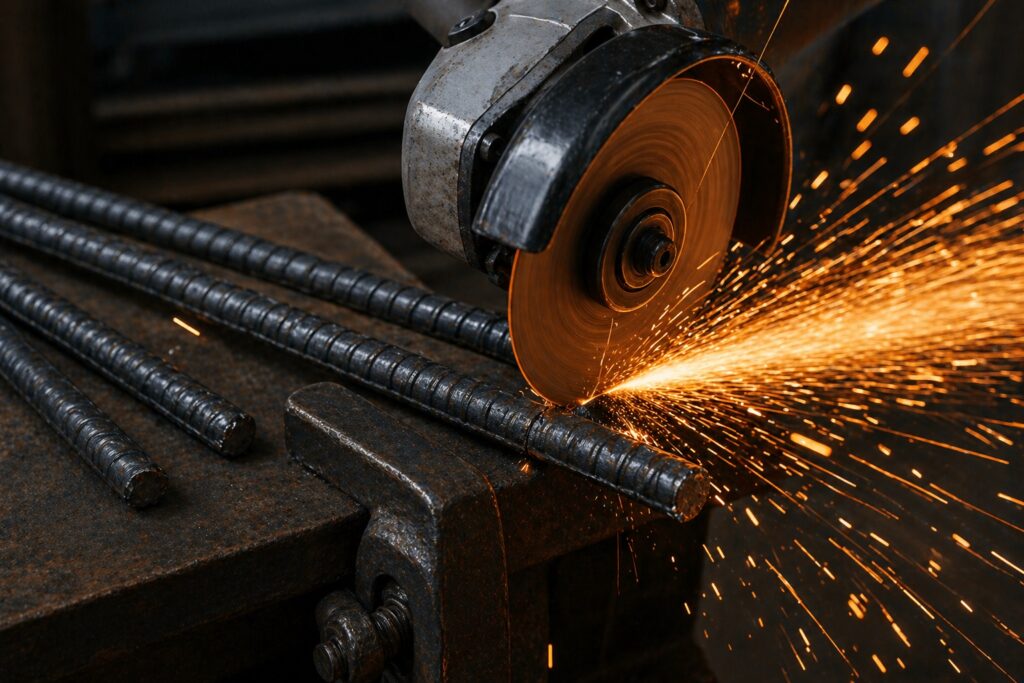
Pros
- Extremely fast
- Handles thick rebar easily
- Cuts flush against surfaces
- Works well on multiple bars
Cons
- Requires power
- Produces sparks
- Loud and messy indoors
- Discs wear out over time
Most people use standard abrasive cutoff wheels for rebar. They’re cheap and cut quickly, but they wear down surprisingly fast on repeated cuts.
Diamond wheels last much longer, especially for heavy use, but they cost more upfront.
A grinder removes metal through high-speed abrasive friction. That’s why it feels dramatically easier on thick rebar compared to hand tools.
This is similar to why different thermal cutting methods behave so differently on steel. For a deeper comparison, see flame cutting vs plasma cutting.
You’ll also notice heat discoloration near the cut on heavier bars. That’s normal.
Cheap discs can glaze over, wear unevenly, or even warp if overheated. Twisting the grinder during the cut is one of the fastest ways to ruin a cutoff wheel.
Angle grinders also throw a constant stream of sparks and hot metal particles. Grinding indoors or overhead gets messy fast.
If you already have one, it’s the easiest overall solution for thicker rebar.
Which Tool Is Best to Cut Rebar?
| Tool | Best For | Difficulty | Speed | Cost |
|---|---|---|---|---|
| Hacksaw | Thin rebar, clean cuts | Medium | Slow | Low |
| Bolt Cutters | Fast cuts, medium bars | Easy | Fast | Medium |
| Grinder | Thick rebar | Easy | Very Fast | Medium |
Which Rebar Cutting Method Should You Use?
- At home → hacksaw
- Need speed → bolt cutters
- Thick rebar → grinder
- Want clean cut → hacksaw
If I were you, I’d choose based on thickness first, then speed.
Best Overall Method for Cutting Rebar
For most homeowners and DIY users, large bolt cutters are usually the best balance between speed, cost, and simplicity.
They’re fast, portable, and don’t require power.
For thicker rebar though, grinders become dramatically easier. A few cuts with a hacksaw might feel manageable, but repeated cuts become exhausting much faster than most beginners expect.
Contractors often prefer grinders or portable band saws because they save time during repeated work.
Hacksaws still make sense when you need cleaner control, quieter cutting, or indoor use without sparks.
What I’d Personally Use
For most DIY projects, I’d personally use large bolt cutters for smaller rebar and an angle grinder for anything thicker.
Hacksaws absolutely work, but long cutting sessions become tiring surprisingly quickly.
If I needed very clean cuts repeatedly, especially in a fabrication setting, I’d probably grab a portable band saw instead.
Step-by-Step Guide to Cutting Rebar
How to Cut Rebar with a Hacksaw
- Measure and mark your cut
- Clamp the rebar securely
- Start with light strokes (create a groove)
- Use steady, full strokes
- Smooth edges with a file
👉 Tip: long strokes cut faster than short ones.
Trying to force the blade usually makes the cut slower. Let the teeth do the work.
How to Cut Rebar with Bolt Cutters
- Mark the cut point
- Place rebar deep into the jaws
- Use both hands (or body weight)
- Apply steady pressure
👉 Don’t cut near the tip—use the base of the jaws.
Beginners often try cutting near the tip of the jaws where leverage is weakest. That makes the job dramatically harder.
What Size Bolt Cutters Do You Need?
- 18-inch → too weak for most rebar
- 24-inch → minimum recommended
- 30–36 inch → ideal for easy cuts
👉 Longer handles = more leverage = easier cuts
Why Cutting Rebar Is Harder Than You Think
Rebar isn’t just metal—it’s engineered to resist force.
Most rebar used in construction is Grade 60 steel, meaning it has a minimum yield strength of around 60,000 psi. If you want the deeper material breakdown, see this guide on what kind of metal rebar is made from. That’s significantly stronger than regular mild steel.
- Ribbed surface → increases friction
- Dense steel → resists cutting
- High-strength carbon steel → very tough
Rebar is also tough, not just hard.
That means it resists both bending and cutting.
The ribbed surface also creates more resistance during manual cutting. That extra friction becomes noticeable with hacksaws especially.
How Different Tools Actually Cut Rebar
Different tools don’t just “cut”—they use completely different mechanisms:
- Bolt cutters → shear force (snap the metal)
- Hacksaw → abrasion (wear it down)
- Grinder → high-speed friction
That’s why each tool feels totally different to use.
You can actually feel the difference through the tool. Hacksaws create steady resistance, while grinders rely more on speed, vibration, and abrasive heat.
Why Some Rebar Feels Harder Than Others
Not all rebar cuts the same.
Because it’s often made from recycled steel, the composition can vary.
You might cut smoothly… then suddenly hit a harder section.
That’s normal.
Construction-grade steel is not always perfectly consistent.
Carbon content, recycled material composition, rolling processes, and localized hard spots can all affect how the rebar behaves during cutting.
That same hardness variation is why simple shop tests matter. If you want to compare steel behavior more carefully, this guide explains how to check the hardness of metal with practical methods.
This is also why cheap blades sometimes seem to dull unexpectedly fast on certain bars.
Why Your Rebar Won’t Cut
If it feels impossible, something’s off:
- Dull blade
- Weak or small tool
- Wrong angle
- Not enough leverage
Fix these first—it usually solves the problem.
A lot of cutting problems come from tool setup rather than strength.
How Clean Will the Cut Be?
- Hacksaw → clean and straight
- Bolt cutters → slightly crushed
- Grinder → clean but rough edges
👉 Always file the edge after cutting.
Grinders usually leave small burrs and sharp edges that should be cleaned up before handling.
If the rebar will be part of a visible metal project, edge cleanup matters. The same surface-prep thinking applies when you finish bare steel furniture.
Do You Need Strength to Cut Rebar?
Not really.
It’s about leverage, not strength.
- Longer handles = more force
- Better positioning = easier cut
- Sharp tools = less effort
Most people struggle because they rely on brute force.
Good positioning matters more than most beginners realize.
Awkward cutting angles waste a huge amount of energy.
How Long Does It Take?
- Hacksaw → 2–5 minutes
- Bolt cutters → seconds
- Grinder → under 10 seconds
Actual cutting time also depends heavily on blade condition and rebar hardness.
Old dull blades slow everything down.
Safety Tips
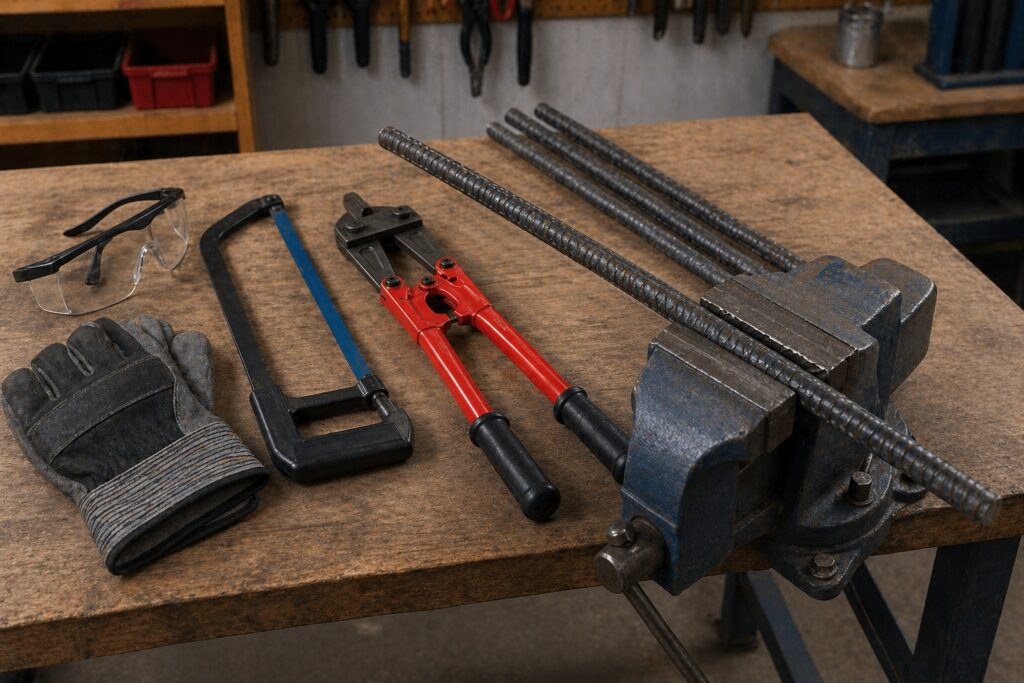
- Wear gloves (edges are sharp)
- Use safety glasses
- Always secure the rebar
- Keep hands clear
Rebar can snap suddenly—stay alert.
Grinding also produces hot sparks and abrasive dust. Indoors, that mess builds up quickly.
Pro Tips for Cutting Rebar Cleanly and Safely
- Cut a small notch first
- Use longer bolt cutters
- Cut slightly longer, then trim
- Keep tools sharp
- Avoid twisting grinder discs
- Let cutoff wheels cool during repeated cuts
If I were you, I’d always start with a small groove—it makes everything easier.
Other Simple Ways to Cut Rebar
If you’re stuck:
- Hammer + chisel
- Bend and snap (after scoring)
Not ideal—but they work in a pinch.
Portable Band Saw
Portable band saws are another excellent option if you have access to one.
They make very clean cuts with far fewer sparks than grinders, and many contractors prefer them for repeated fabrication work.
They’re also quieter and easier to control.
The downside is portability setup and limited access in tight spaces or against concrete surfaces.
If you also work with lighter shop materials, the cutting approach changes a lot. For example, aluminum behaves differently than rebar, as explained in this guide on how to cut aluminum angle.
Common Mistakes to Avoid
- Using dull blades
- Choosing the wrong tool size
- Not securing the rebar
- Cutting too fast
- Ignoring safety
- Using weak bolt cutters
- Twisting the grinder during cuts
- Overheating cutoff wheels
- Trying to force hacksaw blades
- Cutting near the tip of bolt cutter jaws
👉 Most beginners fail because they rush.
Dull blades create excessive friction and heat.
Weak cutters force you to rely on brute strength instead of leverage.
Twisting grinder wheels can warp or crack discs.
Poor clamping makes the rebar vibrate and wastes cutting force.
Most cutting problems come from tool setup mistakes—not lack of strength.
FAQ
Can you cut rebar by hand?
Yes. Hacksaws and bolt cutters work without power tools.
Is a bolt cutter enough for rebar?
Yes, for small to medium sizes. Larger rebar requires more force or power tools.
Can rebar damage tools?
Yes. Rebar wears tools down surprisingly quickly because the steel is tough and abrasive.
Cheap hacksaw blades dull fast, grinder discs wear down, and weak cutter jaws can even chip or strip under repeated heavy cuts.
Overheating can also glaze abrasive wheels or warp cheap cutoff discs.
That’s why hardened steel often destroys low-quality tools much faster than beginners expect.
Tool steel hardness is a big reason files, blades, and cutting edges behave so differently. This guide explains what steel files are made of and why hardened tool steel matters.
Why is rebar hard to cut?
Because it’s made from high-strength steel with a ribbed surface that increases resistance.
Can you cut rebar with a hacksaw?
Yes. It’s ideal for thinner rebar and gives a clean cut.
How to cut rebar safely at home?
Secure it, wear protection, and use controlled pressure.