
What Is Mild Steel in Simple Terms?
Mild steel is a low-carbon steel containing approximately 0.05% to 0.25% carbon. It is one of the most widely used engineering materials because it is affordable, easy to weld, easy to machine, easy to form, and available in countless shapes and sizes. While mild steel offers good strength for general fabrication and construction, it is prone to rust and lacks the corrosion resistance of stainless steel.
What Is Mild Steel?
Mild steel is a type of carbon steel with a relatively low carbon content. Because of its low carbon percentage, it is often referred to as low-carbon steel.
In practical terms, mild steel is the material most fabrication shops, welding shops, machine shops, and construction companies work with every day. It is commonly used for frames, brackets, machinery structures, support systems, gates, railings, sheet metal components, automotive parts, and countless industrial products.
The popularity of mild steel is not because it is the strongest steel available. It is because it offers one of the best overall balances of cost, strength, weldability, machinability, and availability.
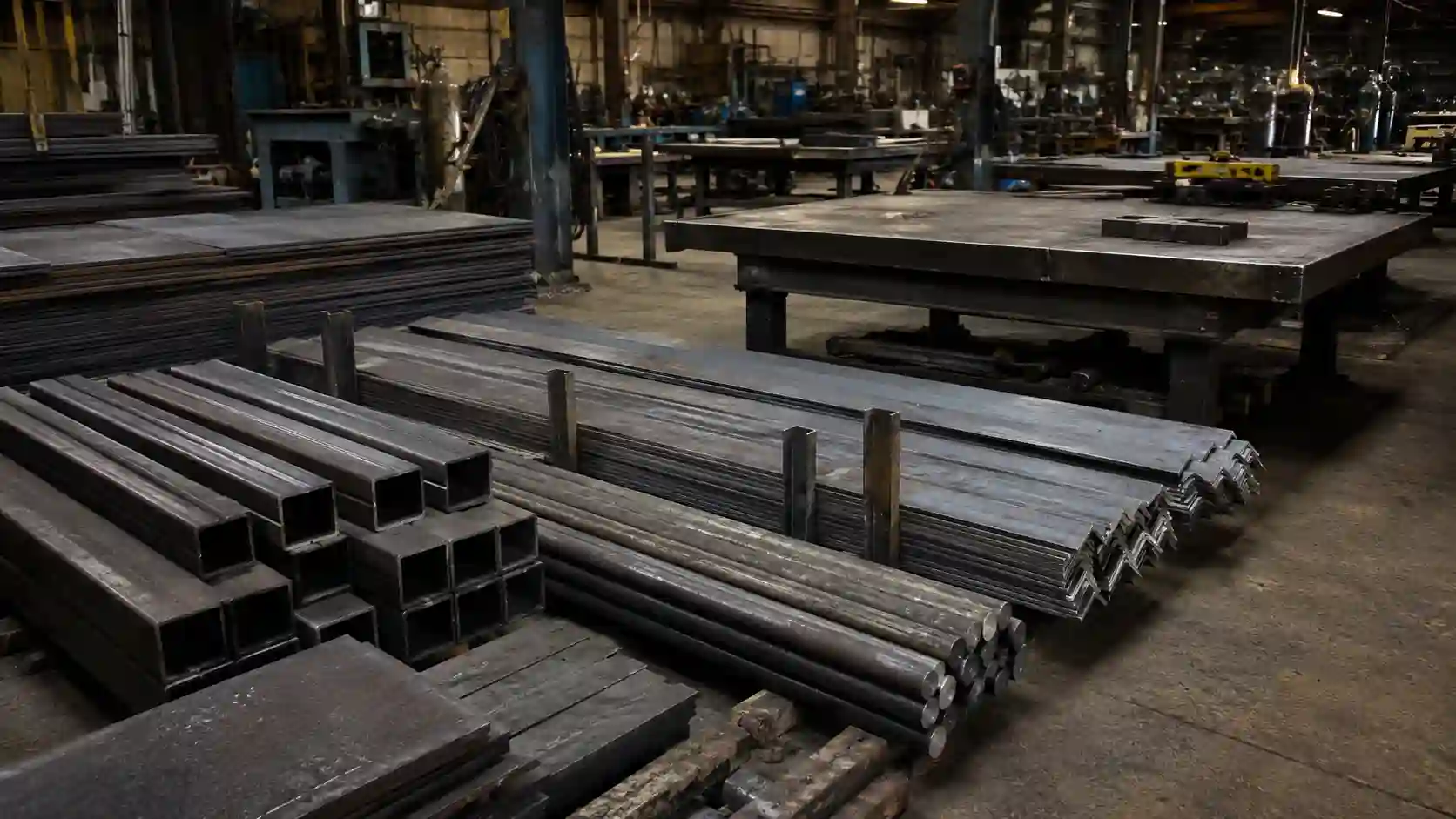
Walk through almost any fabrication shop and you will likely see stacks of mild steel plate, tube, angle iron, flat bar, and round stock waiting to be cut, welded, drilled, bent, or machined.
For many projects, mild steel simply gets the job done without unnecessary complexity.
Why Is It Called Mild Steel?
The term “mild” refers to the relatively low amount of carbon contained within the steel.
Carbon has a major influence on steel properties. As carbon content increases, steel generally becomes harder and stronger. However, it also becomes less ductile, less weldable, and more difficult to form.
Because mild steel contains only a small amount of carbon, it remains relatively soft compared to high-carbon steels. This softer structure makes it easier to cut, bend, drill, machine, and weld.
The result is a material that is extremely forgiving during fabrication.
This is one reason many welders and machinists learn on mild steel before working with stainless steel, tool steel, or specialty alloys.
Mild Steel Carbon Content
Mild steel typically contains between 0.05% and 0.25% carbon by weight.
This places it within the low-carbon steel category.
The amount of carbon present directly affects the behavior of steel:
| Carbon Content | Classification |
|---|---|
| 0.05%–0.25% | Mild Steel (Low Carbon Steel) |
| 0.30%–0.60% | Medium Carbon Steel |
| 0.60%–1.00% | High Carbon Steel |
| Above 1.00% | Very High Carbon Steel |
The low carbon content is what gives mild steel its characteristic combination of ductility, weldability, and affordability.
Common Properties of Mild Steel
Good Strength for General Use
Mild steel is strong enough for most fabrication and construction applications.
While it cannot match the hardness of tool steel or the strength of certain alloy steels, it provides sufficient strength for structural members, machinery frames, support brackets, equipment stands, and countless fabricated assemblies.
In real-world fabrication, design often matters more than material strength alone.
A properly designed mild steel frame can easily outperform a poorly designed structure made from a stronger material.
Excellent Weldability
One of the biggest reasons mild steel remains so popular is its excellent weldability.
It can be welded successfully using:
- MIG welding
- TIG welding
- Stick welding
- Flux-core welding
- Resistance welding
Compared with stainless steel or high-carbon steel, mild steel is generally much more forgiving.
Minor fit-up errors, small variations in travel speed, or slight contamination usually create fewer problems than they would with more specialized materials.
This does not mean preparation can be ignored. Oil, paint, rust, and mill scale can still affect weld quality significantly.
Good Machinability
Mild steel machines reasonably well using standard cutting tools.
It can be drilled, milled, turned, bored, tapped, and reamed without requiring specialized tooling.
However, many beginners are surprised that some grades of mild steel do not machine as cleanly as expected.
Low-carbon steels can sometimes produce long, stringy chips rather than short, easily controlled chips.
A common machining issue is built-up edge, where material begins sticking to the cutting edge of the tool.
Surface finish problems caused by built-up edge can sometimes resemble vibration defects, making it useful to understand how CNC chatter marks form on machined parts.
Using sharp tooling, proper feeds, appropriate cutting speeds, and adequate coolant generally solves most problems.
Good Formability
Mild steel is highly formable.
It can be bent, rolled, stamped, pressed, and shaped into a wide variety of configurations.
This property makes it especially valuable in:
- Sheet metal fabrication
- Automotive manufacturing
- Furniture production
- Appliance manufacturing
- Structural fabrication
Many materials become brittle when heavily formed. Mild steel generally tolerates forming operations very well.
Low Cost
Cost is one of mild steel’s biggest advantages.
Compared with stainless steel, aluminum, tool steel, and many alloy steels, mild steel is relatively inexpensive.
This cost advantage becomes especially important in large fabrication projects where material costs represent a significant portion of the total budget.
Poor Corrosion Resistance
The primary weakness of mild steel is corrosion.
Unlike stainless steel, mild steel lacks significant amounts of chromium and other alloying elements that provide corrosion resistance.
When exposed to moisture and oxygen, mild steel rusts.
Without proper protection, corrosion can eventually weaken the material and reduce service life.
Why Mild Steel Remains the Default Material in Fabrication Shops
Many people assume mild steel is used simply because it is cheap.
Cost is certainly a factor, but it is not the only reason.
Fabricators choose mild steel because it works well across nearly every stage of manufacturing.
It can be:
- Plasma cut
- Laser cut
- Waterjet cut
- Flame cut
- Saw cut
- Drilled
- Bent
- Rolled
- Welded
- Machined
- Painted
When a project does not require exceptional corrosion resistance or extreme weight savings, mild steel is often the most practical solution.
Another major advantage is repairability.
A cracked mild steel bracket can often be repaired quickly with welding. The same repair may be far more difficult on cast iron, aluminum, or hardened steels.
In production environments, simplicity often wins.
Materials that are easy to source, easy to process, and easy to repair tend to become industry standards.
Mild Steel Grades Most Fabricators Encounter
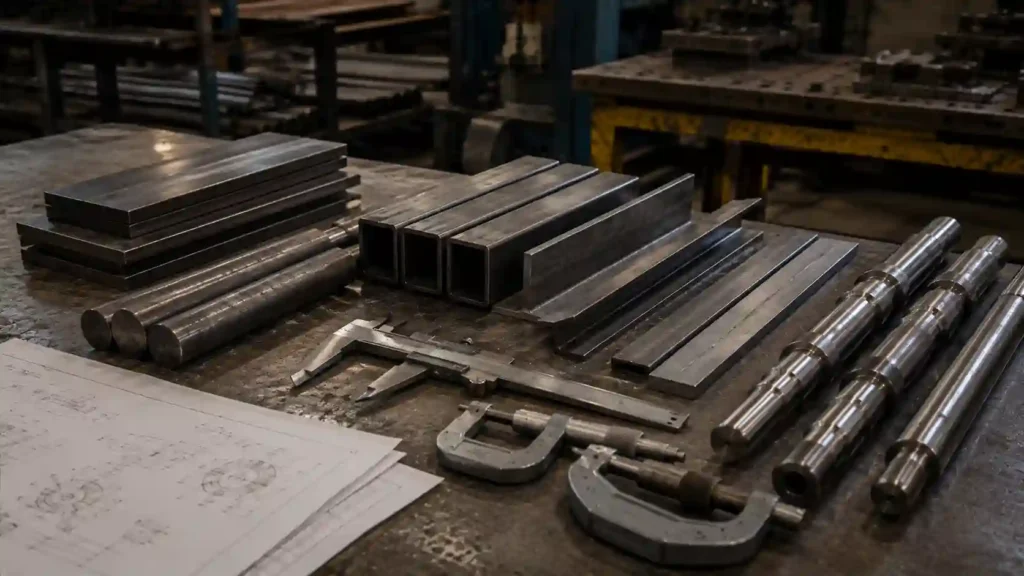
A36 Steel
A36 is one of the most common structural mild steel grades.
It is widely used for:
- Structural frames
- Base plates
- Supports
- Equipment stands
- General fabrication
A36 is often the first choice when strength and affordability are more important than tight machining tolerances.
1018 Steel
1018 is a popular low-carbon steel grade commonly used for machining applications.
Compared with many hot rolled materials, 1018 offers:
- Better dimensional consistency
- Better surface finish
- Improved machinability
Common applications include shafts, pins, bushings, and machined components.
1020 Steel
1020 steel contains slightly more carbon than 1018.
It offers a balance between machinability, strength, and weldability.
It is commonly used in machinery components and industrial equipment.
A1008 Steel
A1008 is commonly found in sheet metal applications.
Its excellent formability makes it useful for:
- Automotive panels
- Appliances
- Cabinets
- Furniture
- Enclosures
Mild Steel vs Carbon Steel
Many people assume mild steel and carbon steel are different materials.
Technically, mild steel is a type of carbon steel.
Carbon steel is a broad category that includes:
- Mild steel
- Medium carbon steel
- High carbon steel
The difference is primarily the amount of carbon present.
Mild steel contains the least carbon and therefore offers the greatest ductility and weldability.
Higher carbon steels offer greater hardness and wear resistance but sacrifice ease of fabrication.
Mild Steel vs Stainless Steel
| Feature | Mild Steel | Stainless Steel |
|---|---|---|
| Cost | Lower | Higher |
| Corrosion Resistance | Poor | Excellent |
| Weldability | Excellent | Good |
| Machinability | Good | More Challenging |
| Appearance | Industrial | Decorative |
| Maintenance | Higher | Lower |
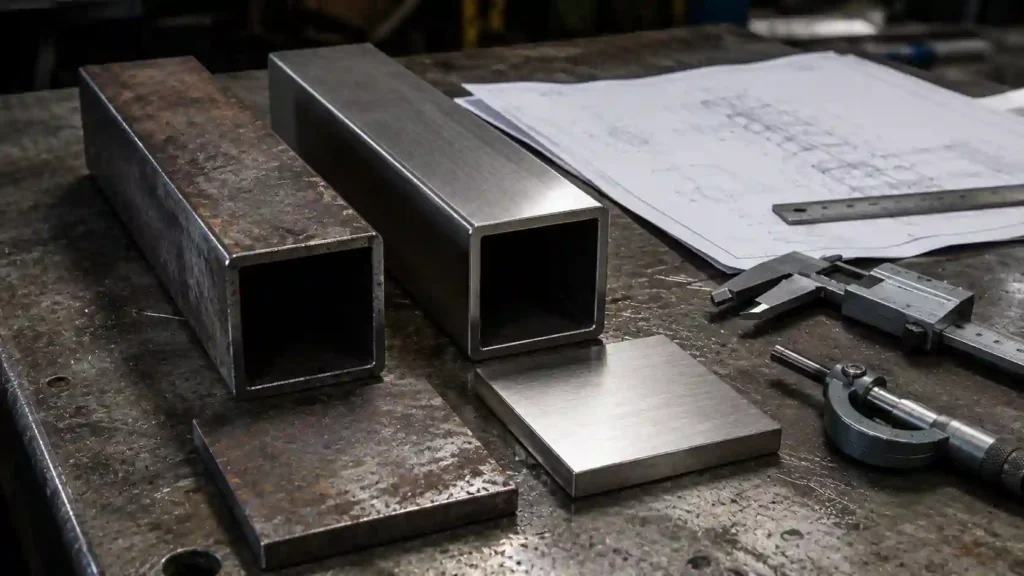
If corrosion resistance is the priority, stainless steel is usually the better choice.
If affordability, fabrication ease, and weldability matter most, mild steel often wins.
Mild Steel vs Aluminum
| Feature | Mild Steel | Aluminum |
|---|---|---|
| Weight | Heavy | Lightweight |
| Cost | Lower | Higher |
| Strength | Higher stiffness | Better strength-to-weight ratio |
| Weldability | Easier | More demanding |
| Corrosion Resistance | Lower | Better |
Many engineers initially select aluminum because of its low weight.
However, when stiffness, cost, and fabrication simplicity are considered, mild steel often becomes the more practical solution.
Hot Rolled vs Cold Rolled Mild Steel
| Feature | Hot Rolled | Cold Rolled |
|---|---|---|
| Surface Finish | Rough | Smooth |
| Cost | Lower | Higher |
| Dimensional Accuracy | Lower | Better |
| Typical Use | Fabrication | Machining |
Hot rolled mild steel typically arrives covered in mill scale.
Cold rolled material provides better dimensional consistency and surface quality but comes at a higher price.
For welded structures, hot rolled material is often sufficient.
When hot rolled plate is cut using thermal processes, the resulting heat affected zone can influence edge quality and downstream fabrication.
For precision machined parts, cold rolled material is usually preferred.
What Is Mild Steel Used For?
Mild steel is used throughout modern industry.
Common applications include:
Structural Fabrication
- Building frames
- Platforms
- Supports
- Stairs
- Railings
Automotive Manufacturing
- Chassis components
- Brackets
- Mounting structures
- Body panels
Machinery and Equipment
- Machine frames
- Guards
- Bases
- Equipment supports
Construction
- Structural members
- Reinforcement
- Architectural fabrication
DIY Projects
- Workbenches
- Shelving
- Furniture
- Fire pits
- Shop equipment
Industrial Fabrication
- Jigs
- Fixtures
- Production racks
- Material handling equipment
Why Mild Steel Rusts Faster Than Many People Expect
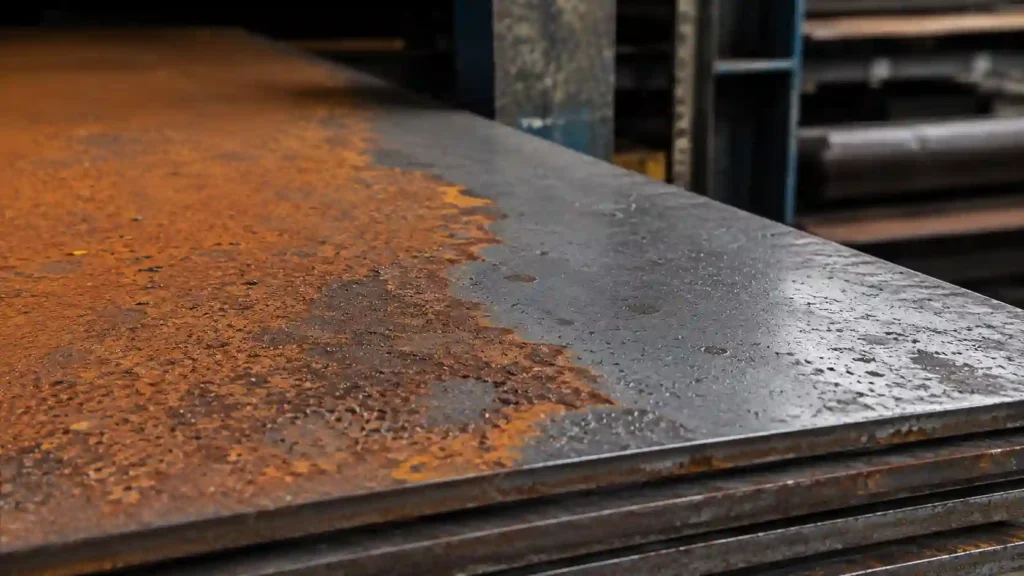
Many people believe rust only develops outdoors.
In reality, mild steel can begin oxidizing surprisingly quickly even inside a workshop.
Humidity, condensation, coolant residue, fingerprints, and temperature fluctuations can all accelerate corrosion.
One common mistake is leaving freshly fabricated parts bare while waiting for paint or assembly.
Surface rust often appears first around:
- Cut edges
- Weld areas
- Ground surfaces
- Machined surfaces
Mill scale provides limited protection, but once damaged, corrosion can spread rapidly.
Does Mild Steel Rust?
Yes.
Mild steel rusts because it contains iron and lacks the chromium content that protects stainless steel.
Some manufacturers use protective surface treatments such as black oxide coating to improve appearance and provide limited corrosion resistance.
When exposed to moisture and oxygen, oxidation occurs.
Common corrosion protection methods include:
- Paint
- Powder coating
- Galvanizing
- Zinc plating
- Black oxide
- Oil coatings
- Wax coatings
The appropriate protection depends on the operating environment.
A bracket inside a dry workshop requires different protection than a gate exposed to coastal weather.
How Professionals Prevent Rust on Mild Steel Parts
Rust prevention starts long before the first signs of corrosion appear.
Experienced fabricators understand that corrosion protection should be part of the design process rather than an afterthought. The environment where the part will operate often determines the appropriate protection method.
For indoor applications, simple paint systems or oil coatings may be sufficient. Outdoor equipment typically requires more durable protection such as galvanizing, powder coating, or multi-stage paint systems.
Common corrosion prevention methods include:
- Primer and paint
- Powder coating
- Hot-dip galvanizing
- Zinc plating
- Black oxide with oil
- Wax coatings
- Rust-inhibiting oils
One mistake many beginners make is painting directly over mill scale, rust, or contamination. Even high-quality coatings perform poorly when surface preparation is neglected.
In fabrication shops, surface preparation often determines coating life more than the coating itself.
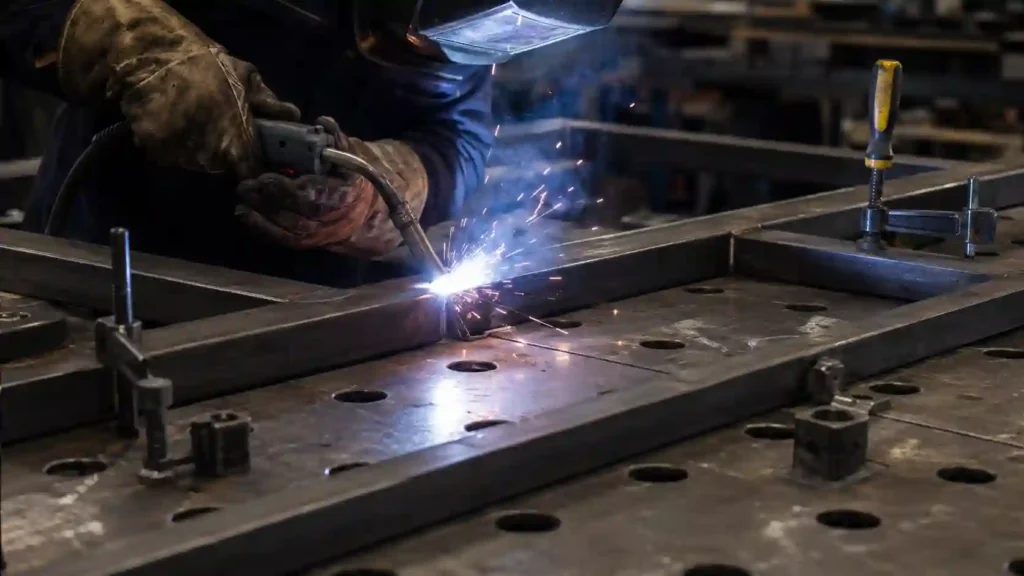
Is Mild Steel Good for Welding?
Yes.
Mild steel is widely considered one of the easiest metals to weld.
Its low carbon content significantly reduces the risk of cracking compared to higher-carbon steels. This makes it a forgiving material for both beginners and experienced welders.
Common welding processes include:
- MIG welding
- TIG welding
- Stick welding
- Flux-core welding
MIG welding is especially popular because it combines speed, simplicity, and good productivity.
However, even though mild steel is weld-friendly, problems can still occur.
Common welding issues include:
| Problem | Typical Cause |
|---|---|
| Porosity | Oil, rust, paint contamination |
| Excessive spatter | Incorrect voltage or wire settings |
| Distortion | Excessive heat input |
| Lack of fusion | Low heat or poor technique |
| Burn-through | Thin material and excessive heat |
One practical observation from fabrication shops is that thin mild steel often warps before weld strength becomes a concern.
For sheet metal projects, controlling distortion is usually more important than increasing weld size.
Is Mild Steel Easy to Machine?
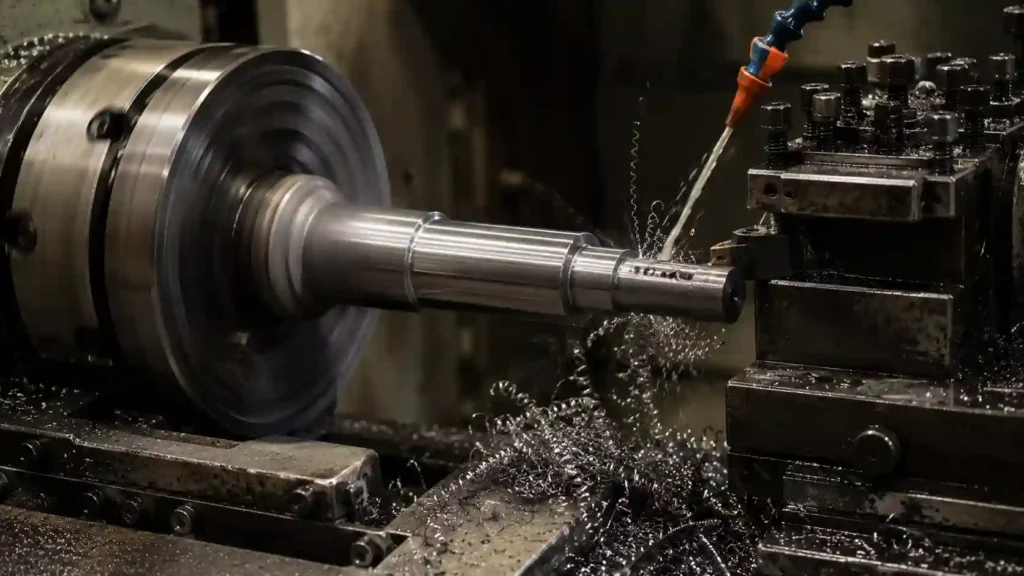
Mild steel is generally considered easy to machine compared to many engineering materials.
However, the phrase “easy to machine” can be misleading.
Unlike free-machining grades such as 12L14, mild steel sometimes produces long, stringy chips that can wrap around tooling and workpieces.
Common machining operations include:
- Turning
- Milling
- Drilling
- Boring
- Tapping
- Reaming
For best results:
- Use sharp cutting tools
- Maintain rigid setups
- Apply proper feeds and speeds
- Use coolant when necessary
- Avoid tool rubbing
One counterintuitive machining lesson is that overly light cuts often create worse finishes.
Many beginners reduce feed rates dramatically when encountering poor finishes. Unfortunately, this can increase rubbing and built-up edge formation instead of improving results.
In many cases, slightly increasing feed actually improves surface finish.
Common Problems When Working With Mild Steel
Distortion During Welding
Welding introduces heat into the material.
As the weld cools, uneven contraction can cause warping.
Thin sections are especially vulnerable.
Common prevention methods include:
- Tack welding
- Balanced weld sequencing
- Clamping
- Heat control
Surface Rust
Rust is often the first issue encountered with mild steel.
Freshly machined or ground surfaces may develop corrosion surprisingly quickly if left unprotected.
Humidity is often enough to begin oxidation.
Stringy Chips During Machining
Low-carbon steels frequently produce long chips.
These chips can:
- Wrap around tooling
- Damage surface finishes
- Create safety hazards
Chip control becomes increasingly important in production environments.
Mill Scale Problems
Hot rolled mild steel often arrives covered with mill scale.
Mill scale can interfere with:
- Welding
- Painting
- Powder coating
- Precision machining
Removing mill scale before fabrication usually improves final quality.
Burr Formation
Mild steel commonly develops burrs during drilling, milling, punching, and cutting operations.
Deburring is often a necessary secondary process.
In high-volume manufacturing, burr control can significantly affect production efficiency.
Can Mild Steel Be Hardened?
Not in the same way as high-carbon steel.
The low carbon content limits how much hardness can be achieved through conventional heat treatment.
Many people assume any steel can be heated and quenched to become extremely hard.
With mild steel, this generally does not work.
There simply is not enough carbon available to create significant hardness increases.
However, mild steel can sometimes be surface hardened using:
- Case hardening
- Carburizing
- Carbonitriding
These processes harden only the outer surface while leaving the core relatively soft and ductile.
Heat treatment must be carefully controlled because excessive thermal stress can contribute to failures such as steel cracking after quenching.
This approach works well when wear resistance is needed but full hardness throughout the part is unnecessary.
Choosing Mild Steel for Fabrication Projects
Mild steel is usually a good choice when you need:
- Affordable material
- Easy welding
- Easy fabrication
- Good availability
- Simple repairability
- Moderate strength
It is often the best option for:
- Frames
- Supports
- Brackets
- Machinery bases
- Welded assemblies
- Structural projects
Many successful fabrication projects are built entirely from mild steel because it provides enough performance without introducing unnecessary complexity.
Material selection should always balance performance requirements against manufacturing costs.
The strongest material is not always the best material.
When Mild Steel Is the Wrong Choice
Despite its versatility, mild steel is not suitable for every application.
Alternative materials may be better when:
Corrosion Resistance Is Critical
Marine environments, chemical plants, and food processing facilities often require stainless steel or specialized alloys.
Weight Reduction Matters
Vehicles, aerospace components, and portable equipment frequently benefit from aluminum.
Wear Resistance Is Required
High-wear applications may require:
- Tool steel
- Abrasion-resistant steel
- Hardened alloy steels
High Temperature Service Exists
Specialized alloys often outperform mild steel in elevated-temperature environments.
One common mistake is assuming mild steel can solve every engineering problem simply because it is inexpensive.
Material failures often occur when environmental conditions are overlooked during the design stage.
Mild Steel Surface Finishes
Because mild steel rusts, surface finishing is often necessary.
Common finishes include:
| Finish | Corrosion Protection | Typical Use |
|---|---|---|
| Paint | Good | General fabrication |
| Powder Coating | Very Good | Outdoor products |
| Galvanizing | Excellent | Structural and outdoor use |
| Zinc Plating | Moderate | Fasteners and small parts |
| Black Oxide | Light | Decorative and indoor applications |
| Oil Coating | Temporary | Storage protection |
Selecting the correct finish depends on both environment and budget.
A warehouse storage rack requires different protection than outdoor agricultural equipment.
Real Workshop Observations About Mild Steel
After years of fabrication work, several patterns become obvious.
Freshly ground mild steel almost always begins rusting faster than people expect.
Thin sheet usually looks perfectly stable until the final weld pass introduces enough heat to cause visible distortion.
Many machining problems blamed on tooling are actually caused by insufficient feed rates and tool rubbing.
Cheap abrasive discs often perform adequately on mild steel but reveal their limitations quickly on stainless steel.
Hot rolled material may look dimensionally acceptable until precision machining exposes residual stresses and movement.
These are not defects in the material. They are simply characteristics experienced fabricators learn to anticipate.
Understanding these behaviors often matters more than memorizing mechanical property tables.
Mild Steel Comparison Table
| Material | Main Advantage | Main Disadvantage | Typical Use |
|---|---|---|---|
| Mild Steel | Low cost and weldability | Rusts easily | General fabrication |
| Stainless Steel | Corrosion resistance | Higher cost | Food, medical, marine |
| Aluminum | Lightweight | Lower stiffness | Transportation, aerospace |
| Tool Steel | Hardness | Difficult machining | Cutting tools |
| High Carbon Steel | Wear resistance | Reduced weldability | Blades and springs |
Common Questions About Mild Steel
What is mild steel made of?
Mild steel is primarily made of iron with a small amount of carbon, usually between 0.05% and 0.25%.
Is mild steel the same as low-carbon steel?
Yes. Mild steel and low-carbon steel generally refer to the same category of steel.
Does mild steel rust?
Yes. Mild steel will rust when exposed to moisture and oxygen unless protected by coatings or surface treatments.
Is mild steel magnetic?
Yes. Mild steel is magnetic due to its high iron content.
Is mild steel stronger than stainless steel?
Not necessarily. Strength depends on the specific grade being compared. Some stainless steels are stronger, while others are not.
Why is mild steel so common?
Mild steel combines affordability, availability, weldability, machinability, and versatility better than most engineering materials.
Can mild steel be used outdoors?
Yes, but it should be protected using paint, galvanizing, powder coating, or another corrosion-resistant finish.
What grade of mild steel is most common?
A36 and 1018 are among the most commonly encountered mild steel grades in fabrication and machining.
Can mild steel be galvanized?
Yes. Galvanizing is one of the most effective ways to improve corrosion resistance.
Is mild steel good for machining?
Yes, although some grades produce long chips and built-up edge. Proper tooling and machining parameters usually solve these issues.
Is Mild Steel the Right Choice for Your Project?
Mild steel remains one of the most important engineering materials in the world because it solves practical problems efficiently.
It is affordable, easy to source, easy to weld, easy to machine, and suitable for an enormous range of applications. From structural fabrication and construction to machinery, automotive components, and workshop projects, mild steel continues to be the material most fabricators reach for first.
Its biggest weakness is corrosion. It also lacks the hardness of tool steel and the corrosion resistance of stainless steel. However, for the vast majority of fabrication and manufacturing projects, those trade-offs are acceptable.
When a project requires a material that is reliable, versatile, repairable, and cost-effective, mild steel is often the most practical choice.
That is why decades after countless new alloys have entered the market, mild steel remains the foundation of modern fabrication.